While just about every television show has an overarching plot or thematic element that guides the story and holds the narrative together, there is nothing quite like a mystery box to get — and keep — the audience hooked. A high concept form of storytelling that features a complex mystery supported by twists, interconnected sub-plots, characters, and ultimately some sort of big reveal that makes everything fit together, the mystery box (or puzzle box, as it is sometimes called) leaves viewers constantly guessing about what comes next. It’s a situation where the mystery is just as much if not more enjoyable as the resolution and it makes for great television, season after season. Over the years, a lot of television series have used the structure, such as Yellowjackets, Stranger Things, Manifest, and more, but there’s one that stands out as perhaps the most well-known: LOST. However, while LOST is maybe the most popular mystery box series and one that many cite as the best, I don’t necessarily think that’s the case. There’s another show that I think surpasses it — and if it wasn’t for this series, we never would have gotten LOST anyway.
Videos by ComicBook.com
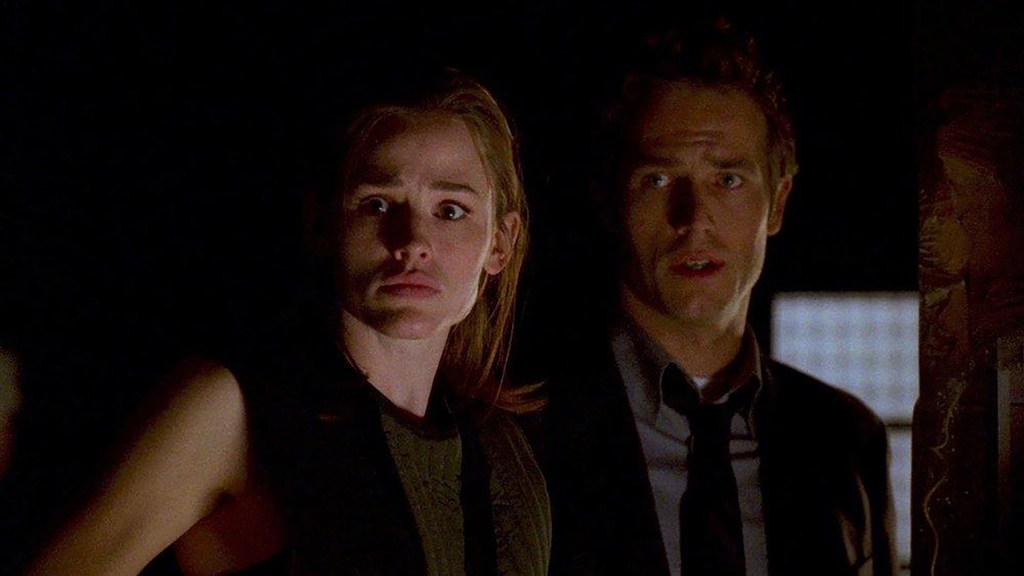
Debuting in 2001, Alias is another show from J.J. Abrams and if LOST is considered to be an early and outstanding example of the mystery box format, then Alias is the prototype. The series centers around Sydney Bristow (Jennifer Garner), a grad student who also happens to be a CIA double agent posing as an operative for the global criminal and spy organization SD-6. While the story centers around Sydney and her efforts to take down SD-6, it’s revealed that there is something larger at play by way of a mysterious, Renaissance era figure named Milo Rambaldi and the danger the world could be in if his artifacts fell into the wrong hands. Now, I’m not here to argue that Alias is perfect; later seasons get a little weird and even the most ardent Alias fan admits it. But in terms of how it sets up its puzzle and ultimately executes it, few series have ever come close to what Alias did — and considering that Abrams would kick off LOST just three years into Alias’ run, you can probably thank this spy series for that great show as well.
Alias Wasted No Time Setting Up Its Mystery — And Doesn’t Hold Back

One of the things that really sets Alias apart as one of the best mystery box series of all time is that it lets you in on the puzzle pretty much from the jump. Yes, to an extent all mystery box series set up their story early on, but Alias revealed its hand almost immediately. We’re introduced to the first Rambaldi artifact in the pilot and it’s made very clear that it’s going to be a key thing to keep an eye on going forward even as we’re also immediately made aware that Sydney is a double agent and even that is more messy than simple spy craft. Rather than give us the slow burn of the family conflict that is very much a part of Alias’ overall story, we are thrown into a tangled web immediately. We know that Sydney has a bad relationship with her dad and that ends up being made more complicated when it’s revealed that he, too, is a double agent. Functionally, we’re actually given two puzzles that nest inside one another, but just how connected it all is what takes time to unfold.
And that unfolding kicks into high gear and never backs down, especially as the series does something that you don’t expect it to very early in its overall run. While most series will stretch out its initial conflict for a while, Alias complicates its puzzle even further before we even finish the second season by having Sydney actually achieve her goal but ultimately open a Pandora’s box in terms of the Rambaldi mystery that will drive the rest of the series. It is puzzles on puzzles on puzzles and it’s great.
Alias’ Deeper Rambaldi Mysteries Set the Stage for LOST’s Dharma Initiative and Made Serialized Storytelling Popular
The most interesting thing about Alias as a mystery box series, however, is actually less about the episode-to-episode and season-to-season specifics of the show and more about the doors it opened. As I said previously, Alias wasn’t perfect. Things got a little odd around the third season (roughly the time Abrams shifted his focus to LOST), but when you really look at Alias as a whole, it’s impossible not to see how it influenced that next series and other more serialized shows that came after both of them. In terms of LOST, the Dharma Initiative ended up being a big deal but the framework for that came from the deep, complex, and carefully created mythos Alias did for Rambaldi. Alias went out of its way to create something that was so complex and had so many details that you’d be forgiven for not realizing that Milo Rambaldi was entirely a work of fiction. His inventions seemed just plausible enough and his prophecies just real enough that they were fully immersive and made some of the more bonkers elements of the hunt for the artifacts and the subverting of fate in the series believable. That same sort of detail and ability to sell the mystery directly translated over to LOST.
Even beyond the structure of the stories in terms of how their mythologies worked and were sold to viewers, Alias also helped set the stage as a proof of concept. If you think back to the early 2000s, most television of that time didn’t require you to watch every episode in exact order. While there was usually some sort of seasonal narrative, if you missed a week or watched, say episode 5 before episode 3, you still had an idea of what was going on and weren’t missing too much. Alias changed that. Every episode of Alias was packed with information, action, reveals, and frequently ended on massive cliffhangers that had viewers frantic for the next episode to arrive (and you had to wait a week for them back then, the suffering). If you missed a week, you would be dropped back in and confused as to what had transpired. It turned the series into appointment viewing and helped train more mainstream television audiences to lock in and fully immerse themselves in the story, the characters, and the lore. Alias’ success made the ABC network far more confident that a show like LOST, which was even twistier, could be a hit.
Alias Has Been Over For 20 Years And There Are Still Mysteries to Solve

As the prototype for the mystery box series as we know it and a key reason LOST exists at all, there’s really no arguing how great Alias really was. However, the thing that might fully push it over the edge from being great to the best lies in its legacy. Alias ended its five-season run in 2006 and while there are some arguments to be made that the final season wasn’t its strongest, one thing Alias does well is wraps up its story fully. There is no ambiguity in how things end: Sydney manages to “win” in a sense, defeating all of the prophecies and stopping Rambaldi’s predictions and catastrophes from becoming reality. However, even with the story completed and wrapped up, even giving Sydney a happily ever after with a definitive end, Alias leaves viewers with mysteries they’re still trying to solve two decades later. We have questions about Sydney’s daughter, for starters. And then there’s the fate of the villain Sloane who is left forever entombed but immortal. While most mystery box series leave us with some sort of cliffhangers to figure out — LOST’s finale is notoriously divisive as people still argue about if they were dead the whole time or what — Alias is pretty direct about what happens… but leaves just enough of a crack in the door that you can see more story to be told.
It’s that tease that there could still be more even with a complete ending and a resolution to all the mysteries and questions that has fueled hope for a reboot or a sequel for two decades and might just make Alias the best mystery box of all time. It’s a mystery that fully solved itself but left us wanting to be confused, thrilled, and challenged even further. It’s an incredible series and the best of the best — period.
More TV Shows
-

Image Courtesy of Image Comics -

Image Courtesy of Skydance -

Image Courtesy of Warner Bros.