Video game adaptations spent decades as a reliable source of Hollywood embarrassment. That reputation has shifted dramatically in recent years, thanks to TV. For instance, the League of Legends adaptation Arcane earned universal critical acclaim and multiple Emmy Awards, while Netflix’s Castlevania proved that faithful animation could elevate the mythology of a decades-old action game. The first season of The Last of Us on HBO also translated Naughty Dog’s emotionally devastating narrative to television so effectively that it drew comparisons to the prestige drama gold standard. Finally, Amazon’s Fallout delivered a darkly comic vision that satisfied both longtime fans and first-time viewers, becoming one of the platform’s highest-rated originals. This track record has led to adaptations of God of War, Tomb Raider, and Mass Effect, all currently in development. Unfortunately, the Mass Effect series may be drawing from a far less successful playbook.
Videos by ComicBook.com
A recent report by The Ankler reveals that Peter Friedlander, Amazon MGM Studios’ new Head of Global TV, has requested that the scripts for the upcoming Mass Effect TV series be rewritten to appeal to “non-gamers.” The series, which has been in some form of development for at least half a decade, is described as “on the verge” of getting a series order and entering production. Rewriting a science fiction epic with a mythology spanning three games, dozens of alien civilizations, and centuries of lore to satisfy an audience with zero familiarity with the material is precisely the kind of executive decision that sounds reasonable in a boardroom, but can fail catastrophically on screen. The Halo series, which Paramount+ cancelled in 2024 after two costly and divisive seasons, demonstrates exactly the dangers of this kind of executive mandate.
The Mass Effect TV Show Should Not Go the Way of Halo

The live-action Halo TV series premiered on Paramount+ in 2022 to mixed reception, with many fans of the games critical of the show’s lack of fidelity to the source material. The most persistent complaint centered on a symbolic but revealing creative choice, as Master Chief (Pablo Schreiber), who is perpetually masked in the games, removed his helmet every chance he got in the TV adaptation. For a franchise built on the mystique of an anonymous supersoldier, that decision communicated a fundamental misreading of the character’s appeal. The result was a show that alienated its core audience while failing to build a comparable one among general viewers.
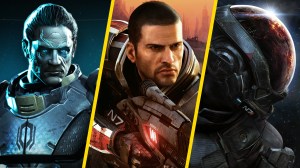
Halo Season 1 performed passably with critics, who gave it a 70% score on Rotten Tomatoes, but received a 52% audience rating on the same platform. Each episode reportedly cost $10 million to produce, totaling approximately $170 million across both seasons. That investment was never recovered, as audiences didn’t stick around to see if the show could improve. Despite Halo season 2 improving significantly with critics, earning 90% on the Tomatometer on release, the damage from the original season’s reception was too great to overcome, and Paramount+ cancelled the series in July 2024.
The contrast with Fallout and The Last of Us is instructive, as neither show treated its lore as a liability to be diluted for uninitiated viewers. The Last of Us preserved the emotional architecture of Naughty Dog’s narrative almost intact, trusting that grief, survival, and moral compromise translate across any medium. Meanwhile, Fallout leaned aggressively into the franchise’s absurdist humor, retrofuturist aesthetic, and political cynicism, the specific qualities that define the games’ identity. As a result, both series attracted enormous audiences that extended far beyond their existing fanbases, not by simplifying the source material, but by presenting it with enough confidence that new viewers wanted to understand it.
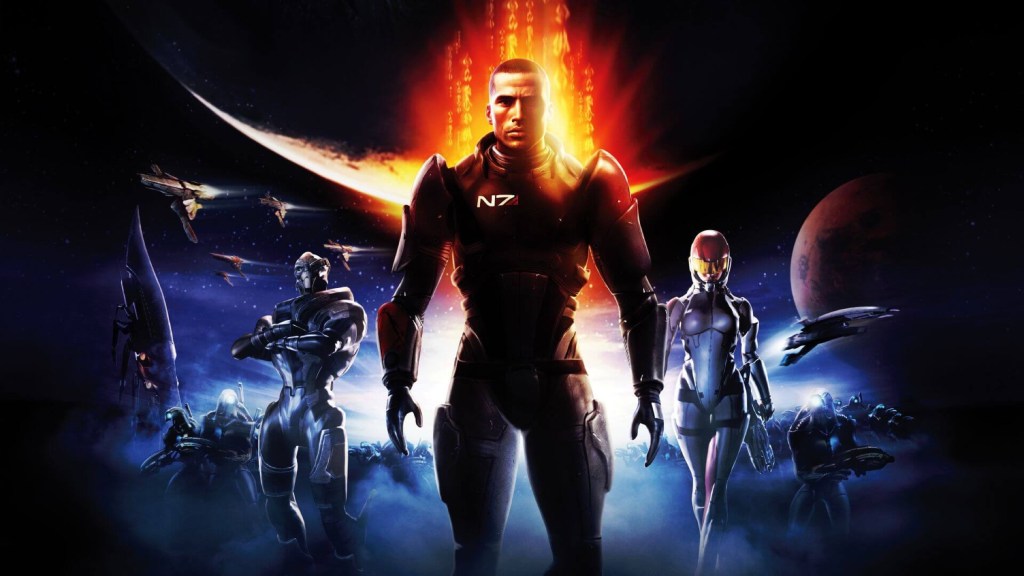
Mass Effect is one of the most narratively complex properties in science fiction gaming. Its three-game arc involves an intricate web of alien politics, a galaxy-spanning threat predating human civilization by millions of years, and a protagonist whose defining characteristic is the weight of impossible choices. Adapting a beloved, choice-driven RPG trilogy for a medium that strips away all the choices is already one of the trickiest paths in entertainment. So, layering on an executive mandate to make that adaptation legible for audiences unfamiliar with the Reapers, the Citadel, or the Geth compounds the problem, as the mythology of Mass Effect is not incidental to its cultural staying power, but one of the core reasons the franchise retains a passionate fanbase more than a decade after the trilogy concluded.
Mass Effect showrunner Doug Jung, who co-wrote Star Trek Beyond and served as showrunner on Chief of War, has boarded the project alongside writer and executive producer Daniel Casey and producer Ari Arad. The creative team has the credentials to deliver something substantial, but whether Friedlander’s intervention allows them to do so remains an open question.
Do you think Amazon’s reported rewrites will doom the Mass Effect adaptation before it even begins production, or can the series still honor the games’ legacy? Leave a comment below and join the conversation now in the ComicBook Forum!