Magic: The Gathering, created by game designer Richard Garfield and released in 1993 through Wizards of the Coast, established the trading card game format that has since spawned an entire industry of imitators. Three decades of continuous expansion have pushed its card pool past 27,000 unique entries, a library size that dwarfs virtually every other collectible franchise still in active production. Even more impressive are the deals closed around particularly rare cards, with some items getting sold for millions of dollars. It’s not a surprise, then, that Wizards of the Coast has spent the years layering novels, comics, and video games on top of the core card game, treating Magic: The Gathering like a continuously expanding mythology. Now, Magic is about to become an animated series at Netflix.
Videos by ComicBook.com
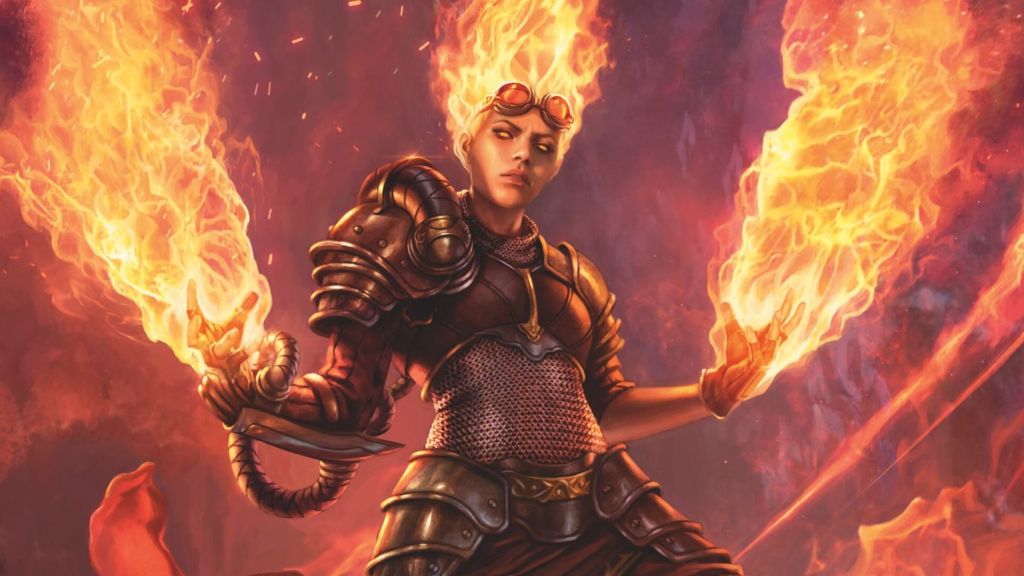
Netflix’s animated adaptation of Magic: The Gathering first entered development in 2019 underJoe and Anthony Russo, who exited the project in 2021. That iteration was declared dead in September 2024, the same month Netflix confirmed a complete restart under new showrunner Terry Matalas, alongside Oscar-winning director Patrick Osborne and art director Simon Rogers. Matalas confirmed that every script for the first season was already finished, with production now moving through casting and animatics. For instance, Netflix’s teaser art has already narrowed the story’s focus to the Planeswalkers Chandra Nalaar, Ajani Goldmane, and Jace Beleren, three characters positioned to anchor the audience’s path through Magic‘s many worlds. Between a showrunner with a track record for sprawling mythology and a clear creative throughline, the adaptation has everything working in its favor.
Magic: The Gathering Lore Is Expansive, and That’s a Good Thing
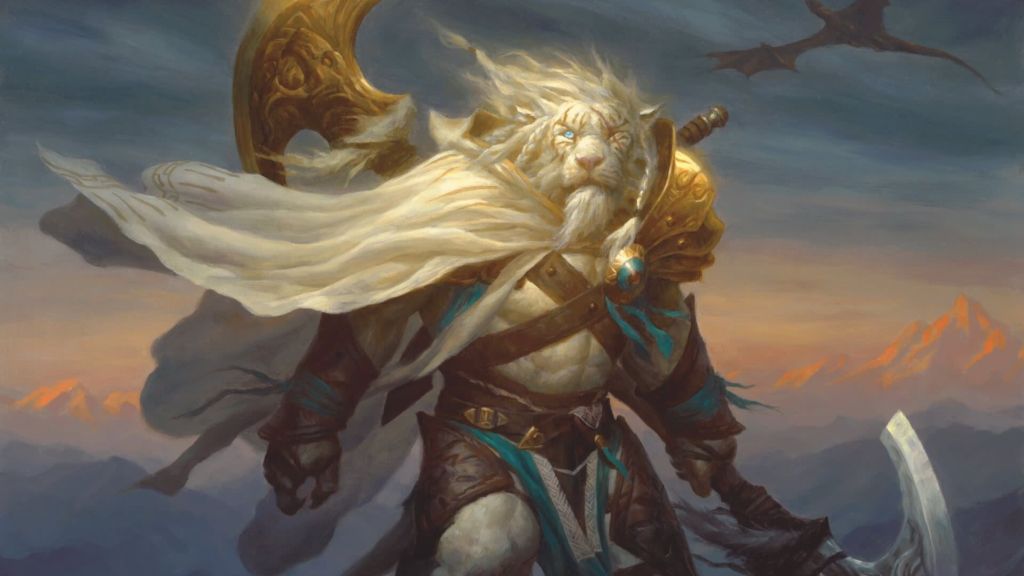
Unlike most franchises adapted for the screen, Magic: The Gathering never built its story through a single authoritative text. Instead, its narrative has been assembled in pieces, told through flavor text printed on individual cards, planeswalker-specific card sets, short stories published on Wizards of the Coast’s own site, and dozens of tie-in novels released across three decades. That fragmented structure can actually be an advantage in the hands of competent storytellers. For instance, an adaptation only needs a small number of load-bearing character arcs to construct a coherent season, since so much of the surrounding lore already exists as background texture rather than binding continuity. A team like Matalas’s is also free to select the threads worth dramatizing without contradicting a previously established storyline, because Magic‘s lore was never delivered as a linear canon.
This is not a new strategy for Netflix. League of Legends built its lore through the same kind of fragmentation, spreading character backstory across champion biographies, in-game dialogue, and short cinematics. Riot Games handed that scattered mythology to Fortiche, and the resulting series, Arcane, grounded its story in the relationship between two champions before expanding outward into the wider world of Piltover and Zaun. That approach won Arcane the Emmy for Outstanding Animated Program and an avid fanbase, proof that fragmented lore can produce a tightly written show when a creative team narrows its focus instead of trying to cover everything at once. As far as we know, Matalas is building the Magic: The Gathering series around a similar principle, positioning Chandra Nalaar as the emotional entry point for a story that will eventually stretch across every plane in the multiverse, an ambitious scope that’s perfectly suited for animation.
Animation Is the Right Vehicle for Magic: The Gathering
Magic: The Gathering‘s setting is a collection of dozens of planes, each with its own physics and aesthetic, ranging from the neon-lit metropolis of Kamigawa to the gothic horror plane of Innistrad. That means a live-action production would need to rebuild its visual language from scratch every time the story jumps to a new plane, which should happen often to keep the spirit of the game. That’s a budgetary suicide, and even then if would be challenging for live-action to capture the diversity of Magic‘s settings.
Animation removes that ceiling entirely, allowing the production to move between wildly different planes without the cost of building and rebuilding physical sets or location shoots. Yes, a live-action Magic: The Gathering film and television universe is separately in development at Legendary Entertainment, but that version will face budget and continuity constraints that animation lets Netflix’s series sidestep. Ultimately, an animated Magic: The Gathering can give Netflix the tools to build a whole new universe on streaming, as it’s simpler and faster to produce new seasons and approve spinoffs that can allow the streaming platform to continue exploring different corners of Planeswalkers mythology.
Do you think Netflix’s animated adaptation of Magic: The Gathering can replicate the success Arcane found with League of Legends? Leave a comment below and join the conversation now in the ComicBook Forum!
More TV Shows
-

Image Courtesy of Disney -
Image Courtesy of UGT / Fuzzy Door / MRC