Captain James T. Kirk is one of the most celebrated characters in science-fiction history, and for good reason. He was brave, charismatic, brilliant under pressure—and played by William Shatner. This combination made him seemingly incapable of backing down from a dangerous situation or giving up against an enemy. But to balance things out, Kirk wasn’t always right. In fact, the original Star Trek series repeatedly put Kirk in situations where his crew had a better read on what was happening. Then, the captain’s instincts, emotions, or sheer stubbornness could push him in another direction. The formula worked, and the series even spawned a Star Trek toyline that wreaked havoc in the ’70s.
Videos by ComicBook.com
And no, Spock isn’t taking all the credit here. That would be far too easy. Any viewer would quickly understand how Spock was always the logical counterweight to Kirk. But some of the show’s other characters demonstrated an impressive ability to see through bad ideas, recognize danger, or simply understand people better than their captain did. These four characters, in particular, had a surprisingly strong track record. Let’s delve into the characters who could frequently see what Kirk couldn’t.
4) Montgomery “Scotty” Scott
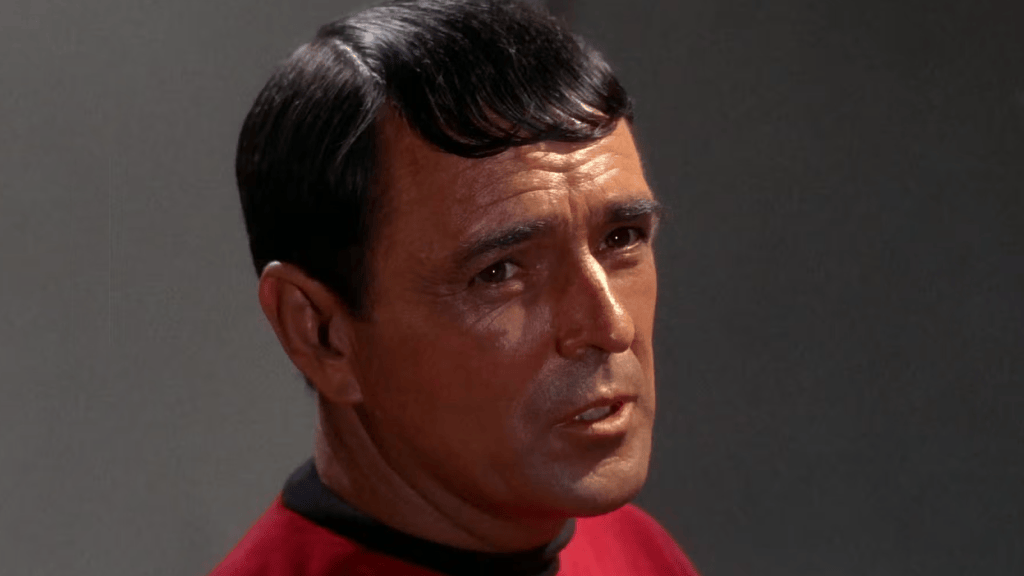
When it came to understanding the difference between what Kirk was trying to do and what the ship could actually do, nobody knew better than Scotty. Montgomery Scott was the chief engineer, for starters. He was also the person responsible for turning Kirk’s outrageous demands into reality. That gave Scotty an unusually good perspective on the consequences of the captain’s decisions. Kirk might demand more speed, more power, or more combat maneuvers, but Scotty knew there were limits that even the Enterprise couldn’t casually ignore.
In “The Doomsday Machine,” Scotty becomes essential to Kirk’s desperate effort to stop the planet-killing machine. While Kirk focuses on the larger strategic problem, Scotty works under immense pressure to restore the severely damaged USS Constellation’s systems to make it maneuverable and combat-capable. He manages to bring its impulse engines and a phaser bank back online, allowing Kirk to use the crippled ship to distract the planet killer and save the Enterprise. Later, Scotty rigs the Constellation’s impulse engines to serve as a timed explosive and helps repair the Enterprise’s damaged transporter, making Kirk’s escape possible. His role is not simply that of an engineer following orders; he repeatedly finds practical solutions that keep the ships and their crews alive when the situation seems impossible.
That made Scotty right more often than Kirk would’ve cared to admit. His warnings were frequently dismissed or challenged because Kirk had a confidence that his crew could pull off the impossible. The frustrating part for Scotty was that Kirk was often rewarded for that confidence. And that’s precisely why Scotty had to play it safe. He knew the machinery, understood the risks, and recognized that pushing the Enterprise beyond its limits could be catastrophic. He was the guy who had to make Kirk’s miracles happen. When Scotty said something couldn’t be done, Kirk’s best move was often to listen. Naturally, Kirk’s favorite response was to tell him to do it anyway.
3) Hikaru Sulu
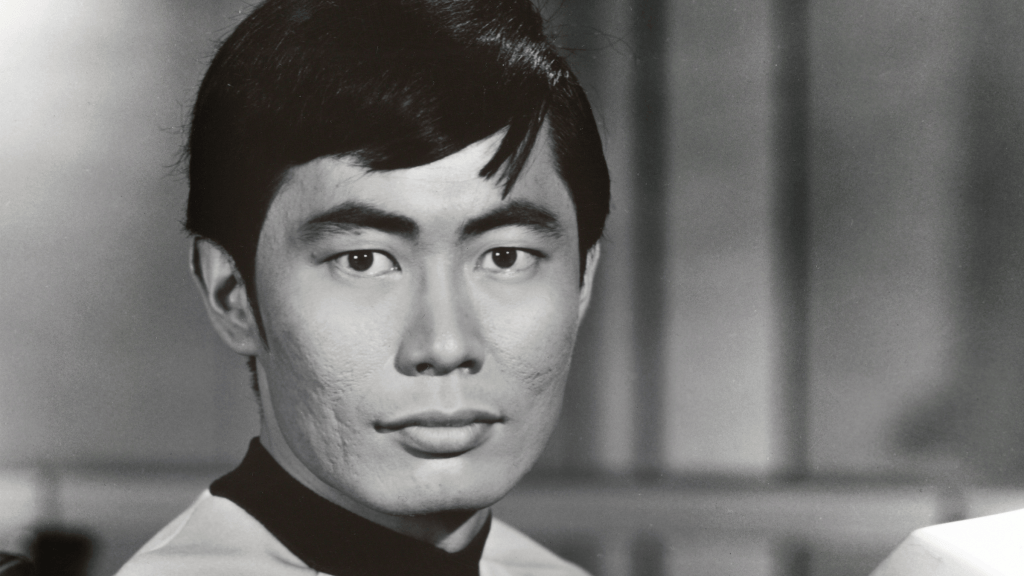
Hikaru Sulu was never the loudest guy on the Enterprise. Many fans would even argue his role in the show was very limited. However, when he did get riled up and really stood his ground on something, it was usually worth listening to. Sulu eventually settled in as the helmsman aboard the U.S.S. Enterprise NCC-1701, putting him in charge of piloting and navigation. His calm approach and professionalism also made him one of the most dependable members of the crew. And keeping a Star Trek spaceship operational was a top priority, especially when the Enterprise had to battle more powerful enemy ships.
Similarly to Spock, Sulu’s restraint made him a good counterbalance to Kirk’s more passionate personality. He brought a quiet sense of stability to the bridge. When Kirk became too invested in a situation, Sulu tended to stay focused on what actually needed to be done to get the Enterprise and its crew through it. Sulu had the kind of level-headed judgment Kirk sometimes needed, even if he didn’t always ask for it. And his hard work eventually paid off. Sulu went on to become captain of the USS Excelsior and was commanding the ship by the time of Star Trek VI: The Undiscovered Country. He had the judgment and discipline to command a starship himself—and sometimes, that kind of steady hand was exactly what Kirk needed around him.
2) Nyota Uhura
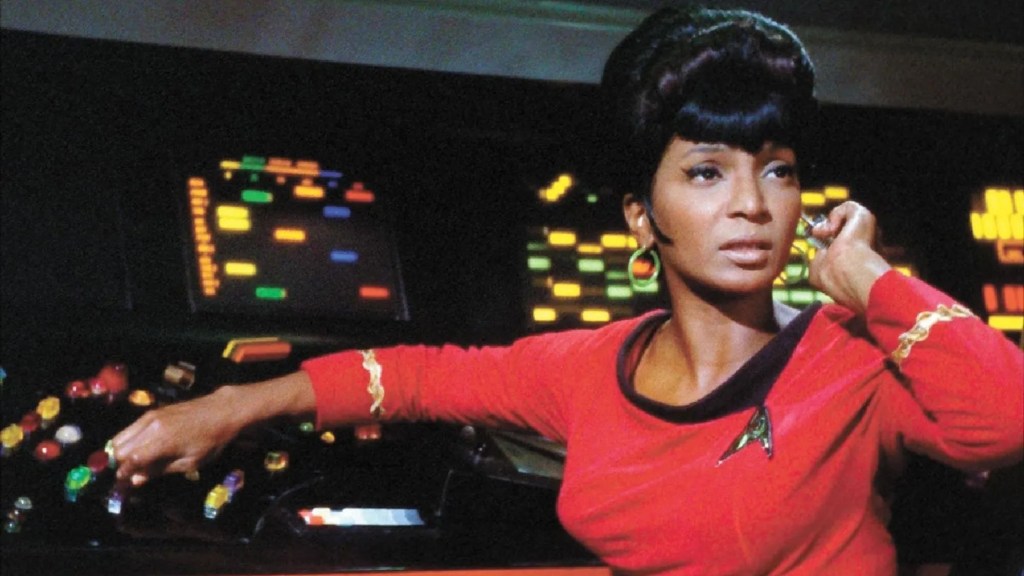
Uhura’s good judgment was a major asset to the original Star Trek crew. Her primary responsibility was communications. Naturally, that put her at the center of some of the Enterprise’s most important encounters. She was usually the person interpreting alien languages. What makes Uhura particularly compelling is that she rarely needed to dominate a conversation to make her point. Her professionalism and composure gave her an authority that didn’t depend on rank.
She was also remarkably versatile on the bridge and even jerry-rigged a very fragile, dangerous subspace bypass circuit with limited resources. And who can forget how she risked everything in the film Star Trek III: The Search for Spock. When Spock’s body was on the line, she threatened a Starfleet transporter technician with her phaser and took control of the transporter station. Then she made sure her crewmates could carry out their plan. And whenever Kirk was making decisions in the middle of an emotional or dangerous situation, Uhura offered the information-gathering perspective. She was listening while everyone else was reacting. Uhura’s entire job was built around listening first. In a universe where one misunderstood message could start a war, that was a remarkably useful skill to have.
1) Dr. Leonard “Bones” McCoy
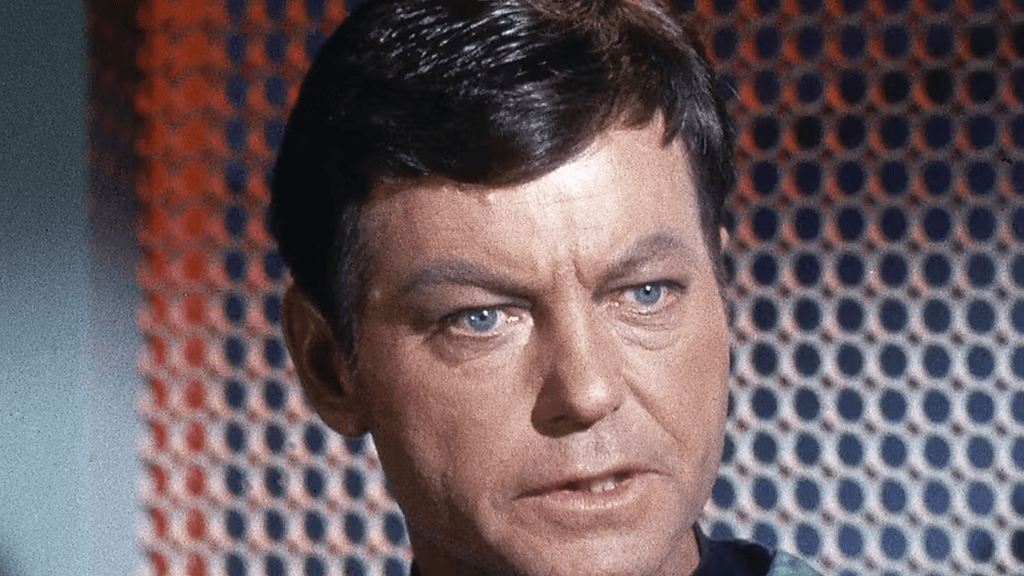
If Kirk had listened to Bones McCoy more, the Enterprise crew might have avoided a lot of complications. McCoy wasn’t simply the doctor who complained about not being a scientist. He was also the person most willing to challenge Kirk when his decisions put human lives, ethics, or basic common sense at stake. That came from a place Spock approached differently. McCoy’s objections weren’t based primarily on logic. They came from an understanding of the human—and often alien—condition. His personal ideals could also get the best of him sometimes, as evidenced in a masterpiece of a Star Trek time travel episode.
That distinction is exactly why McCoy deserves the number-one spot. Kirk could become obsessed with completing a mission or proving that an impossible situation could be overcome. Bones was often the person reminding him that there were lives caught in the middle of all that heroism. You can see that clearly in the episode “A Private Little War.” McCoy understands the medical and humanitarian consequences of Kirk’s decisions on Neural. He recognizes that introducing advanced weapons has devastating consequences for the natives and becomes deeply uncomfortable with the escalating cycle of violence. Kirk, meanwhile, is forced to think strategically. Once he realizes the Klingons have introduced advanced weapons to the villagers, he decides the Federation must provide weapons of its own to maintain the balance of power. McCoy can see the terrible human cost of that decision, but Kirk believes there is no safe alternative.
His medical expertise gave him a perspective Kirk and Spock couldn’t replicate. McCoy could certainly be emotional, stubborn, and wrong. But when the question was whether an action was humane, medically sensible, or worth risking someone’s life, Bones frequently had the better argument. Kirk might have been the captain, but McCoy was often the conscience of the Enterprise—even if he had a rather off-putting complex about it.
Kirk may not have been perfect, but he did have the captain’s seat. He also needed to be surrounded by the right team, even if there are things fans refuse to admit about the original Enterprise crew. In the end, the best captain isn’t the one who is always giving orders—it’s the one who knows how to listen.
More TV Shows
-
Courtesy of 20th Century Studios -
Courtesy of Netflix/Carnival Films & Television