Time travel is one of those science-fiction concepts that sounds amazing until a story actually has to explain how it all works. Immediately, there are multiple paradoxes, alternate timelines, accidental changes to history, and at least one character asking why they can’t just go back and fix everything. Star Trek has never been afraid of that headache, and The Original Series got there surprisingly often.
Videos by ComicBook.com
What makes the best TOS time-travel episodes work is that they don’t always get buried under complicated rules. Sometimes the Enterprise crew ends up in the past or someone from the future shows up. And sometimes, Kirk just has to deal with the consequences of humanity doing something spectacularly reckless. Either way, these episodes understood that time travel works best when the science-fiction idea actually creates a problem the characters have to solve together. Here are five TOS episodes that managed to do it particularly well.
5) “Tomorrow Is Yesterday”
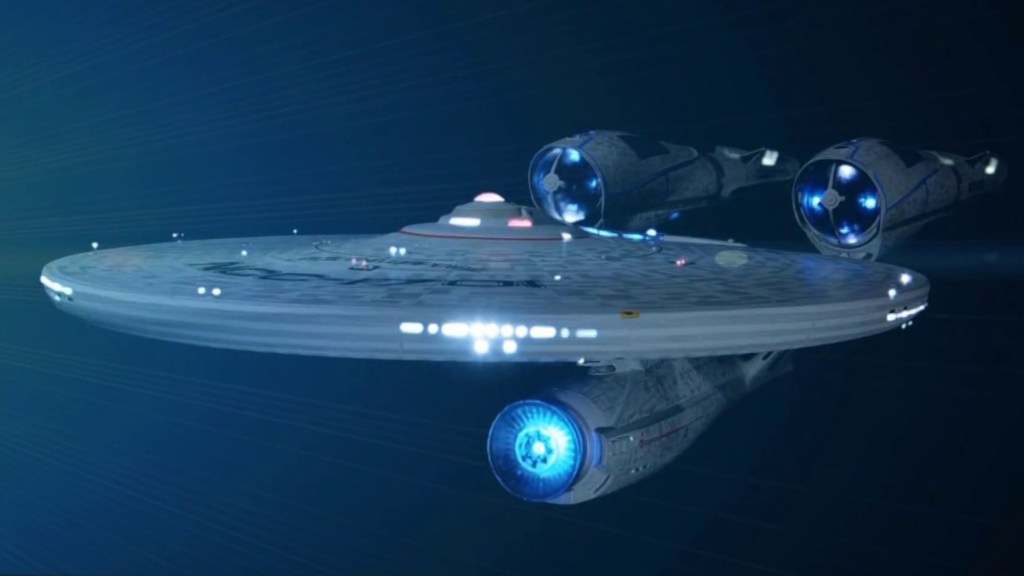
The Enterprise doesn’t exactly plan on traveling through time in “Tomorrow Is Yesterday.” After getting caught in the gravitational pull of a high-gravity black star, the ship accidentally gets thrown back to the 20th century, where Captain Kirk and his crew suddenly find themselves dealing with the United States Air Force. That alone gives the episode a great premise. The Enterprise isn’t just lost in space. It’s lost in time, and the people on Earth understandably have absolutely no idea what to make of it.
The episode explores the notion that Starfleet is desperately trying not to interfere with history. The crew has to figure out how to return to their own time without leaving behind evidence that a 23rd-century starship ever visited Earth. This kind of alteration could forever change history, after all. It turns what could have been a simple fish-out-of-water story into a surprisingly clever time-travel problem. The best part is that TOS doesn’t need an enormous explanation for why the episode works. Kirk and the crew are simply stuck in the wrong century, and now they have to clean up the mess before they can go home. If you celebrated Star Trek’s 60th anniversary with Pluto TV, these episodes are sure to shake up your time stream.
4) “Assignment: Earth”
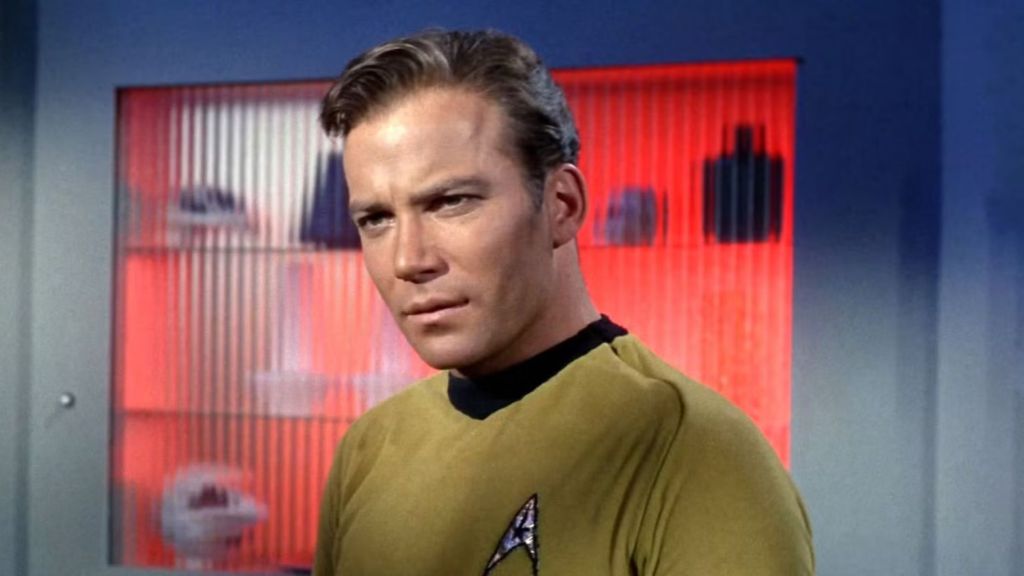
The episode “Assignment: Earth” takes the time-travel formula into a completely different lane. In it, the Enterprise travels back to 1968 to study Earth’s past. Sounds innocent enough until they discover that humanity’s future may depend on a mysterious man named Gary Seven. At first, he appears to be just another ordinary human. Then Kirk discovers that he’s actually an agent who was taken from Earth as a child, trained by an advanced civilization, and returned to protect humanity from destroying itself.
Kirk isn’t simply visiting another historical period for sightseeing. He watches an agent with extraordinary knowledge actively intervene in the course of human history. In response, the Enterprise has to decide whether stopping Seven could actually make Earth’s future worse. There’s also a fun twist to the whole concept that comes unexpectedly. The episode was originally designed as a possible spin-off pilot, which means TOS was effectively using time travel to introduce an entirely new science-fiction series. It never happened, but the episode still feels like a pilot that could have become something very different. The 1960s may be the past for Kirk, but to Gary Seven, it’s a mission that could determine whether humanity even gets a future.
3) “All Our Yesterdays”

“All Our Yesterdays” takes time travel and makes it considerably more impactful than usual. Kirk, Spock, and McCoy end up separated across different periods of a planet’s history, with Kirk landing in a society resembling 17th-century Earth while Spock and McCoy are thrown 5,000 years into Sarpeidon’s past. Naturally, none of them has any idea what’s happening, so getting everyone back together becomes the priority.
What makes the episode particularly interesting is how it treats time travel as something that can affect the characters themselves. Spock and McCoy aren’t simply visiting history. They become caught up in it. Spock in particular begins behaving differently after being exposed to an ancient version of Vulcan society. There’s a real sense that staying in the past could change who these characters are. That’s a much more powerful consequence than simply worrying about whether someone accidentally changes things. The episode also gives the crew a genuine reason to consider whether returning to the present is even the best option, with surprisingly serious consequences. Can you believe that Leonard Nimoy’s Spock was almost cut from the movies? That would have been a time-shattering event.
2) “The Naked Time”
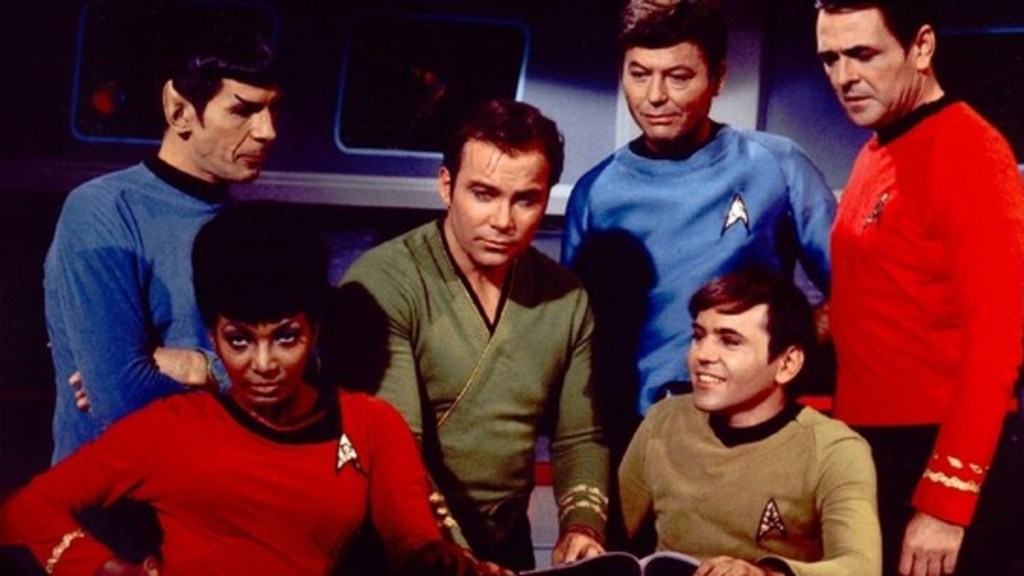
Technically, “The Naked Time” isn’t a conventional time-travel story in the way the other episodes on this list are. But it belongs here because its conclusion introduces one of TOS’s most memorable uses of time manipulation. After the crew becomes infected by a strange condition, they start to lose their inhibitions. As a result, the Enterprise is eventually forced into an impossible situation. The only way to escape is to manipulate the ship’s movement through time.
The episode’s ending is where things get particularly interesting. Kirk orders Scotty to restart the ship’s warp engines at full power, creating a controlled implosion that unexpectedly sends the Enterprise backward in time. Suddenly, what looked like a catastrophic accident gives the crew a chance to return to a point before everything went wrong. It’s a wonderfully old-school science-fiction solution handled in an entertaining way. The characters don’t have a perfect explanation for every detail, but they understand enough about the phenomenon to take a ridiculous gamble. And it works. TOS would revisit this basic idea in “Tomorrow Is Yesterday” and other stories, but “The Naked Time” helped establish just how willing Star Trek was to treat time itself as something the Enterprise could potentially wrestle with. And surprisingly, this episode of Star Trek wasn’t the one that was banned in Britain.
1) “The City on the Edge of Forever”

This is probably the episode most people will think of when they hear the words “a great TOS time travel episode.” There’s a good reason for that. Kirk and Spock travel back to 1930s New York after McCoy accidentally changes history, and suddenly the fate of the entire future depends on one woman named Edith Keeler.
The episode understands that time travel is most effective when the consequences are personal. Kirk isn’t simply trying to restore some historical event he read about in a textbook. He falls in love with someone whose survival would alter the future, forcing him to make an impossible choice. The episode also gives Spock a much bigger role in solving the problem. As he works with Kirk to determine exactly what changed and how they can fix it, the stakes rise. And then there’s the ending, which still hits decades later because Kirk has to let history happen even though he knows exactly what it will cost him. That’s what makes the episode so memorable. The time-travel mechanics matter, but ultimately, the story explores whether knowing the future gives you the right to change it.
What makes these episodes so memorable is that Star Trek never treated time travel as just a gimmick—it used it to test the characters, their choices, and the consequences of knowing what comes next. And maybe that’s the real paradox of time travel: the more you know about the future, the harder it becomes to leave the past behind.
More TV Shows
-
Image Courtesy of DC Comics