
After the release of Godzilla Minus Zero, the smash-hit follow-up to 2023’s Godzilla Minus One, fans of the kaiju franchise have been clamoring to find more content featuring their favorite reptilian titan. Thankfully, the Godzilla franchise has 72-years worth of content for fans to dive into, including Netflix’s three part film series from Toho Animation and Polygon Pictures. Consisting of Godzilla: Planet of the Monsters, Godzilla: City on the Edge of Battle and Godzilla: The Planet Eater, this action-packed sci-fi trilogy tells a high-stakes story.
Videos by ComicBook.com
Initially introduced as a revenge journey that later pivots to focusing on the struggle between humans and nature, hubris, and the philosophy of what gives us an indomitable drive to survive, this unique Godzilla trilogy was penned by none other than Gen Urobuchi, a prolific and infamous writer known for his work on franchises like Puella Magi Madoka Magica, Psycho-Pass, and even legendary tokusatsu such as Kamen Rider Gaim. True to his other works, all three of these Godzilla films take their time unraveling their overarching narrative, using the legendary figure of Godzilla to aid in exploring the psychology of each of the main characters.
The Netflix Godzilla Trilogy Reinvents The Legendary Kaiju In a Fascinating Way
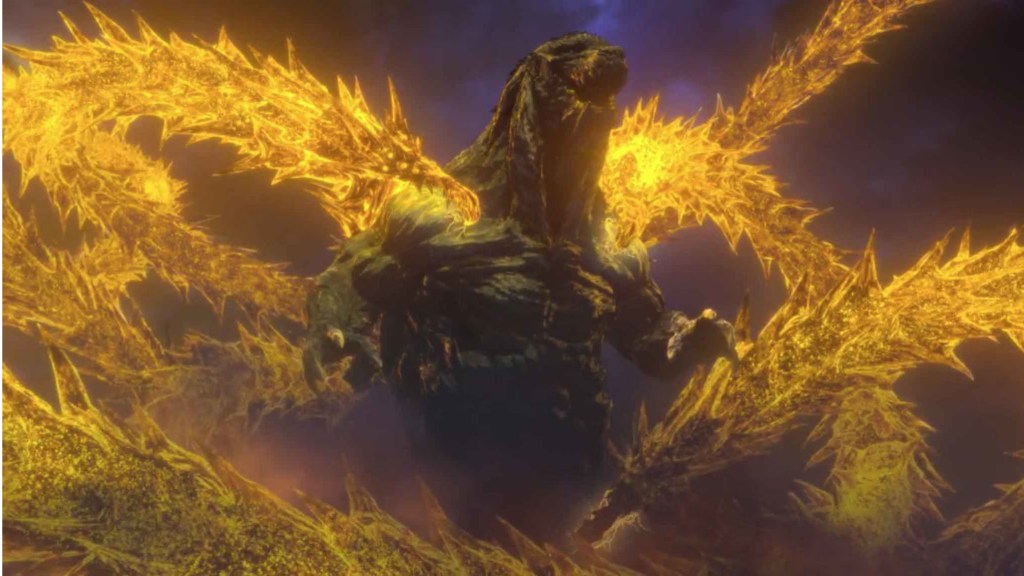
Opening with Godzilla: Planet of the Monsters in 2017, the trilogy begins by introducing audiences to a group of human refugees returning to the planet Earth to attempt to recolonize it 20,000 years after being chased away by the titular kaiju. The film also introduces two alien species that worked in tandem when Earth was lost to the beast, known as the Exif, a group of religious zealots, as well as the technologically advanced Bilusaludo. After their failure to aid humanity in defeating Godzilla, humans emigrated to an exoplanet called “Tau-e.”
The film’s protagonist, Haruo Sakaki, holds a bitter hatred toward the kaiju and has made a vow to destroy it and reclaim Earth for humanity after deciding that Tau-e is inhabitable for human-kind’s continued existence. The first film follows many story beats akin to a typical revenge story, but as the plot unravels it becomes clear that the first film is aiming to set up a “humans versus nature” conflict. Without giving too many details away, Planet of the Monsters leaves off on a cliffhanger that leads perfectly into its 2018 follow-up film, Godzilla: City on the Edge of Battle.
Godzilla: City on the Edge of Battle introduces another fan-favorite kaiju: Mechagodzilla who aids the returning human cast in their efforts to defeat Godzilla. The film is a direct sequel, opening shortly after the first entry’s cliffhanger ending. The third and final film in the trilogy, The Planet Eater, leans heavily into themes of existential dread and human psychology, with the same extraterrestrial forces who once vowed to help humanity in their efforts now outwardly acting with hostility toward them due to differences in priorities when handling the threat of the giant kaiju threatening their recolonization efforts.
This film explores many classic story beats embedded into the roots of the Godzilla franchise as well, drawing comparisons between the beast and human-made tragedies. Directed in a collaborative effort by Kobun Shizuno (Detective Conan, Evangelion: 1.0 You Are (Not) Alone) and Hiroyuki Seshita (Knights of Sidonia, Ajin), the trilogy is uniquely positioned in how it presents these story beats, as it’s the first Godzilla trilogy to commit fully to some of the franchise’s sci-fi leanings and even giving Godzilla mutations akin to films like Shin Godzilla.
Godzilla‘s Anime Trilogy’s Production Staff Knew Exactly What They Were Doing With The Iconic Monster
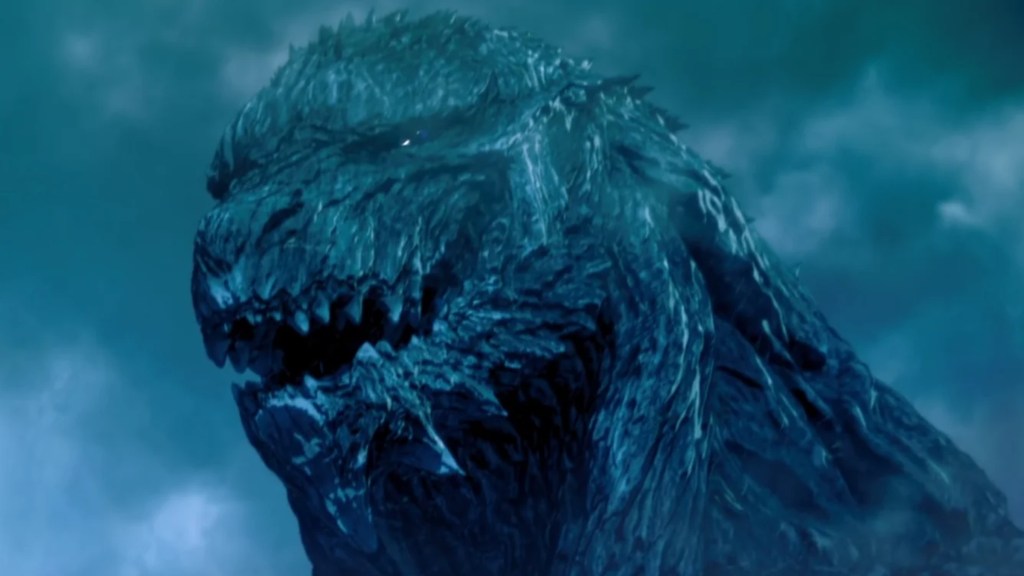
While the overall reception to the Netflix Godzilla trilogy is mixed in regards to how well the films stand as proper entries to the franchise, it’s clear to see what the filmmaking team wanted to do with the story. In that, all three films beautifully accomplish exactly what they set out to do. Gen Urobuchi’s scriptwriting prowess really hits its stride in the second film as the main cast’s goals begin to unravel as they reckon with the consequences of pitting advanced technology against a hulking beast that’s inhabited the Earth for well over 20,000 years.
Additionally, it’s easy to see just how well the directing duo Kobun Shizuno and Hiroyuki Seshita understand psychological storytelling as it pertains to science fiction as a genre. The pair are able to showcase stunning sci-fi action sequences and large-scale kaiju fights that are interspersed with deeply compelling conversations about humanities position on the intergalactic food chain.All of this is only amplified by the absolutely phenomenal vocal performances found throughout the film trilogy, including Mamoru Miyano’s role as the protagonist, Haruo Sakaki.
Mamoru Miyano has without a doubt positioned himself as an A-list casting choice for any anime series or film out there, with casting credits including legendary characters like Doma in Demon Slayer, Chrollo in Hunter x Hunter, and Light Yagami in Death Note. Other performances throughout the trilogy include other huge names in the industry, Takahiro Sakurai, Kana Hanazawa, Yuki Kaji, and Daisuke Ono.
For any Godzilla fan looking for a narratively compelling, bittersweet story of humanities conflict with nature, especially after the heartbreaking conclusion of Godzilla Minus Zero, there’s truly no better option than binging Netflix’s Godzilla trilogy. Have you checked out this trilogy yet? If so, what do you think of this take on Godzilla? Let us know your thoughts in the comments.
More Anime
-
Courtesy of Shueisha -

Image Courtesy of MAPPA -

Image Courtesy of Shaft / Sunrise -

Image Courtesy of Pierrot -

Image Courtesy of Studio LAN -

©Kinoko Nasu, TYPE-MOON / Aniplex, Notes, ufotable -

Image Courtesy of Bandai Namco Filmworks -

Image Courtesy of UGT / Fuzzy Door / MRC
