While most people think comics peaked with superheroes saving the day, the truth is the medium has grown into something far more diverse. Comics cover everything from quiet, introspective stories about mental health to slice-of-life tales, and even existential musings about what it means to be human. The range today means you can find a book that matches your mood and still leaves you a little more seen than when you started.
Videos by ComicBook.com
Some of these comics have become a surprising safe space for exploring the messy realities of what’s happening in our heads. They might not have all the answers (no one does), but they’re starting conversations that matter. And in a medium that once tried to convince us punching villains solved everything, that’s a pretty big deal.
10) The Dark Knight Returns
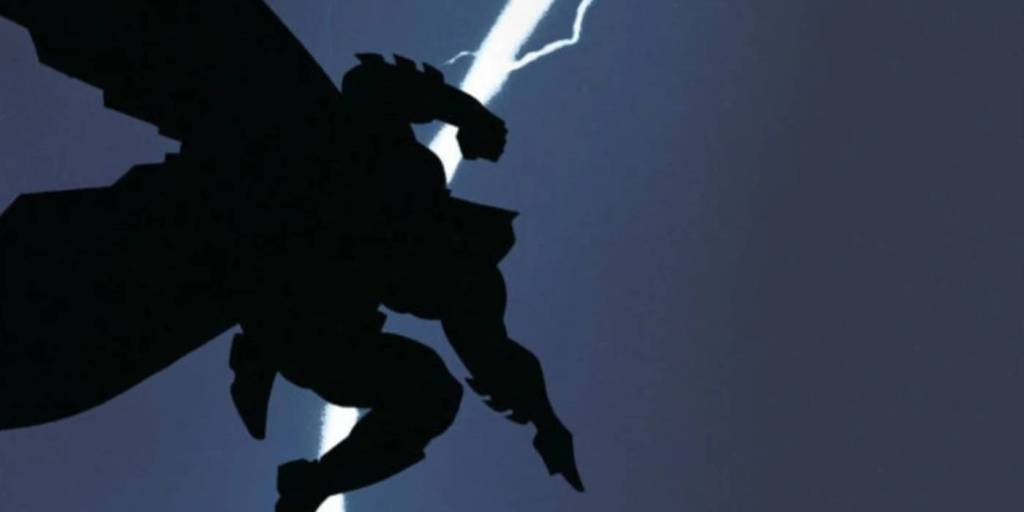
It’s not a secret that Frank Miller’s The Dark Knight Returns is one of the most iconic works in comic history, but it also earns its place in mental health conversations for how it treats Batman’s fractured psyche as the heart of the story. Years after hanging up the cowl, we find a mid-50s Bruce who cannot sit with himself. The city’s noise pokes old wounds and he goes back to the only routine that quiets his head — being Batman. Vigilantism takes more than it gives, but it offers Bruce one thing he cannot find elsewhere, which is focus. That focus is not what one might call health. It’s a painkiller with rules, and the story’s most honest realization is that sometimes a painkiller with rules is the only thing a person will accept.
9) Daredevil: Born Again
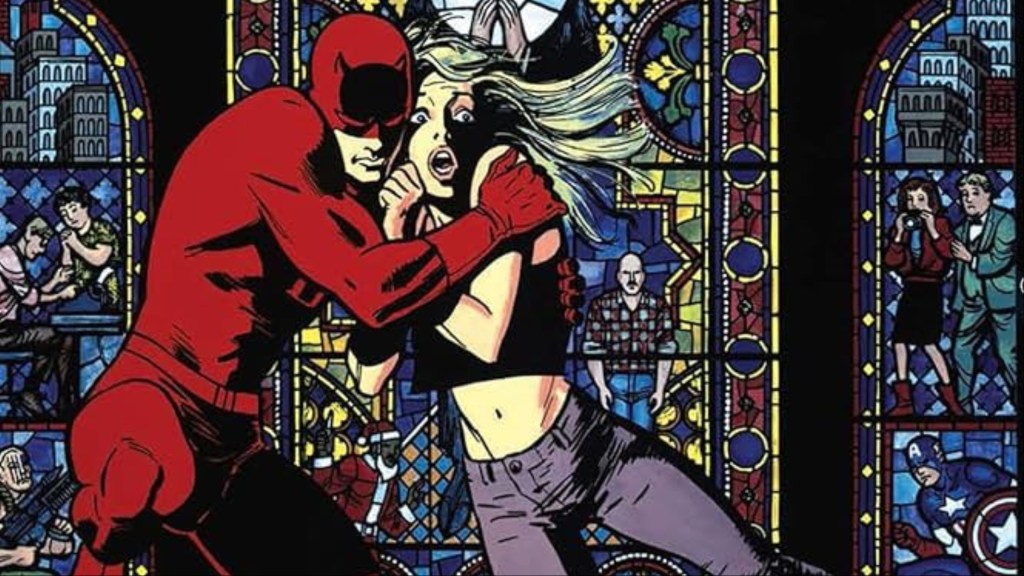
Daredevil: Born Again originally ran in Daredevil issues 227 to 233 and follows Matt Murdock as his life is taken apart piece by piece by his greatest enemy Wilson Fisk, the Kingpin. After hitting rock bottom, however, Matt rebuilds with his Catholic faith and the steady care of friends. The takeaway feels grounded — nobody gets through the worst parts of life alone. That’s a quietly modern insight. The story understands that lone heroism without support is a fantasy and that the real miracle is the ordinary work of getting through the days.
8) The Vision

The Vision is one of the most formally controlled, character-driven Marvel stories of the last decade, and it reads closer to literary sci‑fi or Shirley Jackson suburbia horror than to capes-and-punches. Written by Tom King and illustrated by Gabriel Hernandez Walta, it tells the story of Vision attempting to live a “normal” suburban life by creating his own family of synthezoids. You can come for the high-concept sci-fi, but you’ll stay (and ache) for how painfully recognizable it makes the desire to be “normal,” and the harm we’ll rationalize to get there.
7) Moon Knight

Moon Knight is often called Marvel’s Batman, but that comparison sells him short because Marc Spector’s struggle with Dissociative Identity Disorder makes him a very different, complicated hero. Over the years, there have been many memorable runs, but Jeff Lemire and Greg Smallwood’s 2016–2017 series stands out for its nuanced and sensitive portrayal of Marc’s mental health.
The story opens with Marc waking up in a psychiatric hospital where the doctors insist his entire superhero life is a delusion. From there, the world keeps shifting under his feet as Marc escapes the hospital and embarks on a journey through shifting realities. The series is about Marc choosing himself on his own terms. It frames empowerment as accepting every part of who you are while rejecting anyone who tries to control your story.

6) Fun Home

Alison Bechdel’s Fun Home tells the story of growing up gay in small-town Pennsylvania while her closeted father lived a secret life that ended in suicide. The book gets its ironic title from the family funeral home business — probably the least “fun” place imaginable for a kid. Fun Home very much tackles mental health, both directly and indirectly. Bechdel documents her childhood OCD rituals and later therapy, linking compulsion to control. Overall, Fun Home uses the comics medium to express how psychological coping mechanisms develop when emotions have nowhere else to go.
5) Mister Miracle
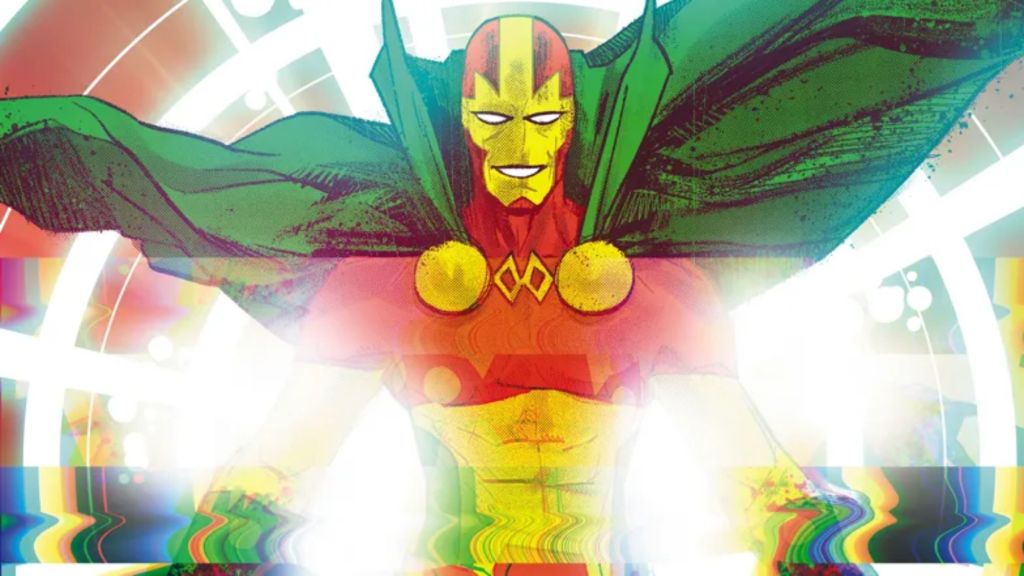
Mister Miracle is a DC Comics character created by Jack Kirby as part of his Fourth World saga. The comic follows Scott Free, who is the son of Highfather of New Genesis but was exchanged as part of a peace treaty with Darkseid of Apokolips. Scott grows up on the planet Apokolips, eventually escaping to Earth where he becomes the world’s greatest escape artist, taking on the name “Mister Miracle.” The more recent acclaimed 2017-2018 series by Tom King and Mitch Gerads took a darker approach, examining trauma, depression, and the nature of reality itself, while questioning whether Scott’s “escapes” are actually real or elaborate delusions. For anyone looking for a story that’s as much about the heart as it is about heroics, Mister Miracle is a masterpiece.
4) Epileptic

If you enjoy introspective stories, Epileptic by David B. (Pierre-François Beauchard) is a must-read. Originally titled L’Ascension du Haut Mal in French, it recounts the author’s childhood alongside his epileptic brother. His seizures dominate their lives, pushing the family to seek alternative treatments, including mysticism, faith healers, and macrobiotic diets, often with little success. Epileptic refuses to provide easy answers, instead presenting the messy reality of how disability affects both the individual and those in their orbit.
3) Ink In Water

Ink in Water by Lacy Davis and Jim Kettner hits close to home for anyone who’s struggled with body image. Lacy embarks on a quest to improve her health, but this quickly spirals into an obsessive cycle of disordered eating and self-loathing. The graphic memoir is told through a mix of text and striking black-and-white illustrations, which vividly convey her emotional and physical experiences. Ink In Water educates and ultimately offers hope without ever promising that life becomes perfect when recovery begins.
2) I Kill Giants

I Kill Giants is one of the most honest portrayals of childhood grief, though it cleverly disguises itself as a fantasy adventure. Joe Kelly and J.M. Ken Niimura tell the story of Barbara Thorson, a prickly fifth-grader who believes she hunts giants with her Norse war hammer while wearing bunny ears. As the story unfolds, we learn that Barbara is using this fantasy world to cope with her mother’s terminal illness and the emotional distance she feels from her family. I Kill Giants resonates with anyone who has faced their inner “giants” and come out stronger on the other side, and its 2017 movie adaptation captures much of the story’s emotional depth.
1) Black Hole

Charles Burns’s Black Hole is a 12-issue comic book limited series that captures adolescent shame and mental health struggles. Set in 1970s Seattle, it follows high schoolers dealing with a mysterious sexually transmitted “bug” that causes physical mutations. Burns captures that universal teenage feeling that something is fundamentally wrong with you that others can somehow sense. The story shows how isolation, shame, and the search for connection feel when you’re young and everything seems catastrophic. Not exactly light reading for a Sunday afternoon, but it sticks with you in ways most comics don’t.
So which comic has been your personal lifeline? Drop your comfort read in the comments!
Most Viewed
-

Image Courtesy of Crunchyroll -

Image Courtesy of TOHO