Following this weekend’s surprising updates about the casting of the next James Bond, one of 007’s most popular movies is celebrating an anniversary. Skyfall, the third film in which Daniel Craig starred as Bond, premiered in theaters 14 years ago today. The film was itself an anniversary celebration, released just over fifty years after Sean Connery’s Dr. No started the Bond movie franchise in 1962. Skyfall’s narrative and many of its stylistic choices coincide with its historic place in the series. In the film, James’ latest mission leads him and others to question if he’s past his prime, with the relevance of traditional secret agents and espionage themselves being similarly doubted. The film also successfully reintroduced some of the franchise’s long-running supporting characters and other traditional elements into the modernized, grounded world of Craig’s Bond, even though doing so drew renewed attention to the series’ unusual approach to continuity.
Videos by ComicBook.com
Skyfall’s opening action sequence ends with M (Dame Judi Dench) ordering James’ colleague Eve (Naomie Harris) to take a risky shot on an enemy mercenary with a sniper rifle, despite James’ close proximity. Eve’s shot misses and hits James in the chest, knocking him from a moving train into a waterfall, after which he’s presumed dead for a time. Though it wasn’t until 2021’s No Time to Die that Craig’s Bond actually became the first version of the character to be killed onscreen, promotion for Skyfall emphasized the idea that this could happen in the earlier film, which along with the anniversary resulted in immense audience intrigue, hence why Skyfall is still the series’ highest grossing entry at the box office.
Skyfall Created a Modern Take on Classic Bond Mythology
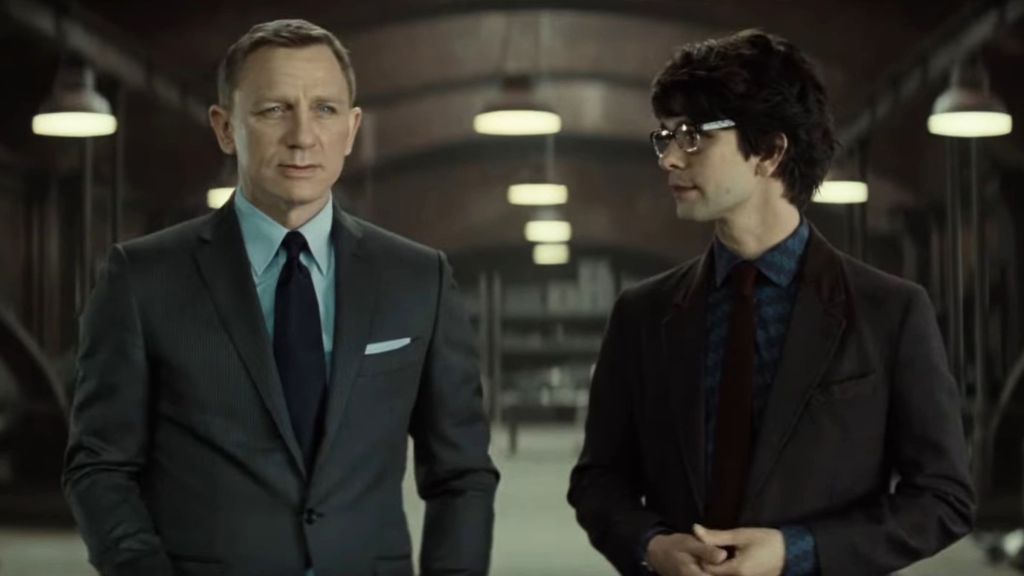
Following a title sequence set to Adele’s Oscar-winning theme song, the film resumes three months later. James had gone into hiding after the shooting but returns to MI6 after the agency’s London headquarters is struck by a devastating terrorist attack. Though James’ physical injuries and the obvious psychological toll of the shooting lead others to question the decision, M allows him to return to active duty as part of the investigation. Meanwhile, the quality of M’s leadership of MI6 and the necessity of programs like the 00 section are subjected to government scrutiny. James and company eventually discover that the mastermind behind the attack is a former agent named Raoul Silva (Javier Bardem,) who is motivated by an intense grudge against M, his own former commanding officer.
Craig’s first two Bond films, especially 2006’s Casino Royale, are known for rejuvenating the series for the modern era with plots that are seen as relatively realistic and more serious than those of many previous entries, with their style often being compared to those of contemporary action series like Matt Damon’s Bourne trilogy and Christopher Nolan’s Batman movies. While Skyfall’s style is largely similar, the film does reintroduce and update some of the more farfetched and comedic aspects of the franchise. Ben Whishaw portrays the youngest onscreen version of Q, James’ MI6 quartermaster, with whom James develops a humorous friendship similar to the dynamics between past versions of the characters, though the inventions Whishaw arms Craig with are less outlandishly high-tech than those previous Bonds used. Eve is likewise revealed as the Craig-era version of Miss Moneypenny, the co-worker past Bonds frequently flirted with, and she begins her traditional position as secretary to the new M, Gareth Mallory (Ralph Fiennes) at the end of the film, despite having demonstrated her potential for field work. Bardem’s unhinged performance also makes Silva a more bizarre, otherworldly presence than the villains of Craig’s previous films, with the character often being compared to famous earlier Bond villains and the character of the Joker from the Batman franchise, including both Heath Ledger’s grounded interpretation of the latter from Nolan’s The Dark Knight and more fantastical versions.
Skyfall Honors Past James Bond Movies
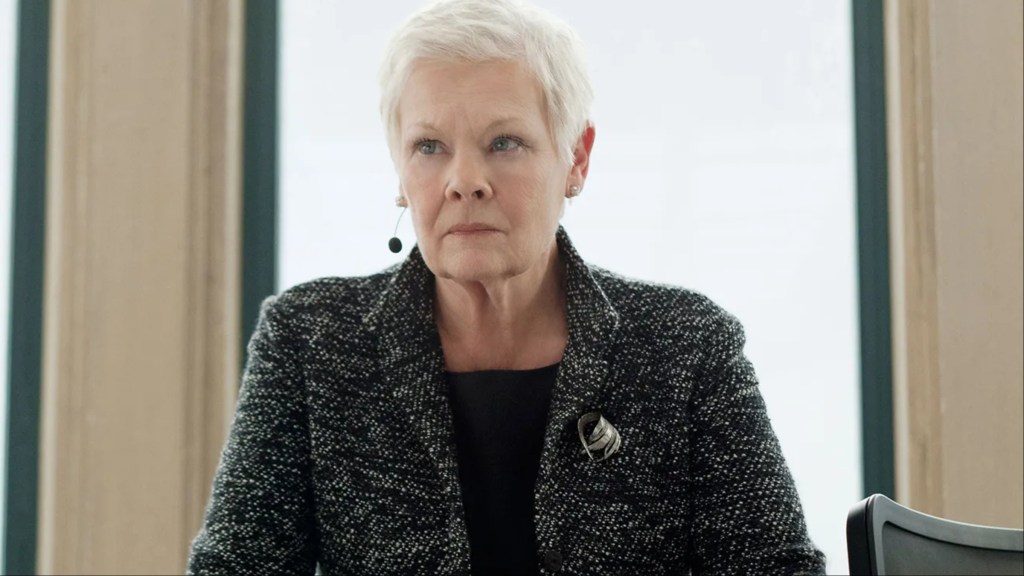
After Silva attempts to assassinate M, she and James flee London in the latter’s personal car, an Aston Martin DB5, which is the same model Connery’s Bond was often shown driving. While many viewers accepted and appreciated this as a simple, amusing Easter egg, others viewed it and certain other aspects of the film as evidence supporting or undermining popular theories used to interpret the franchise’s continuity. The Bond films’ approach to continuity has always been loose, which is of course understandable given the series’ length. The simplest and most common understanding of the series as a whole is to view each actor’s tenure as Bond, no matter how many films it lasts, as taking place in its own isolated narrative world. But this is complicated by the fact that even films starring different actors sometimes reference one another’s events, and that some members of the supporting cast remain in their roles alongside different Bonds. Dench herself is arguably the most famous example of the latter trend, having played M in all four of the films in which Pierce Brosnan starred as Bond, before continuing into the Craig era.
A more divisive interpretation asserts that “James Bond” is a code name, used by different agents who successively serve in the position of Agent 007, similar to how Mallory replaces Dench’s M after her death in Skyfall. This idea posits that all of the first five Bond actors’ films (with the possible exception of Connery’s Never Say Never Again, which was an outlier for various reasons) take place in the same continuity, despite the various inconsistencies this creates between specific pairs of entries. But while the inclusion of Dench’s M initially allowed the Craig era to fit into this interpretation, Skyfall itself explicitly disproves the code name theory in relation to Craig’s Bond. The film’s final action sequence takes place at James’ childhood home, the caretaker of which knows him by his same name. His parents’ graves are also shown, confirming their last name was also Bond.
Skyfall did lead to some increased interest in and support for yet another interpretation of the Craig films, specifically. Though Casino Royale is the actual origin story of Craig’s Bond, showing some of his earliest missions as 007, Skyfall’s ending, in which James resumes work under a male M alongside traditional co-workers like Q and Moneypenny, is noted for closely replicating the status quo of the Connery films. Some have consequently interpreted Craig’s 5-film tenure as a modernized remake of the Connery era, especially given that the two remaining films continued to use the DB5 and included what were depicted as James’ earliest encounters with the villainous Spectre organization. Ultimately the Easter eggs’ implications about continuity, or lack thereof, matter less than their main function of adding to Skyfall’s larger effort to celebrate the franchise’s first 50 years, which it did excellently.
Do you agree that Skyfall is among the best Bond films? Discuss in the comments.
More Movies
-
Image Courtesy of Marvel -
Courtesy of Paramount Pictures