The Star Wars galaxy, as the name of the franchise suggests, is not the place to be if you are hoping for a calm, peaceful existence. Even outside of the various empires, republics, orders and other miscellaneous factions that have risen, fought, and fallen over the galaxy’s vast history, there are plenty of environmental threats to contend with, ranging from the deadly cold weather of Hoth to the giant mutant rats roaming the lower streets of Coruscant (yes, really). Simple survival in the worlds of Star Wars, not to mention the vast and often-lawless areas of space between them, requires wit, fighting prowess, a good ship, a good weapon, knowing the right people, and always keeping one eye on the lookout for danger.
Videos by ComicBook.com
Despite this, some races do not seem content to merely survive within this hostile galaxy, choosing instead to thrive in it with martially-based cultures and great feats of combat that place them, in the galaxy and in the fandom, among Star Wars’ most iconic warrior races.
5) Tusken Raiders

The Tusken Raiders, also known as Sand People, are the native people of the desert planet Tatooine. The scarcity of vital resources such as water has fostered combative mindsets and a warrior-skill-based culture among the Tusken Raiders, with younger males in the species have to slay a Krayt Dragon to gain an adult role in their society. The Tusken Raiders’ signature weapon, the Gaffa stick, is an object of great personal importance to its owner, with the process of locating the base wood and carving the staff being a culturally-central spiritual process comparable to Jedi traditions around the creation of lightsabers. While close ties to their home planet limit them to a local, rather than galactic, presence, their unforgettable appearance as an early threat to Luke Skywalker in A New Hope easily lands them a place among Star Wars’ most iconic antagonists.
4) Mandalorians
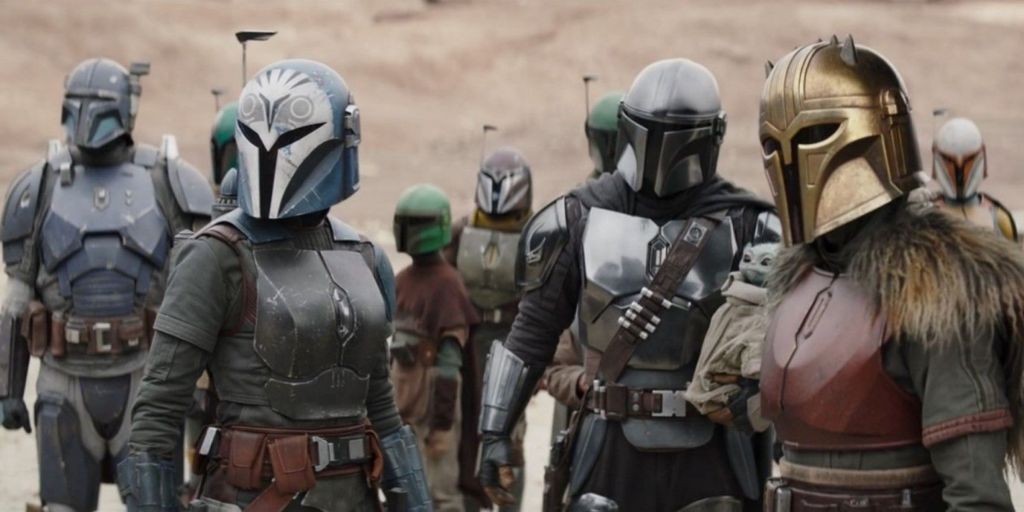
With the series bearing their name having run for three seasons and a movie, it’s no secret that the Mandalorians (or Mando’ade in their native tongue of Mando’a), with their distinctive helmets, stoic attitudes, and preference for distinct weaponry, are one of the most visually recognizable cultures of Star Wars canon. In fact, Jango Fett, the man whose DNA was used to create the Old Republic’s army of Clone Troopers, was himself Mandalorian. Given this, it seems likely that the Clone Troopers’ helmets, the in-universe ancestor of the Original Trilogy’s iconic Stormtrooper helmets, are themselves an iteration on the helmet design protected by the Mandalorian people.
On their homeworld of Mandalore, society functions within a rigid set of power structures, family units, codes of honor, and religious and secular tradition. Combat is central to Mando’ade culture, with a person’s fighting skill both being a mark of respect and a way to advance socially. Similarly, a Mandalorian’s armor, made of a metal called Beskar which is found only in the Mandalore system, is a central part of its owner’s identity. Passed down over centuries and modified by each wearer to suit their own body, lifestyle and aesthetic, Mandalorian armor is closely guarded by its owner as a part of their personal identity and history, with some Mando’ade religious sects refusing to remove their helmets in the company of other sentient beings. The combination of unique and easily-recognizable appearance, martial skill, and multiple influential individiuals such as Jango and Boba Fett, Sabine Wren, and Duchess Satine Kryze, the Mandalorians easily earn their place on this list.
3) Dathomirian Zabraks
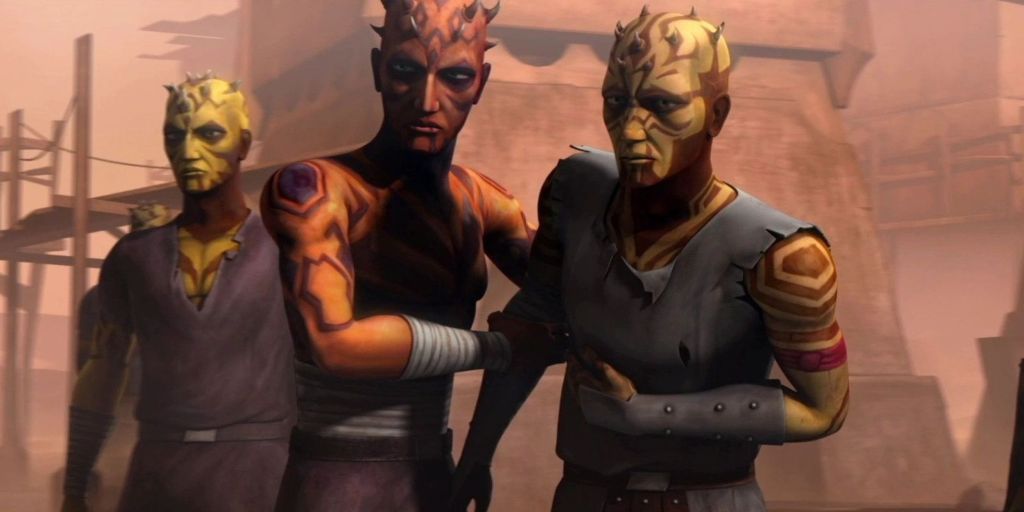
While the Zabraks are, as a whole, one of the galaxy’s more formidable species, those home to the swampy planet of Dathomir possessed a distinctly terrifying culture, a fact illustrated by their most famous member, the former Sith known as Maul. Along with his brother, Savage Oppress, Maul grew up within a strict matriarchal society, where males engaged in constant trials of endurance and combat, designed to build tolerance to pain and leave only the strongest alive. Female children, meanwhile, were raised to become Nightsisters, deadly warrior-witch-priestesses under the watchful eye of Dathomir’s ruler, referred to as the Mother. The Mother was also the head of the Dathomirian religion, this intermeshing of spirituality and violence being central to their society. The Nightsisters’ magic, which drew on symbiosis with the planet’s ecosystem as well as on some connection to The Force, was used to enhance the strength and durability male and female warriors alike.
These imbued powers could even push past the limits of death, as seen when the Nightsisters reanimated their own deceased sisters as an undead horde to protect Dathomir from invasion, and, arguably, when Maul survived his own bisection. Prepared since birth for a life of magically-enhanced combat and potentially exempt from permanent death, the Zabraks of Dathomir easily rank among the galaxy’s most intense, intimidating and committed warrior peoples.
2) Yuuzhan Vong
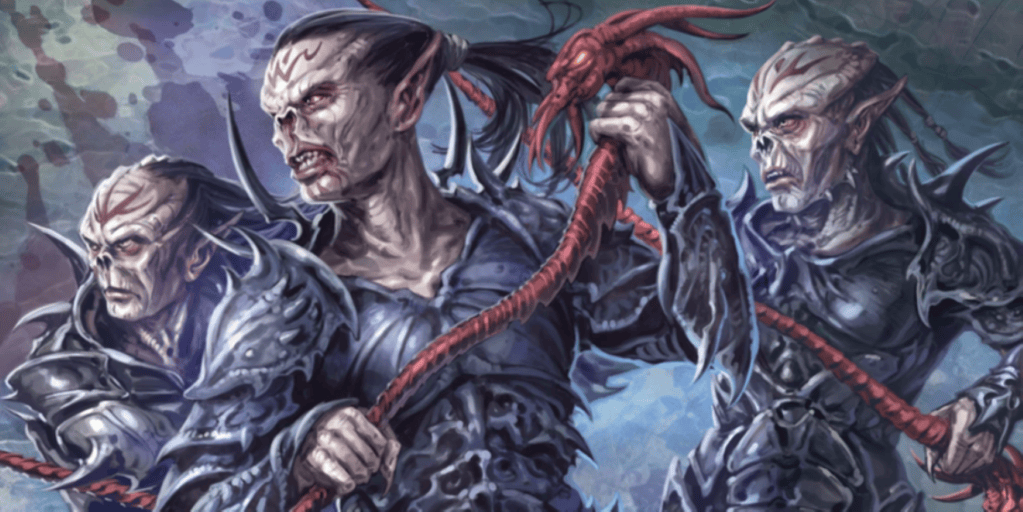
While limited, at time of writing, to Legends canon, the Yuuzhan Vong’s overwhelming power, method of attack, and the threat they posed to the post-imperial New Republic warrant them a high place on this list. The New Republic of Legends canon, led by Leia Organa after the fall of the Galactic Empire in the events following the Battle of Endor (more on that in this list’s final entry) was still in the process of quelling remnant imperial sects and stabilizing the newly-reformed senate when rumors began to filter in of strange instances of biological warfare on the galaxy’s wild Outer Rim. The source of these attacks turned out to be the Yuuzhan Vong, an extra-galactic warmonger species that had been making slowly advances into the galaxy for several millennia.
In a seeming paradox, the Yuuzhan Vong refuse all technology in favor of biological construction and enhancement, including their warships, weapons, and own physical bodies, and carry a deep religious respect for pain— yet, despite their unique degree of physical and spiritual enmeshment with biology and physical sensation, they seem to exist entirely outside of The Force. During the ensuing war, the Yuuzhan Vong would cut their way through the galaxy, conquering many worlds and leaving the New Republic in a panicked and shattered state, before eventually being pushed back to their new homeworld of Zonama Sekot amid the Unknown Regions, and forced to surrender by Luke Skywalker and Jacen Solo.
1) Ewoks
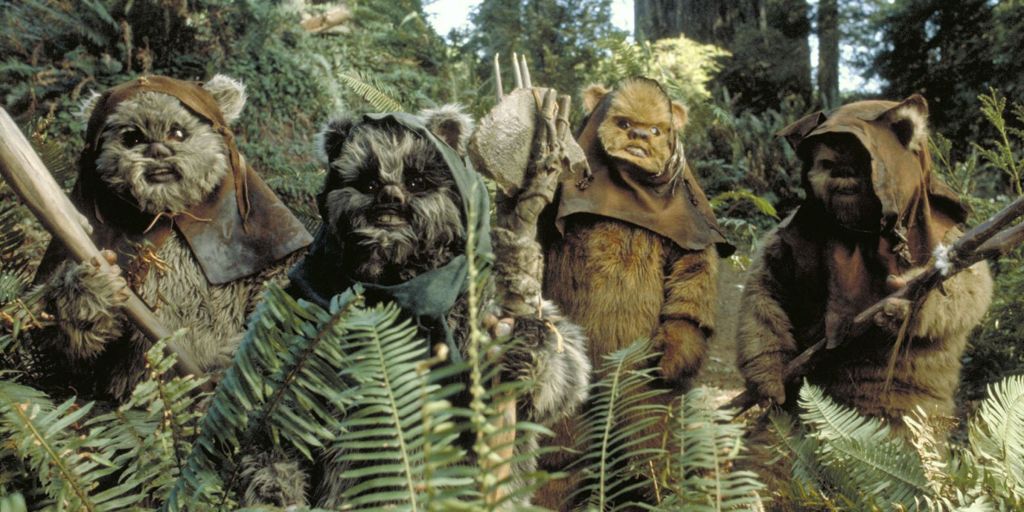
While they are an unorthodox entry to this list, given their lack of interest in warfare both on and off their home planet of Endor, the Ewoks bear inclusion due to their central role in taking down the Death Star II’s shield generators on Endor, allowing for the space station’s destruction and ensuring the fall of the Galactic Empire. A lack of interest in violence does not necessarily mean a lack of skill, and few races in the Star Wars galaxy show this more clearly than the Ewoks. When the Empire took interest in Endor for military use, Ewok culture revolved primarily around hunting and foraging, with no history of combat in recent memory.
This was to swiftly change, however, as the small, bearlike race quickly adapted the skills and tools used for hunting— slings, short knives, rope traps and treetop ambush strategies— turning them into lethally effective tools of warfare. Equally able, and willing, to take down at AT-ST Walker or slit the throat of a Stormtrooper, the Ewoks’ are a species comfortable in combat against other sentients— a fact which may have a darker context, as while the Ewoks only nearly eat Han Solo and his group when they stumble into their hunting nets, the presence of Ewok musicians using empty stormtrooper helmets as drums in the celebration after the Battle of Endor suggests that this was far from an empty threat, and that Ewoks’ understanding of their relationship to other sentient beings, namely their relationship on the food chain, could be something deemed unthinkable of in most of the galaxy. This dark possibility, combined with the Ewoks’ capability to shift tool, skill and community function from peace to warfare near-instantly and their instrumental role in defeating the Galactic empire, earns them the top spot on this list.
More Movies
-

IMAGE COURTESY OF WARNER BROS.