Get Jiro is taking over Adult Swim as the next major animated series to come to the block from DC Studios, and ComicBook got the chance to speak with the minds that helped to make it all happen. Based on the original comic series written by the late Anthony Bourdain and Joel Rose, with illustrations provided by Langdon Foss and Alé Garza, Get Jiro introduces a spicy world where chefs have become the dominant social powerhouse following a mysterious apocalyptic event that changed the world forever.
Videos by ComicBook.com
There was quite a lot of ground to cover for Get Jiro as not only did the animated series’ first season take on the material from the original comics, but also introduced some new elements to further expand on its world. Speaking with ComicBook ahead of the new series’ Adult Swim premiere, executive producers Alessandro Tanaka, Brian Gatewood and Jordan Blum opened up all about how the comic made its way to screen. Read on below for our interview (which has been edited for length and clarity).
On Making Get Jiro Into an Animated Series

NICK VALDEZ, COMICBOOK: Could you talk a bit about how Get Jiro as an animated series came together? What about the comics initially drew you into this as something to pursue with animation?
ALESSANDRO TANAKA: Well it came to Brian and I, and the minute we read it, we were kind of all in. It just so randomly happened that Bourdain wrote this with a guy named Joel Rose. In my twenties, I was Joel Rose’s neighbor, and I hadn’t talked to him in years, so it was just this weird thing of all these things coming together. So we jumped on it, and then it took a while to actually get the green light. But once we did, Brian and I come from live-action, we don’t have any animation experience, so we realized we needed a heavy to help us with that. And that’s when Jordan came on board.
BRIAN GATEWOOD: I’ll also say that when this was first published, Peter Girardi at Warner Brothers Animation bought it and Bourdain and Rose were themselves going to do this adaptation. And then sadly, Anthony passed away, and so that’s when they started trying to find someone else to carry it on. We were lucky enough to be the guys that were able to continue it. It was a long road, particularly from that this was meant to be made even years before this.
JORDAN BLUM: We were very lucky to have Joel Rose in the writer’s room helping steer us, telling us stories about Anthony, and also their intentions behind the book and philosophies. So though we didn’t get to work with him, we had a presence of him there.
That’s awesome because that’s actually what I wanted to ask you guys about next! [Get Jiro] is about the importance of cuisine and cooking, and thematically what that represents for each character. Is that something from the comics that you wanted to be fully sure was captured in this adaptation?
GATEWOOD: 100%. Our first job was to do justice to the original graphic novels and also just to Bourdain’s overall philosophy on cuisine and life and how those things mix together. That was basically our North Star…it was really the central Bourdain philosophy, food bringing people together, cutting across cultures, bringing people with differences to the same table. So we just had a ton to work with, not only on the food side, but also as Joel spoke to us about all the different Japanese films, the samurai films and Yakuza films that Bourdain was obsessed with that helped inspire the graphic novels themselves. So it was an interesting cross section of food and cinema that I think inspired it and we just tried to carry forward in terms of turning it into a show.
In working with Joel on the adaptation, did that factor into what was changed and expanded from the original story? Because this debut adapts the Blood and Sushi prequel, and origin story. Did you have in mind how much you wanted to get across from the series within the number of episodes?
GATEWOOD: I would say we obviously would love to do many, many seasons of the show and expand it, and we do know per Joel where they were planning to take more of the books. But yeah, we felt like if we’re going to get one shot, let’s make sure that we get what Anthony and Joel originally intended in the two books that they had the time to give the world. So yes, and that was a challenge doing that in 10 episodes, but hopefully we did a job that gives a sense of satisfaction if you’ve read both of those comics.
BLUM: I think we all digested the comic and then also we came in with a million ideas because it’s so inspiring. The world is so well thought out, and fleshed out that it just began like, “Well, what would the police look like? Or what does an assassin look like in this world?” Things that would be just on the edges of what’s in the book, and it allowed us to build out the world. But it all comes from the source material.
Figuring Out Get Jiro’s Tone & Food
How did you all figure out the tone? It’s a little inherently wacky with chefs taking positions of power, so what was the process in making sure you’re keeping as grounded as you can, but still almost kind of wink at the screen a bit?
GATEWOOD: I think a lot of that was trying to take the world very seriously. In fact, early in the writer’s room, we wrote up on whiteboards how the government would actually work in this world. What departments from today’s world would actually still be existing, and what in the hierarchy of the government would be the more important departments. So we tried to come from a place of taking it totally seriously, knowing that it’s a pretty out there idea. As we spoke earlier about the Japanese film influences, Bourdain was a big just lover of cinema, we were able to talk to Joel a bit about that.
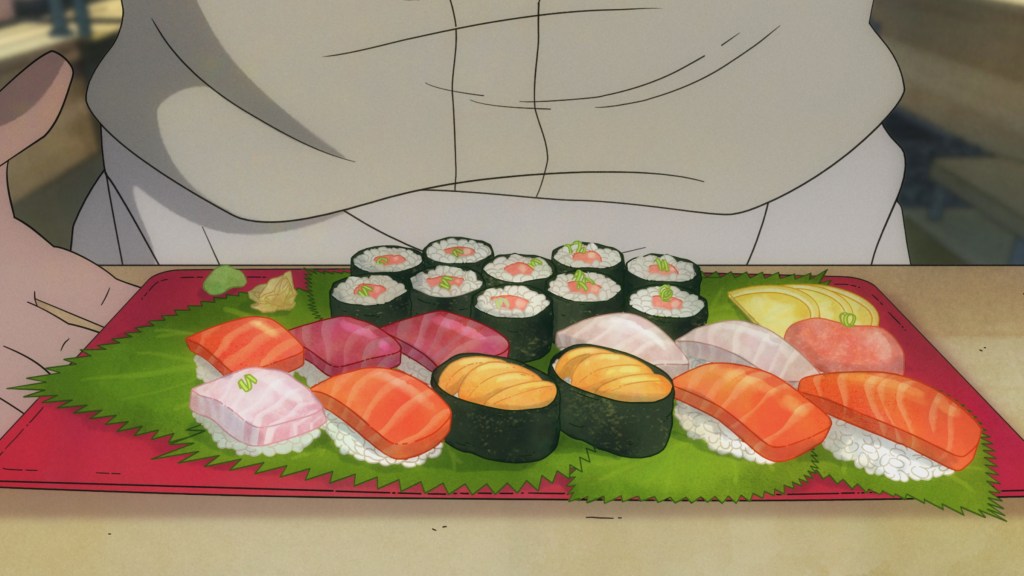
So we expanded it into some more contemporary works and trying to find that mix of tone was tough, but it was really trying to find authenticity in the food. There’s nothing, even though we may have some jokiness with the food, the food is totally authentic. In fact, we had Matt Goulding, who was a friend and coworker of Bourdain’s, he would read every first draft and then we would discuss the type of dish that was going to be in this episode and make sure that we were choosing the correct dish and we had the correct ingredients.
Then he would watch the animatic and make sure that the food was depicted properly visually, including how it was being prepared all the way through to the final cut. So having a sense of authenticity with the food and then trying to approach the world as a very realistic world, I think helped try to keep us tethered to a reality, its own reality. Then as Jordan has said, that’s sort of the fun is finding those two things.
BLUM: Just the blend of it is an absurd world, but the characters take it very seriously. I think figuring out what’s pushing it too far where it becomes farce, and where you’re walking that line perfectly where we’re having the most fun we can in a food obsessed world while still feeling like there’s real stakes to it.
Fleshing Out Get Jiro’s Violence
Speaking to that fun and speaking to pushing things relatively far, we get a lot of awesome blood and gore in this show, a lot more than I was expecting. I think especially during the prison episode, which is high octane action and it looks totally different than the rest of the show itself. So what went into deciding, okay, how brutal is too brutal?
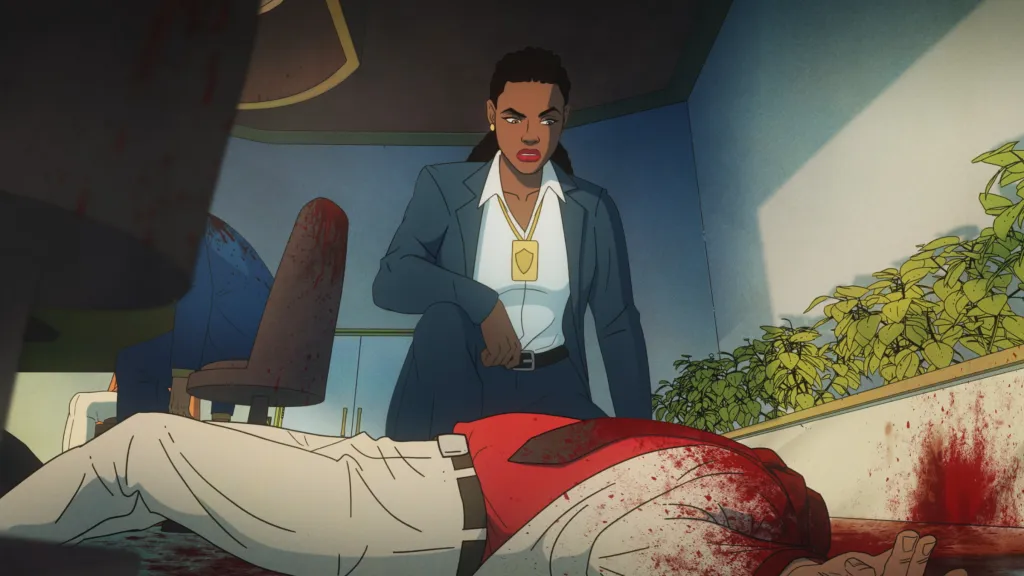
BLUM: I always thought of it of we have all these gorgeous closeups of chopping, and the violence…cooking is weirdly inherently violent to me and the gore matches it. It’s like, well, what if you applied the things you do to food to faces? That was some of the fun of even I think the first day we were like, “What are fun ways to even kill people in this world? What does a crème brûlée to someone’s face look like?”
It was just a fun exercise in that. We talked about how we can push the gore in a way that Tarantino gore is heightened, where it’s not living and festering in the brutality. It’s kind of comedic and operatic. I think we tried to lean into that, that is the fun of doing that.
Get Jiro is now airing with Adult Swim, Saturdays at midnight ET/PT on Toonami, and episodes are then streaming with HBO Max the next day.