Gene Roddenberry is best known for creating Star Trek, but it’s not the only science fiction series he made. After Roddenberry’s death, his widow, Majel Barrett-Roddenberry, used his notes to provide a basis for Earth: Final Conflict. The show ran for five seasons from 1997 to 2002, and its success led to the greenlighting of another posthumous Roddenberry project, Gene Roddenberry’s Andromeda.
Videos by ComicBook.com
Over its run, Earth: Final Conflict aired 110 episodes while seeing high turnover in its main cast. This led to most major characters being killed off or removed from the story, forcing the show to focus more on its overarching themes than on individual character beats. Earth: Final Conflict shares some similarities with Star Trek given the show’s premise of alien-human partnership and a futuristic look of Earth, but ultimately the show veers closer towards 1996’s Independence Day than Star Trek. The show became available for streaming on Prime Video in September.
Decidedly Not a Utopia
The conceit of Star Trek, especially during Roddenberry’s tenure, is a space utopia. It isn’t to say that conflict doesn’t exist — it sure does — but rather that people can work together in ways they couldn’t before. Captain Kirk’s crew involves not only humans of different races but also different species, such as Spock, the Vulcan. There have been advances in medicine and technology, and the Federation is regarded as a benevolent force for good.
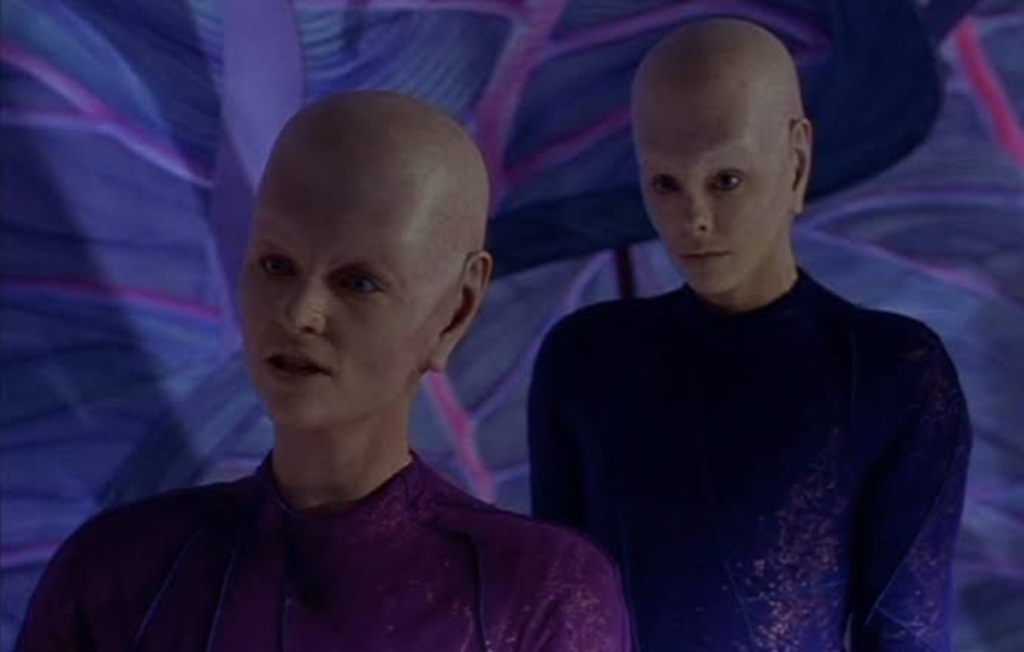
Earth: Final Conflict starts with a similar conceit but moves away from it. In “Decision”, the first episode of the series, the audience is introduced to the Companions, an alien race with the official name of Taelon. The Companions showed up on Earth three years prior to the start of the series and have peacefully coexisted with humanity up to that point. By sharing their knowledge and technology, they have eradicated child hunger and made many human ailments irrelevant. Additionally, the Companions are an androgynous race, which the show is quick to point out. Guards discuss security details for the rally, and one uses “he” as a quick shorthand, only to be corrected that neither “he” nor “she” properly apply to the Companions.
The crux of the episode’s propelling force isn’t the Companions’ arrival, but rather a failed attempt on the Companions’ leader, Da’an. Before the event, Da’an had limited security protocols, insisting that humans had never given him a reason to fear for his safety, and he wasn’t going to start now.
Very quickly, the illusion of the Companions as universally beloved shatters. Some humans are suspicious of the Companions and have actually formed an underground resistance movement, such as Jonathan Doors, the shooting’s unintended victim. The audience soon learns Doors faked his own death to be able to fully devote himself to the resistance.
A Science Fiction Show Through a Spy Lens
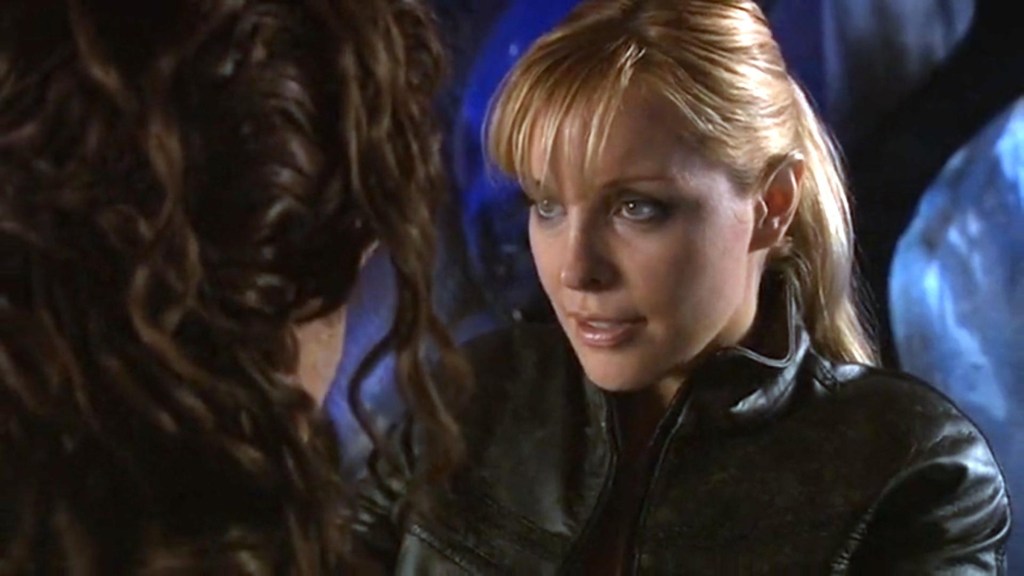
From then on, Earth: Final Conflict is more about the politics and playing double agent than the typical trappings of the genre. Detective Boone agrees to join the Companions to figure out their intentions. He’s given a Cyber-Viral Implant that increases his mental capacities and, under regular circumstances, would force him to be loyal to them over all others. It’s only because the Resistance altered the implant that Boone’s able to keep to his mission. He’s also given a bioengineered weapon.
Throughout the first season, the less-than-benevolent science that the Taelons have subjected humans to is revealed. They have installed implants, similar to the one worn by Boone, into humans, and they have forced others into a breeding experiment. It’s taking place in a sci-fi show, but there’s nothing boundary-pushing about it.
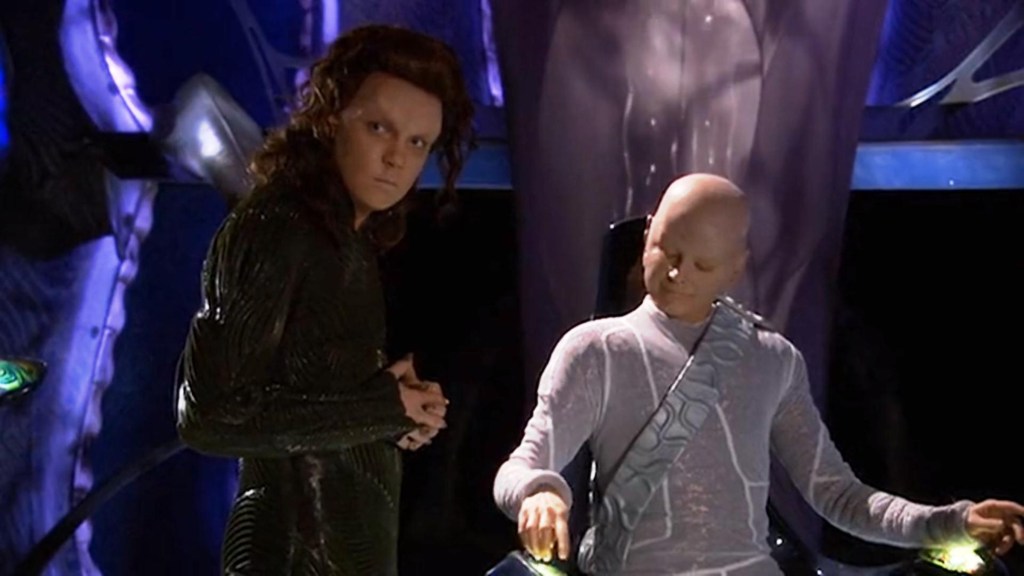
As the series continues, divisions among the Taelons pop up, exemplified in Da’an and his son, Zo’or. Zo’or believes that Taelons are superior to humans and should rule them, while Da’an still believes in peaceful coexistence, however warped their view of that may be. To further complicate things, another alien race is added into the mix: the Jaridians. The Jaridians see Taelon/Human coexistence as humans siding with Taelon and thus pull humans into the Jaridian and Taelon conflict.
Perhaps the most spy-coded element of the show is the frequent character deaths. Characters rarely last longer than a season or two past their introduction. In fact, there’s only one character to appear as a regular for all five seasons — the antagonistic FBI Agent Ronald Sandoval. Otherwise, everybody else could be replaced, even the Taelons. The show took a big swing in its fifth season and switched out the antagonistic aliens with a new species, the Atavus, that were functionally energy vampires.
A Product of Its Time
If the original Star Trek series is a snapshot of the 1960s, Earth: Final Conflict is very telling of the 2000s. The theme sequence feels — both in the music and the transitions — inspired by Buffy, and the frequent alien baby hybrid plotlines feel very twenty years ago. The show was based on notes by Roddenberry, but it would’ve been interesting to see a version of the show’s pilot that was fully written by him. Da’an starts as a sympathetic alien, but as the show progressed, it was hard not to see most Companions as inherently antagonistic. How does that fit with the mythos of Star Trek? Does it have to?
For Roddenberry enthusiasts, the show is worth checking out, even if the special effects can veer towards silly at times. The show has interesting ideas at the very least, and it did run for five seasons, giving plenty for viewers to binge.
What sci-fi hidden gems are on your watchlist? Let us know in the comments!
More TV Shows
-

Image Courtesy of Disney -
Image Courtesy of UGT / Fuzzy Door / MRC