Anyone who’s a fan of The Walking Dead, like I am, knows that, even though this universe has technically been alive since 2010, it still exists on TV in a pretty strange way. There’s no shortage of new shows (we’ve had a solid number of spin-offs by now), and there’s no shortage of familiar characters popping up here and there as a result. What is missing, though, is that basic feeling that all of this is actually leading somewhere. As someone who’s been watching since the very beginning, it feels like the franchise has been stuck for years, moving through different narrative circles, showing how each character keeps dealing with the apocalypse, but never really allowing itself to close a full cycle. The main story officially ended, but emotionally, it didn’t. And that’s not because fans can’t let go — it’s because the franchise itself left too many loose ends to just pretend everything is wrapped up.
Videos by ComicBook.com
That said, this might finally be about to change. The idea of using the spin-offs to eventually bring these characters back together again is something that now seems to be in development. Nothing has been officially confirmed yet, but considering this idea came from a fairly reliable source, and that past interviews have hinted at something similar, it’s possible we’re looking at what could genuinely become an Avengers: Endgame-style moment on TV.
The Walking Dead May Be Close to Getting a Full Character Reunion Series

The Walking Dead has come a long way over the course of 11 seasons, ending with a conclusion that sent several of its biggest characters off in completely different directions. Daryl leaves the Commonwealth on his own (and later reunites with Carol in The Walking Dead: Daryl Dixon); Michonne is alive and sets out on her own journey to find Rick (which leads directly into The Walking Dead: The Ones Who Live); and Maggie and Negan each go their separate ways (only to eventually cross paths again in The Walking Dead: Dead City). But is that it? According to insider Daniel Richtman (DanielRPK), who is well known for sharing rumors, leaks, and early information about movies, TV shows, and games, there’s still a light at the end of the tunnel for fans hoping for a proper ending.
According to the informant, there’s a chance a massive crossover could happen in a brand-new series, on the same kind of scale audiences saw in theaters in 2019 with the Marvel Cinematic Universe. The project would already be in development at AMC. And that’s exciting news, because this kind of report tends to surface exactly when several spin-offs are nearing their end and when The Walking Dead universe feels like it desperately needs a point of convergence. The idea of bringing these stories together doesn’t come out of nowhere; it comes from the realization that the franchise has become too fragmented, and continuing down that path will only weaken the overall impact of everything that came before. And honestly, that’s pretty obvious.
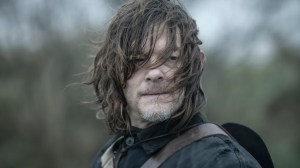
Back in 2024, this topic was brought up to The Walking Dead chief content officer Scott M. Gimple in an interview with TVLine, where he openly expressed his desire to see a reunion happen. “So when it comes to something like [an ‘Avengers: Endgame‘-style, all-series crossover event], yeah, I do have dreams of merging this all together, and I have laid little breadcrumbs toward that, but you never know exactly when and how [it will come together], because of a variety of reasons…” he said. “I will just say that I’m building those pathways, but there could be all sorts of pivots along the way that change it.”
The idea was also brought to Daryl actor Norman Reedus last year. He said he’s totally aware of fans wanting a reunion, but suggested that the franchise shouldn’t be guided solely by online theories and fan demands, arguing that surprise and creative freedom are just as important to the experience. Meanwhile, Andrew Lincoln, who plays Rick, responded with a simple “never say never” when asked about possibly returning to the role in the future.

And honestly, let’s be real that it’s been way too long since Rick and Daryl shared a scene together, right? Who doesn’t want to see them reunited? And this isn’t a small detail or random nostalgia talking. It’s a structural flaw in how The Walking Dead chose to end (or not end) its main storylines. Rick disappeared from the flagship series without reuniting with the people who helped define him (something fans dreamed about for years), and Daryl was left carrying an absence that was never truly resolved. Even though The Ones Who Live gave Rick and Michonne emotional closure, it was clear that this ending was selective.
On top of that, every spin-off focused on characters from the original series keeps leaning into increasingly isolated stories. Daryl Dixon works well as a character study, but it also pulls the character even further away from what made him emotionally relevant in the first place. Dead City, meanwhile, relies almost entirely on the Maggie-Negan dynamic — which is compelling, but has arguably already run its course within its own bubble. These shows aren’t bad, but they’re limited precisely because they lack the collective weight that was always the soul of The Walking Dead. Yes, there’s still an audience for all of them, but anyone who followed this zombie apocalypse universe from the start knows nothing compares to the cultural phenomenon it once was.
Why a New The Walking Dead Crossover Series Is the Right Move

The idea of a crossover is, actually, less about spectacle and more about logical storytelling. An Endgame-style event wouldn’t need to reinvent anything; it would just need to do what the franchise has always done best: put different characters in the same space, force old conflicts back to the surface, and let choices shape the ending. The difference this time is that it would serve as an actual conclusion, not yet another vague “to be continued.” And here’s the frustrating part: the franchise has already proven it knows how to do this. The early seasons worked because everything felt connected — losses, separations, and reunions all had real consequences. Now, it feels like the characters exist in parallel universes that never touch. A crossover would be the chance to fix that and remind viewers that these people survived the same hell, even if they’re scattered across different places now.
There’s also the practical side of things. AMC clearly doesn’t want to abandon The Walking Dead, but keeping multiple spin-offs going forever just isn’t creatively sustainable. At some point, the franchise needs to stop expanding sideways and start looking inward. The main series itself went through highs and lows, often struggling to figure out where it was headed, and at times even losing its core identity for a portion of its once-loyal audience. An event like this would make it possible to close multiple arcs at once, without rushed endings or isolated conclusions that ignore the bigger picture — while also reconnecting with what originally made so many people fall in love with this universe.
And of course, there’s a risk involved. A poorly executed crossover could easily turn into a shallow parade of cameos and rushed decisions with little substance. But the risk of doing nothing is even bigger. If The Walking Dead ends its stories as a collection of disconnected epilogues, the final feeling will be fragmentation, not closure. And that would be a waste for a franchise that, even with all its missteps, knew how to handle tension, emotion, and consequence better than most shows on TV (and yes, even with its bumps along the way).

At the end of the day, I (and I’d argue most fans) don’t want a crossover because it sounds big and marketable. I want it because it makes sense. Because it’s long overdue for these stories to collide again. Because The Walking Dead shouldn’t end as a set of disconnected afterthoughts. An Endgame-style event wouldn’t fix every problem the franchise has, I know that. But it would fix the most important one: giving both the characters and the fans a shared, earned sense of closure after such a powerful run on TV. After everything that’s been built over the years, that shouldn’t feel optional — it should feel inevitable.
This is the last real opportunity to give meaning to the current dispersion. It’s about acknowledging that these stories belong to one another. Characters like Rick, Daryl, Carol, Maggie, and Negan aren’t isolated pieces; they’re part of the same larger narrative. Pretending otherwise only weakens the identity, the purpose, and the impact of a universe that firmly made TV history.
What do you think? Leave a comment below and join the conversation now in the ComicBook Forum!
Most Viewed
-

Image courtesy of Netflix -
Image Courtesy of Netflix -

Image Courtesy of Crunchyroll