Known for her stint on Captain Marvel and Wonder Woman Historia: The Amazons, the latter of which won her an Eisner Award, Kelly Sue DeConnick is no stranger to feminist comics. Although her indie work may be less known, it is hardly of lesser quality. Her collaboration with Valentine de Landro, Bitch Planet, may just be the perfect source material for the next sci-fi adaptation to be made from a comic.
Videos by ComicBook.com
Bitch Planet ran for ten issues between 2014 and 2017, with a follow-up anthology series called Bitch Planet: Triple Feature, which ran for five issues. Each Triple Feature contained three stories from different writers and artists, including many of the top creatives in the industry today. Such creatives included Matt Fraction, the current writer on Batman; Che Grayson, who co-writes Absolute Catwoman and wrote for the Absolute Cassandra Cain one-shot; and Vita Ayala, known for their work on New Mutants during the Krakoan X-Men era.
Bitch Planet technically never ended. Both DeConnick and de Landro have expressed wanting to go back to it, but never quite found the right time. The themes of incarceration and feminism only got more and more relevant over the years, and DeConnick has mentioned at conventions that the book is hitting a little too close to home. This relevance — in the wake of television successes like Orange Is the New Black, The Handmaid’s Tale, and the follow-up The Testaments — makes Bitch Planet perfect for adaptation.
Taking the Women in Prison Genre to Space
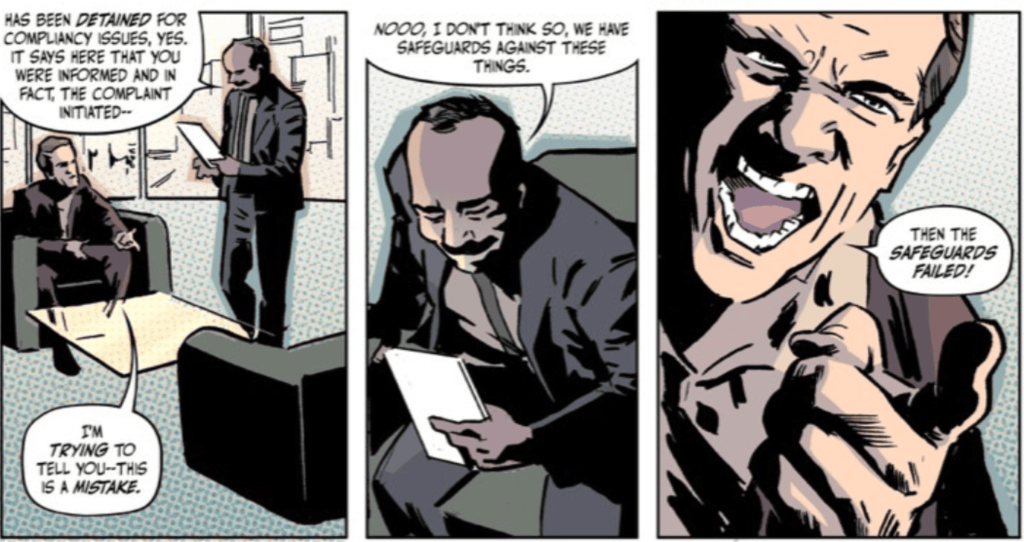
Bitch Planet takes place in a dystopian reality where not only are non-compliant women sent to prison, but they are also sent to prison in space. Crudely referred to as Bitch Planet both in-universe and in the comics’ title, the Auxiliary Compliance Outpost is exactly what readers would expect.
DeConnick created Bitch Planet out of a love for the 1960s and 1970s’ women’s prison movies and wanted to spotlight the intriguing and difficult aspects of women’s lives in prison. Nudity is common throughout the comic, but it isn’t meant to be cheesecakey or serve as eye candy. Instead, it’s meant to help flesh out these characters. One of the most striking moments from the first issue of Bitch Planet is the leader of Auxiliary Compliance Outpost explaining that the prison jumpsuits are one-size-fits-all when that clearly isn’t the case. One woman struggles to put on, given that it barely has room for just one of her tits.
Prison media in general is packed with existential dread — prisoners are forcibly removed from society, stripped of their rights and belongings, and often feel trapped. However, Bitch Planet takes it to a whole new level by transporting them to a different planet. A husband of one of the prisoners, Maria Collins, explains that people never hear of escapees from Bitch Planet, emphasizing the prison as a dead end. Besides, even if they did escape, where would they go?
Shows like Orange Is the New Black — which the creators avoided watching in fear of taking too much inspiration from — inevitably allow for reintegration into society by the end. Such a fate doesn’t seem possible for the protagonists of Bitch Planet. They’ve committed too many trespasses, whether it be gluttony, pride, weakness, or wickedness. The women are seen as beyond correction, and it is for the good of Father Earth — an interesting subversion given how Earth is typically referred to as a Mother — that they are sent away, lest a sickness spread.
How a Bitch Planet TV Show Would Work
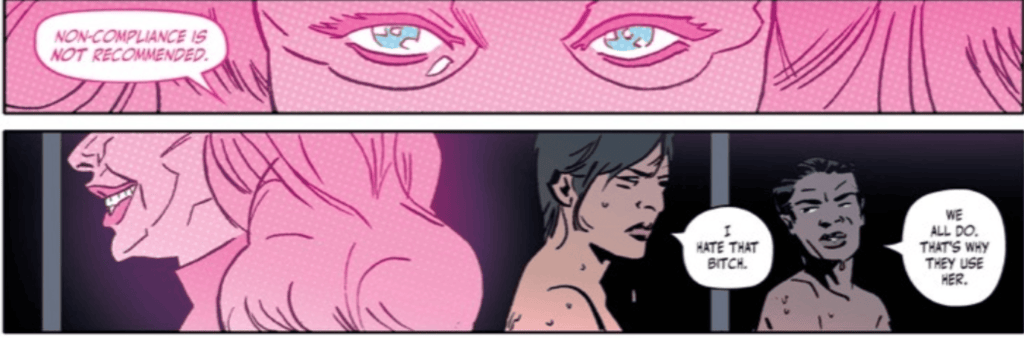
As written in the afterword of the first issue of Bitch Planet, “the most striking thing about Bitch Planet is that we’re already on it.” Bitch Planet was unafraid of social commentary, both in and out of its story, remarking on not only sexism, but racism, fatphobia, and the intersections that they cross. Bitch Planet uses a decoy protagonist in Marian Collins, a middle-aged white woman who became so “non-compliant” that her husband was driven to an affair. The comic quickly kills her off and pivots to Penelope. It pivots to a fat, black woman, emphasizing how African American women are 3x more likely to be incarcerated.
Penelope may not be the standard sci-fi protagonist, but that’s part of why she works. She’s the type of woman that the prison wardens expect to be able to break easily, but they can’t. At one point in the comic, she’s forced to look into a mirror that’s built to show her true ideal self. The wardens assume it’ll show a thin, beautiful, and compliant woman. To their chagrin, however, it shows Penelope exactly as she is. Penelope is happy with herself, a crime that gets her sentenced to the Auxiliary Compliance Outpost.
Turning Bitch Planet into a television show allows room not only for the stellar characterization that DeConnick and de Landro utilized, but also gives space for the gravity of the worldbuilding. What does it mean to dedicate an entire planet to a women’s prison? The leader of the Auxiliary Compliance Outpost is the face of a woman that all the prisoners hate upon seeing. The Handmaid’s Tale showed one rationale behind a woman punishing other women with Serena Joy. What other reasons might there be? Ultimately, this comic is not getting any less relevant with time, and it still has the ability to say something that not every show on TV does.
What other comics have potential for great sci-fi dystopia TV? Comment down below!
More TV Shows
-

Image courtesy of Paramount Television -

Image courtesy of Cartoon Network