For many people who grew up in a time when—yes it’s true—cartoons aired on a television without the internet, there are cartoons you watched as a kid that followed you into adulthood. Those early years are still part of our formative years. You remember the theme songs and eventually realize that you have spent 20 years making oddly specific references that nobody under 30 understands.
Videos by ComicBook.com
1995 was an especially strange year for television animation. It gave us shows that treated kids like they had functioning brains while, at the same time, were zany to some degree. These three cult shows weren’t simply background noise from childhood. They were tiny cultural time capsules, and somehow, decades later, their personalities still feel recognizable.
3) Daria: The Patron Heroine of Not Caring

If the 1990s had a mascot for snide adolescent cynicism, it would be Daria Morgendorffer. Complete in her green jacket and round glasses, she was the queen of understated sarcasm. And she’d simply stand there, looking as though she had just been personally offended by the existence of enthusiasm. Daria arrived as a spinoff of the infamous Beavis and Butt-Head series (she even appeared in the show’s recent revival), but quickly became far more distinctive. Daria wasn’t loud or crude. She didn’t need to be. Her weapon was her perfectly timed deadpan observation. Her comments could roast an entire room of teenage drama to ash—in one sentence.
What made the show endure was that Daria’s sarcasm wasn’t merely teenage rebellion. It was a defense mechanism. She lived in a world obsessed with popularity, appearances and fitting in, and her response was essentially: No, thank you. That still resonates. Especially in an era when social media encourages everyone to carefully manufacture a personality for public consumption. Daria’s refusal to perform feels almost prophetic. She didn’t want to be an influencer. She didn’t even want to be invited to the party. She just wanted everyone to stop being so into themselves.
2) Animaniacs: The Beautiful Art of Being Completely Unhinged
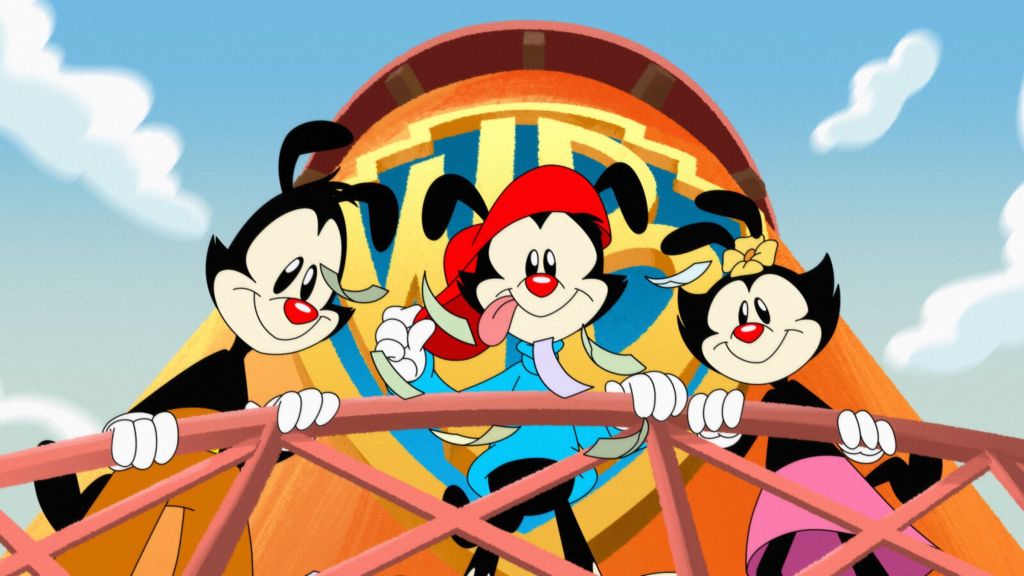
Then there was Animaniacs from Warner Bros Animation, which seemed to operate under the theory that every episode should contain enough jokes to fill a book.
Yakko, Wakko, and Dot Warner were innocent chaos in cartoon form. They sang. They danced. They insulted authority figures. They wandered into situations that had absolutely no business being in a children’s program and somehow made them work. And they did it all while keeping things fun and far from obscene. The brilliance of Animaniacs was how it entertained children and adults simultaneously. Each episode was packed with hidden adult jokes, double entendres, and kid humor – basically the 1990s version of Bluey.
And there’s no forgetting Pinky and the Brain—two lab mice, ever the polar opposites. Technically, they were side characters who had their own short segments within Animaniacs, but they deserve their own paragraph (and show, for that matter). Every night, Brain planned to take over the world. But that same night, Pinky was a mere inches away from accidentally ruining the plan. Their relationship was funny, but it also had a strange sweetness underneath it. Brain had the ambition and, well, the brains. Pinky had the optimism and naivety. Neither was particularly successful, but together, they were a winning pair for entertainment.
But there’s more. Underneath it all, Brain teaches us that serious intelligence without perspective can become absurd. Pinky reminds us that being ridiculous isn’t necessarily the same as being useless. Together, they are perhaps the most accurate depiction of the perfect comedic pair.
1) Gargoyles: Because Apparently We Needed Shakespeare With Wings

Then there was Gargoyles, the show that looked at Saturday-morning television and apparently thought, “What if we made a dramatically intense and dark series for kids and grownups?” The premise alone sounds like something conjured after an ancient ritual: ancient Scottish gargoyles awaken in modern-day New York after being cursed for a thousand years. There are plenty of battles, mythology, and Shakespearean references. Then, to top it all off, add enough gothic atmosphere to make a child wonder why their cartoon suddenly had the emotional weight of a prestige drama.
And yet, it totally worked. At the center of Gargoyles was Goliath, a leader trying to understand a world that had changed completely. The gargoyles were creatures out of time, and that gave the series an unexpected emotional depth. They weren’t simply fighting villains. They were trying to figure out where they belonged. That theme has aged remarkably well. Watching Gargoyles now, the appeal isn’t just the action or the elaborate mythology. It’s the seriousness with which the show treated its audience. It trusted kids to understand loyalty, grief, betrayal, and moral ambiguity. It also had no problem with those same kids having a Shakespeare reference fly over their heads. Seriously, one of the best shows to come out of the ’90s. And thankfully, a new comic release for Gargoyles was just announced (unfortunately, the live-action movie reboot isn’t moving forward)!
Maybe that’s the strange thing about the cartoons we loved as kids. We thought we were just watching television. Years later, we realize they were quietly becoming part of who we are.