X-Men ’97, which recently wrapped its second season, sets itself an interesting challenge when it comes to plot. Rather than loosely adapting one or more specific arcs from the comics, rebooting a prior TV show, or placing the core characters and concepts in an entirely fresh canon to play off each other, X-Men ’97 (which premiered its first season in 2024) chooses to continue the plot of the 1992-97 X-Men: The Animated Series, picking up directly after the events of the ’90s series’ final episode.
Videos by ComicBook.com
Aside from some seriously anachronistic dialogue (the show is set, with some exceptions, in the 1990s), this choice to continue, rather than adapt, an older series also gives X-Men ’97 a lot of flexibility with incorporating content from the comics. X-Men: The Animated Series was fairly faithful in its adaptation of contemporary X-Men comic runs. X-Men ’97 has almost three decades of new comic material to pull from, much of which came years or decades after the arcs that inspired X-Men: The Animated Series. Those newer arcs are incompatible with a direct continuation of the 1990s series, but X-Men ’97 has made good use of the situation, adapting and reworking both old and new arcs and elements to meld together within the show’s canon. This list highlights three comic arcs that eagle-eyed viewers may have noticed X-Men ’97 laying the groundwork for— including one that has already come to pass in the final episode of X-Men ’97‘s second season.
3) Krakoa

While the sentient isle of Krakoa made its initial debut in 1975, it wasn’t until 2019 that it would become the ally and home of mutantkind. This arrangement would not remain peaceful for long, however, as Krakoa would come under devastating attack by anti-mutant forces in the 2023 Hellfire Gala comic event.
Readers and characters alike were struck by the Krakoa attack’s similarity to the attack on Genosha in New X-Men #114 in 2001— an event that was adapted in X-Men ’97‘s first season. While Genosha has been rebuilt into the headquarters for X-Corp by the end of Season 2, an early stage of the Krakoa arc may still be underway. Magneto’s death has pushed Professor X into a crisis as he grapples with the need to carry on Magneto’s dreams alongside his own, and it is this acceptance of Magneto’s ideology that led the Charles Xavier of the comics to declare Krakoa as a mutant homeland.
It is currently unknown if Krakoa will make an appearance as its own landmass and/or being in future seasons of X-Men ’97. For now, it is the rebuilt Genosha that continues to play the role of mutant homeland and embodiment of Magneto’s ideal.
2) Cassandra Nova

Professor X’s assumed-stillborn twin sister and polar opposite, Cassandra Nova is a force of sheer spite, evil, and manipulation, having been reduced to a cluster of cells as a fetus only to grow a body for herself fueled only by a desire for revenge. Since her debut in 2001, Cassandra has been a persistent thorn in the X-Men’s side, with her usual tactic being to manipulate events behind the scenes through strategic alliance and outright body-snatching, only being revealed as the mastermind when the X-Men have vanquished the threat.
This pattern of attack is relevant to Cassandra’s possible presence in X-Men ’97, as while she herself has not yet appeared, the threats, allies, and concepts introduced over the show’s two seasons do have a remarkable degree of overlap with those orchestrated by Cassandra in the comics. In the comics, the Sentinel Master Mold that attacked Genosha was not controlled by Trask, nor by Mister Sinister or Bastion like in X-Men ’97. It was Cassandra, who had absorbed Donald Trask III into her body and stolen his identity. The Shi’ar, the avian alien race that healed Charles Xavier after he was presumed dead, are also present in the comics both as the Professor’s saviors and eventual targets of Cassandra’s manipulation. In New X-Men #121, Cassandra, having switched minds with Professor X, departs from Earth with the Shi’ar Majestrix Lilandra Neramani — a character who notably appeared as Xavier’s love interest in X-Men ’97— and begins to destroy the Shi’ar empire from within before turning its warships on Earth.
Finally, the technological virus that serves as the origin story for X-Men 97′s Bastion, and which he later uses to create the zombified human sentinels in the final arc of X-Men ’97‘s first season (notably, this malicious techno-organic entity is not given any clear origin), is nearly identical to Nova’s infectious, mind-altering Sentinite nanomachines. Given that the Cassandra Nova of the comics prefers to operate through deeply hidden behind-the-scenes manipulation, the fact that so many X-Men 97‘s plotlines have a direct connection to Nova may be setting up her appearance as a twist antagonist in future seasons— but we haven’t seen any definite proof of life from Professor X’s malevolent twin yet.
1) Onslaught
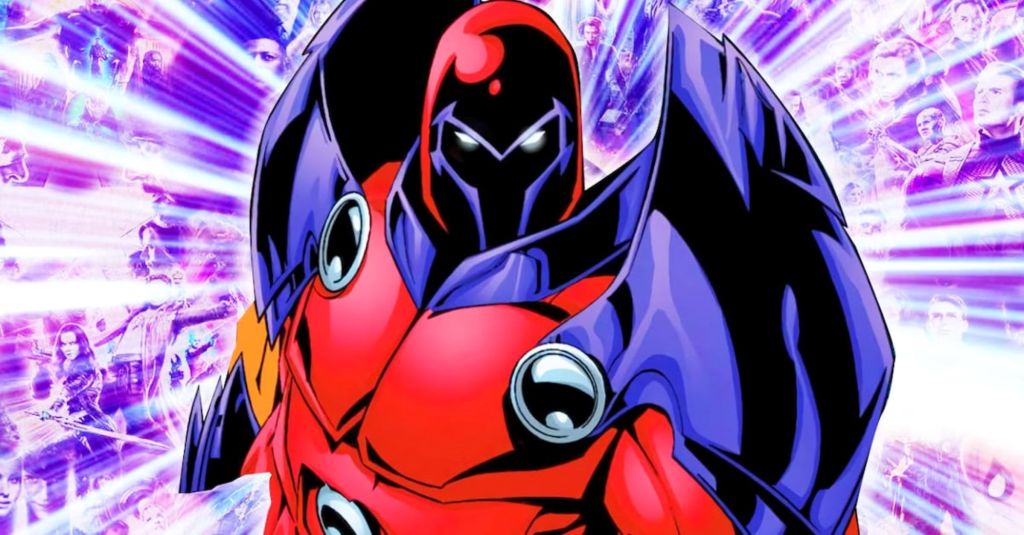
X-Men ’97 Season 2 gave heavy focus (and mood) to the relationship between Professor X and Magneto. Charles Xavier’s decision to select Magneto as his successor to lead the X-Men (revealed in the first episode of X-Men ’97) becomes increasingly demystified after the professor returns to Earth from his time among the Shi’ar. Professor X and Magneto take on an awkward co-leadership of the X-Men, an arrangement that allows the friends-turned-enemies to remember their past and engage in a (mostly) peaceful debate about their respective ideologies around mutant-human relations, with both genuinely trying to understand, and even live by, the ideals of the other. The pair’s shared past became a matter of life and death when, after Professor X was forced to shatter Magneto’s mind to reverse a well-intentioned but potentially catastrophic globe-spanning electromagnetic burst, he enters the psyche of his friend-turned-enemy-turned-ally to restore his memories and drag him back from the brink of oblivion. In a truly tragic twist, Magneto dies— seemingly for good— only a few episodes later, leaving Professor X overwhelmed with grief and uncertainty.
However, the pair’s mind-melding experience may pave the way for Magneto’s resurrection e creation of the powerful, bodiless entity known as Onslaught. Introduced in X-Men: Prime #1 in 1995, Onslaught is a being made entirely of psionic energy, formed from a combination of the mental energy of Magneto and Professor X’s minds when X merged his mind with Magneto’s own to defeat him. The being only emerged as a sentient presence in response to the Professor’s strong negative emotions from the stress of trying to guide mutantkind, a scenario which X-Men ’97 may be paralleling with the combined struggles the Professor faces in the latter half of Season 2, as he grieves Magneto while leading the rebuilding of mutant communities amid a rise in violent anti-mutant sentiment. Xavier’s repeated, perhaps obsessive, desire to speak to Magneto again and questioning as to how he would lead in this situation may be a hint towards Onslaught’s approaching existence, though a much stronger hint may also have been seen when Professor X uses his memories of Magneto to guide the deceased antihero’s daughter, Polaris, into accessing the full scope of her powers. After the day is saved, Professor X and Polaris both say they “felt” Magneto’s presence in that moment… merely two people sharing the memory of someone they were closely tied to, or the first rumblings of something much more dangerous?
Paid Off: Gambit as The Horseman of Death
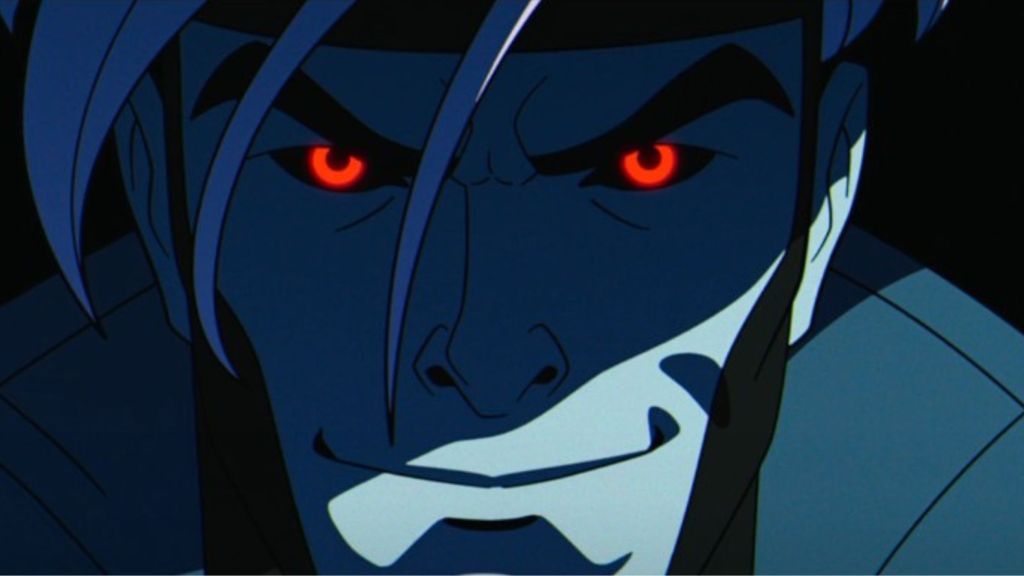
Gambit’s heroic death in Season 1, Episode 5 of X-Men ’97 was a source of grief for both the characters and the audience — however, viewers familiar with the comics quickly picked up on the potential of this plot development to lead into one of Gambit’s more interesting comic arcs, where the self-sacrifice in question is a lot more literal. In 1991’s X-Men #185, Gambit gives himself up to the villain Apocalypse to become his Horseman of Death, on the condition that he be allowed to keep his own consciousness during the transformation— a deal which is only partially kept for Gambit, who would remain affected both by Apocalypse’s influence and by the darker inclinations of his morbid new role, for some time.
While the connection between Gambit’s sacrifice and his resurrection was less direct in X-Men ’97, the fan theories were indeed confirmed true in Season 2’s final arc, as Apocalypse uses Gambit’s body as a vessel for Death (only for the villain to end up a disembodied spirit himself in the process). In the ensuing episodes, Gambit-As-Death’s struggle for autonomy in the comics is adapted into a literal struggle between Gambit and Apocalypse for control of Gambit’s body. Eventually, albeit at the cost of another sacrifice, the X-Men were able to restore Gambit fully to himself, and we are left uncertain which, if any, of X-Men ’97‘s other hinted connections may come to fruition…
More TV Shows
-

Image Courtesy of DC Comics -

Courtesy of Disney Television Animation