The nature of the Hollywood business means television has very little tolerance for creative ambition. Streaming platforms, in particular, have developed algorithmic frameworks that prioritize immediate engagement over long-term payoffs, which is why so many serialized dramas with dense narratives find themselves on the chopping block before their architects can deliver the full picture. A show must hook viewers from its first episode; otherwise, they risk being suddenly cancelled. That means creators who plan for multiple seasons risk leaving the story unfinished if the audience numbers are not to the liking of the executives in control of content planning.
Videos by ComicBook.com
Mystery-driven shows suffer most acutely from this reality. When a series builds its entire identity around a puzzle, the contract with the audience is particularly binding. Occasionally, creators soften the blow after the fact, such as when Mike Flanagan shared his planned resolution for The Midnight Club following Netflix’s decision not to renew it. More often, the creators move on, the IP stays locked in corporate vaults, and the audience is left with a half-told story and no explanation in sight.
7) What Was Sophie’s True Destiny in Carnivàle?

HBO’s Carnivàle debuted in September 2003 as one of the most ambitious mystery dramas the network had ever attempted. Set during the 1930s Dust Bowl, the series traced two parallel figures in a cosmic struggle between good and evil: the reluctant healer Ben Hawkins (Nick Stahl) and the charismatic preacher Brother Justin Crowe (Clancy Brown), each an avatar in a supernatural war stretching back through human history. Creator Daniel Knauf designed the show as a six-season saga structured as three two-season books, with subsequent installments building toward a nuclear confrontation tied to the Manhattan Project.

HBO cancelled Carnivàle in May 2005, having delivered only the first book of a planned trilogy. The central unanswered question involves the fortune-teller Sophie (Clea DuVall), who is revealed in the finale as an Omega figure capable of ending the entire cosmic cycle. Whether she would align with Ben or become an agent of darkness was never shown. Knauf has spoken publicly about his plans and even pursued publishing rights to tell the remaining story as novels, but Carnivàle remains permanently frozen in the middle of its most important revelations.
6) What Was Dolores’s Final Game in Westworld?

Jonathan Nolan and Lisa Joy designed Westworld as a meticulous examination of artificial intelligence, free will, and the cyclical nature of human violence. Over four seasons, the HBO production expanded its scope from a localized theme park rebellion to a global conflict determining the survival of both sentient androids and humanity. Following a massive drop in viewership, the network cancelled the series in 2022, falling one season short of the creators’ publicly stated five-season plan.
The premature conclusion of Westworld leaves the narrative permanently stalled inside the Sublime, a digital afterlife where Dolores Abernathy (Evan Rachel Wood) initiates a final test for the remnants of both species. The exact parameters of this concluding game, and whether it would result in the resurrection of the physical world or the permanent extinction of consciousness, are left entirely to the imagination. This abrupt termination robs the philosophical epic of its definitive thesis statement regarding the capacity for sentient beings to break their behavioral loops.
5) What Was the Island in Lost?

J.J. Abrams, Damon Lindelof, and Jeffrey Lieber’s Lost ran for six seasons on ABC from 2004 to 2010, generating some of the most fervent television theorizing in the history of the medium. At the center of its mystery was the Island, a place of electromagnetic anomalies, ancient temples, a smoke monster, and a valve of cosmic energy that the characters had to protect or risk catastrophe. Over six seasons, the creative team also introduced the Dharma Initiative, time travel, an ancient Egyptian-influenced mythology, and a pantheon of characters linked to the Island across centuries.
The finale of Lost resolved the fate of its central characters through a purgatorial framework that prioritized emotional closure over explanatory payoff. However, the Island’s foundational rules were never clearly codified, including the nature of the Source, the mechanism by which the smoke monster was created, and the meaning of the Numbers beyond their narrative function. The showrunners have maintained that deliberate ambiguity was always part of the design, but the sense that Lost built toward a mythology it ultimately declined to fully articulate has kept the debate alive for 16 years and counting.
4) Did Will and Hannibal Survive the Cliff in Hannibal?
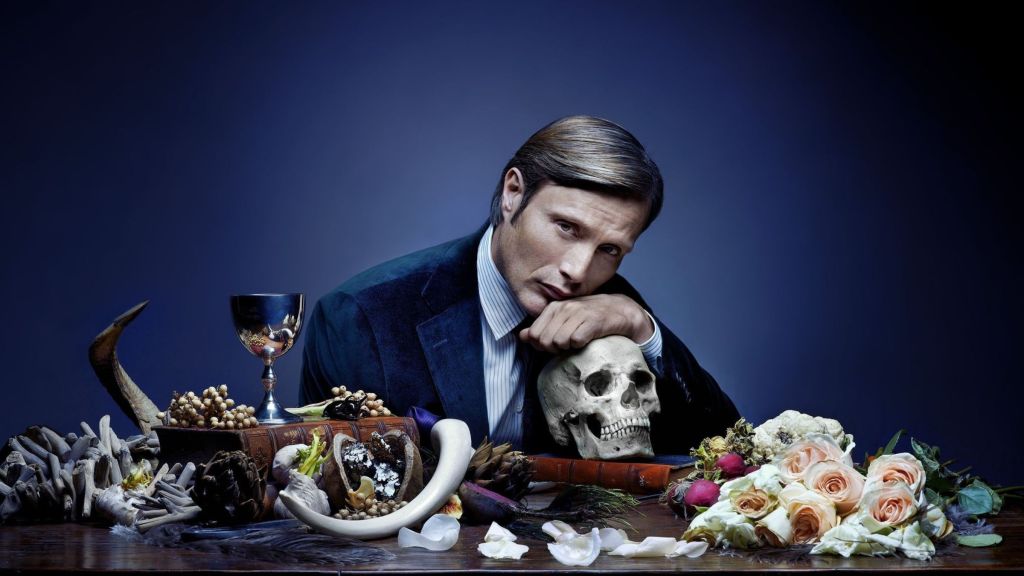
Bryan Fuller’s Hannibal ran for three seasons on NBC from 2013 to 2015, delivering a genuinely unsettling reimagining of Thomas Harris’s cannibal mythology that treated murder as art pieces. The series developed the co-dependent relationship between FBI profiler Will Graham (Hugh Dancy) and Dr. Hannibal Lecter (Mads Mikkelsen) into something closer to a dark romance than a procedural, building toward a finale in which Will and Hannibal, bloodied and triumphant after killing serial killer Francis Dolarhyde (Richard Armitage) together, fall off a cliff into the ocean. Whether they survived was left entirely open, although a final scene teases that at least Hannibal is still alive.
Fuller had a seven-season plan that included adaptations of all of Harris’s remaining novels, but NBC cancelled the show after Season 3 due to consistently low ratings despite exceptional critical reception. Fuller has spent the decade since announcing his desire to continue the story in various formats. The rights situation involving Harris’s estate and the studio has remained complicated, and as of 2026, no continuation has materialized.
3) Where Were the Final Three Seasons Taking Prairie in The OA?
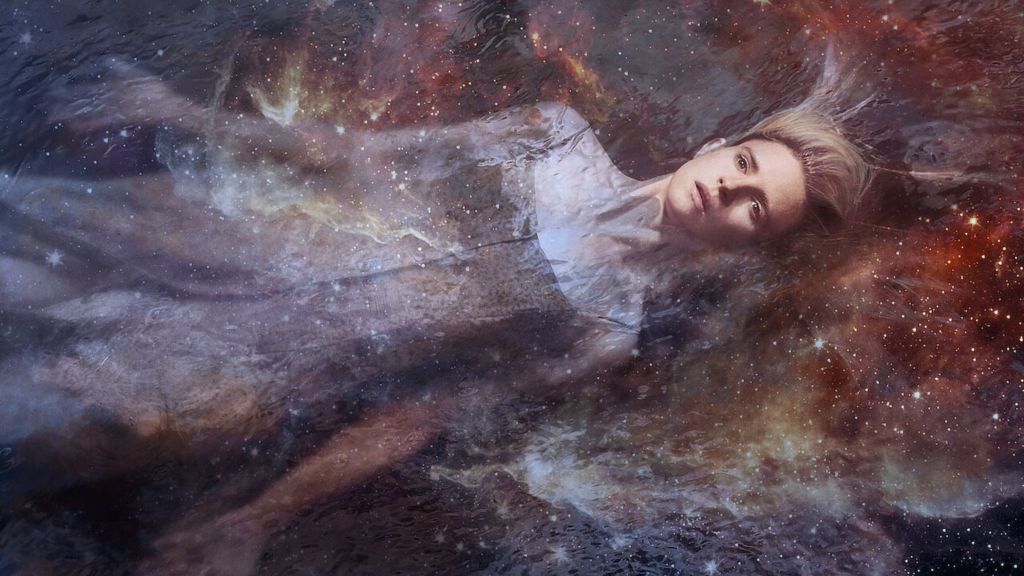
Brit Marling and Zal Batmanglij conceived The OA as a five-part story from the beginning of its development, pitching the complete arc to Netflix before the platform commissioned the first season in 2016. The series follows Prairie Johnson (Marling), a blind woman who resurfaces after seven years of captivity, able to see, having survived near-death experiments conducted by the scientist Hap (Jason Isaacs) in a basement laboratory. Part II escalated dramatically, relocating the narrative into an alternate dimension and ending with Prairie and Hap apparently inhabiting fictionalized versions of themselves as actors in a television production.
The OA‘s meta-twist was extremely ambitious, and Isaacs has confirmed that Batmanglij and Marling had already told him where Season 3 was going before the cancellation was announced. Netflix declined to continue the series in August 2019, and the creators subsequently rejected a Netflix offer to compress the remaining three seasons into a single film. Marling and Batmanglij continue to express hope for a revival, with both confirming they have not abandoned the story.
2) Who Was Ciaran and What Was His Plan in 1899?
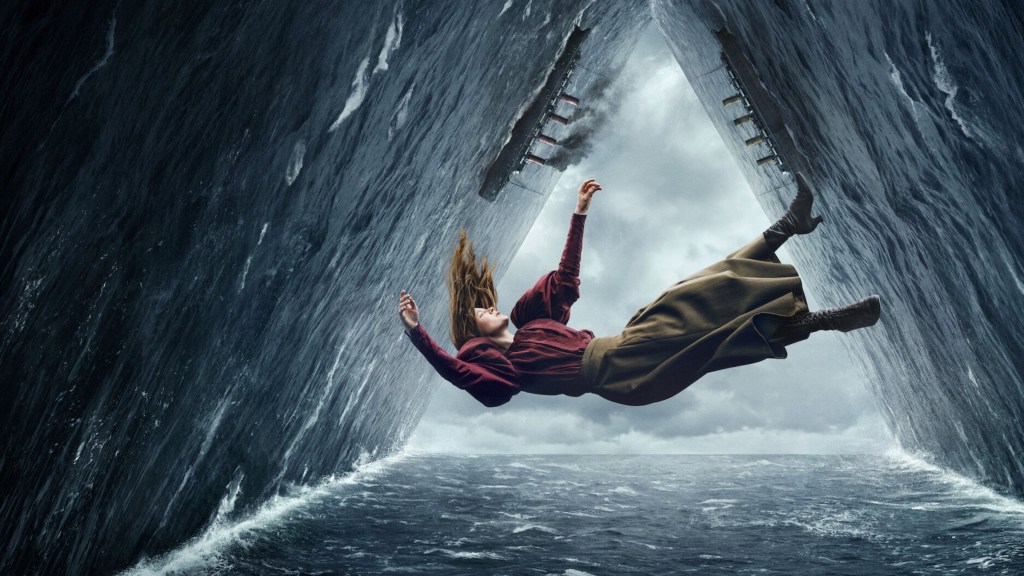
1899, created by Jantje Friese and Baran bo Odar, the duo behind Dark, premiered on Netflix in November 2022. The series follows a group of European emigrants aboard the steamship Kerberos who discover a ghost ship and descend into a reality-fracturing nightmare. The first season’s climactic twist reveals that the entire historical setting is a simulation, that the passengers are sleeping in pods aboard a spaceship in the year 2099, and that the simulation was originally built by protagonist Maura Franklin (Emily Beecham) to preserve her dying son. The season ends with Maura waking in space to find a message from her brother Ciaran, who has been manipulating the simulation from the outside and whose larger purpose was never explained.
Friese and Odar had designed 1899 as a three-season story, with Season 1 functioning as Act One of a complete arc. Sadly, Netflix cancelled the series in January 2023 without explanation beyond the platform’s standard data-driven criteria. Ciaran’s identity, his relationship to Maura’s original world, and the nature of the simulation’s origins remain completely unresolved, turning what should have been a first chapter into a permanent cliffhanger.
1) What Year Is This for Cooper in Twin Peaks: The Return?
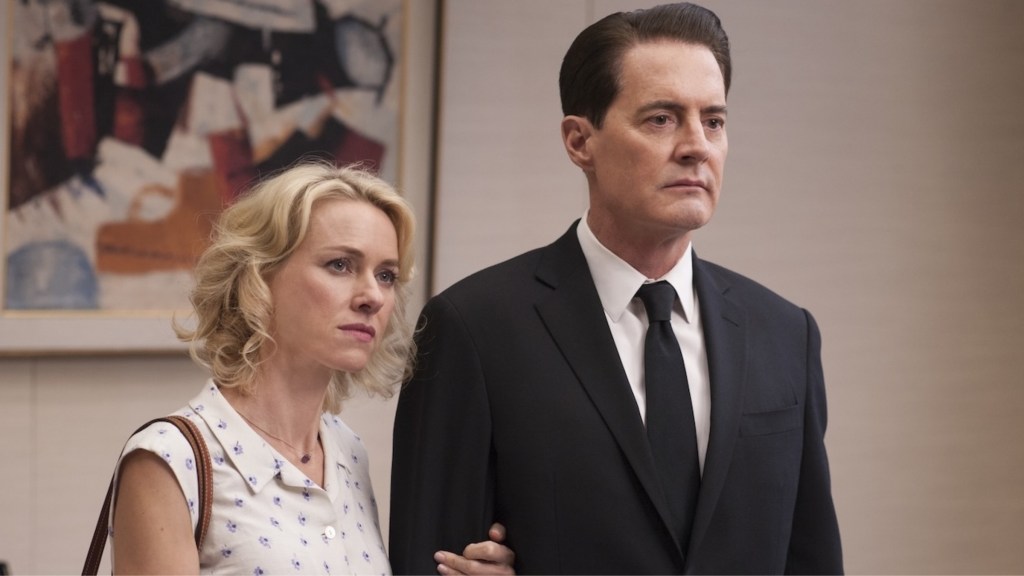
No unsolved TV mystery carries more weight than the final moments of Twin Peaks: The Return, the 2017 Showtime revival co-created by David Lynch and Mark Frost. After 25 years of waiting, FBI Agent Dale Cooper (Kyle MacLachlan) finally escapes the Black Lodge, defeats his doppelgänger, and travels back in time to prevent the murder of Laura Palmer. He succeeds, only to find that removing Laura’s death from history destabilizes the entire timeline.
In the finale, Cooper escorts a woman named Carrie Page, who appears to be Laura Palmer living in another dimension, to her childhood home in Twin Peaks, only to find a different family living there. The sound of Sarah Palmer’s voice echoing from a distant past triggers a scream from Carrie, and Cooper asks, “What year is this?” before the screen cuts to black. Lynch died on January 16, 2025, at the age of 78 from emphysema, and Mark Frost has since confirmed that Twin Peaks will not continue without him.
Which of these unsolved TV mysteries has stayed with you the longest, and do you think any of them still have a chance of being finished? Leave a comment below and join the conversation now in the ComicBook Forum!
More TV Shows
-
Image Courtesy of Marvel -
Courtesy of The Walt Disney Company -

Courtesy of Hulu -
Image Courtesy of 20th Century Animation -
Image Courtesy of DC Comics