Fantasy, for a long time, was a genre that allowed audiences to escape the real world for a bit. Over the years, though, that started to change gradually, as filmmakers began using fantasy to explore different effects, ideas, and storytelling tools for people who wanted to experience something outside reality. And that shift also created the desire to keep rewatching certain movies, especially because of the comfort they offered. The problem is that not every fantasy production holds up over time, and even fewer survive the rewatch test. Some impress on a first viewing but lose their impact once the surprise wears off, for instance. On the other hand, there are the ones that do the exact opposite: the more you return to them, the clearer their strengths become.
Videos by ComicBook.com
With that in mind, this list highlights 10 fantasy movies that genuinely get better every time you decide to revisit them. And no, this isn’t nostalgia doing all the work — it’s structure, intent, and execution.
10) The Mummy

The Mummy doesn’t need to pretend it’s deep to justify its value as one of the most rewatchable fantasy movies; it gets better because it knows exactly what kind of experience it wants to deliver. With every rewatch, it becomes clearer how much the script and direction are focused on rhythm and character dynamics rather than just the supernatural threat driving the plot. Rick O’Connell isn’t framed as a traditional epic hero, but as a reactive, witty protagonist who’s always at a disadvantage. Evelyn, meanwhile, works far less as a love interest and far more as the narrative engine of the film, because she’s the one who understands the world, sets the plot in motion, and drives many of the key decisions. A lot is said about their chemistry, but its real meaning only becomes clear when you allow yourself multiple rewatches.
On top of that, The Mummy knows exactly when to slow down for a joke, when to speed up for action, and when to lean into cartoonish horror to strike a balance between pulp adventure and classic fantasy. Even the effects that haven’t aged well end up serving the tone, because they were never meant to feel grounded or realistic in the first place. The movie’s identity is clear, consistent, and really comfortable with its own excess, which also helps explain why, decades later, it’s still remembered so fondly and is once again on the verge of getting a new sequel.
9) Jumanji

Jumanji was strong enough from the start to inspire variations like Zathura, which, on its own, says a lot about the weight of the original idea. Even so, nothing really matches the impact of the ’90s film, which grabs you on a first watch through chaos and a genuine sense of danger. What completely changes on rewatch, though, is how disciplined that chaos actually is. The game’s rules aren’t just a narrative gimmick; they structure the entire movie, set the rhythm, and make sure every event has clear consequences (something that was far from common in fantasy films of that era). Once you notice that, it becomes obvious that the real emotional core isn’t the animals, the effects, or the destruction, but Alan Parrish and the trauma of having his childhood literally cut short.
On top of that, one of the most rewarding aspects of revisiting Jumanji is the performances, especially Robin Williams’. His work here is far less broad than people tend to remember, shaped by guilt, fear, and an almost desperate need to fix the past. When you already know the big set pieces, there’s room to focus on how the film handles themes like growing up, responsibility, and second chances with an unexpected level of seriousness. Over time, Jumanji trades the shock of surprise for deeper emotional investment — and not every fantasy movie manages to pull off that shift without losing its momentum.

8) Pirates of the Caribbean Franchise
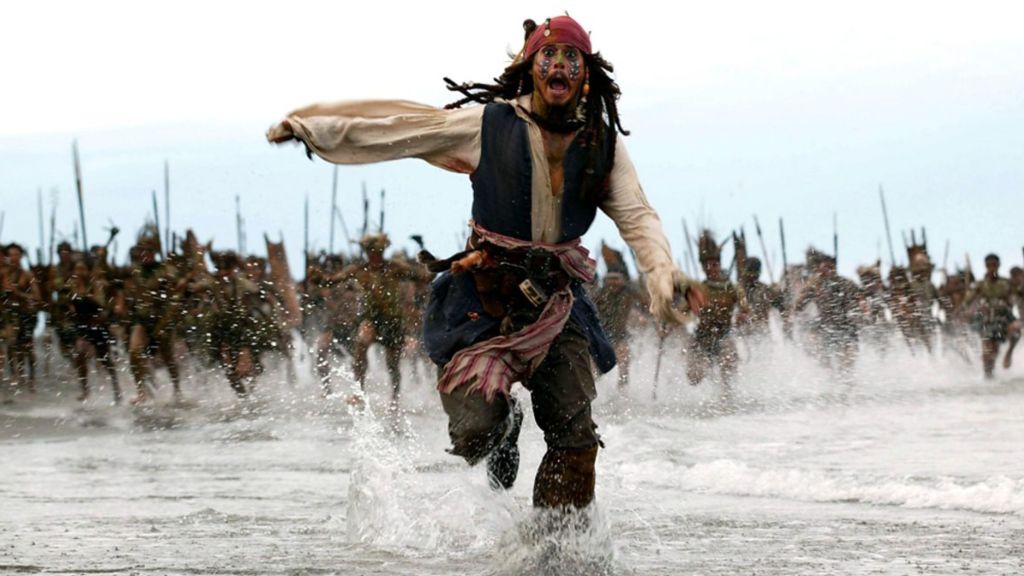
It’s practically impossible to watch the Pirates of the Caribbean saga just once, because it was clearly built to reward familiarity. On a first viewing, the appeal comes from the spectacle, the humor, and that sense of adventure; on rewatch, the enjoyment shifts. Once you already know where the story is headed, it becomes easier to see how carefully the movies are structured around power plays, shifting alliances, and betrayals planted well in advance. Nothing really happens by accident. Characters move closer or drift apart not because the script needs them to, but because survival demands it — and Jack Sparrow is the clearest example of that.
What initially feels like chaotic improvisation turns out to be a character who always operates with partial information, manipulates perception, and rarely says everything he knows. That choice is deliberate, and recognizing it completely changes the experience. And even when the franchise overreaches or loses itself in scale, rewatches make it more enjoyable to take in: the world feels more cohesive, themes of freedom and loyalty become easier to track, and there’s a real pleasure in watching how the narrative pieces shift, collide, and rearrange themselves. Nostalgia definitely plays a role, but what keeps Pirates of the Caribbean alive is the sense that there’s always something new to catch when you decide to come back to it.
7) Charlie and the Chocolate Factory

This is a movie that only really starts to work once you stop treating it as a “weird” remake of Willy Wonka & the Chocolate Factory (1971) and start accepting it as a project with a completely different narrative goal. On rewatch, it becomes clear that Tim Burton wasn’t interested in softening Roald Dahl’s world, but in leaning into its discomfort. In Charlie and the Chocolate Factory, the kids aren’t just exaggerated personality types; they’re framed as byproducts of modern excess: overconsumption, constant competition, and a total lack of boundaries. The movie deliberately refuses to make them likable, because doing so would blunt the point it’s trying to make.
Rewatching also reframes Willy Wonka himself, turning what first feels like pure performative eccentricity into a clear defense mechanism. Willy is emotionally isolated and incapable of forming healthy adult relationships. The subplot involving his father, which can feel awkward or unnecessary on a first viewing, gains coherence when you approach it as a psychological key to the character rather than a forced attempt at humanization. So over time, the movie stops functioning as a comfort fantasy and starts reading more like a satire about control, punishment, and conditional affection. Charlie and the Chocolate Factory becomes a very different film once you stop expecting warmth and start paying attention to intention.
6) The Wizard of Oz

In short, rewatching The Wizard of Oz makes it clear that the film was never carried by visuals alone. On a first viewing, the impact comes from the songs, the color, and the thrill of stepping into a completely different world, right? But go back to it, and you start to notice why it actually holds up: the precision of Dorothy’s journey. Nothing is random. Every encounter along the Yellow Brick Road exists to reinforce the same idea: what these characters think they’re missing has been with them all along.
Once you revisit the movie with that framework in mind, everything clicks differently. The dialogue carries more weight, the musical numbers feel like extensions of the emotional conflict, and even the return to Kansas stops reading as a simple, comforting wrap-up. The Wizard of Oz improves with every rewatch because it trusts clarity over excess. That kind of disciplined simplicity is exactly why it became a narrative blueprint for fantasy as a whole. Not because it tries to be epic, but because it knows exactly what story it’s telling and never loses sight of it. It’s no coincidence that this influence still echoes today, even in a spin-off like Wicked.
5) Shrek
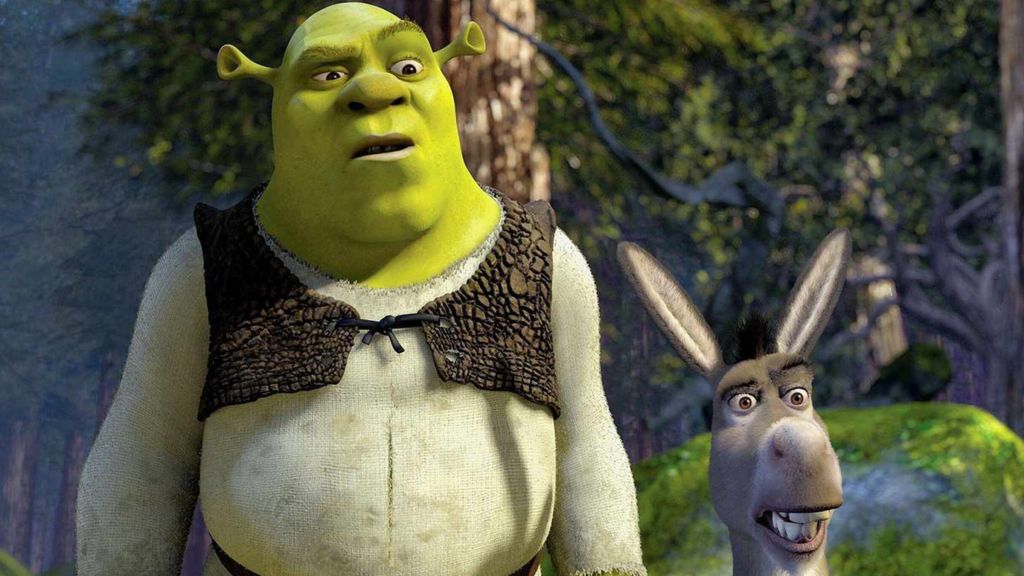
Shrek doesn’t need much justification to remain endlessly rewatchable — its appeal feels almost automatic. What changes over time is how it lands. On a first viewing, the impact comes from the subversion and the more obvious jokes; on revisits, what stands out is how aware the script is of the fairy-tale tradition it’s playing with. The movie isn’t mocking classic stories out of contempt, but out of familiarity, using well-known archetypes to dismantle ideas of heroism, beauty, and happy endings without ever breaking the genre’s internal logic.
The layered humor becomes easier to appreciate, and it never comes at the expense of the emotional arc. There are surface-level references, sure, but also quieter observations about identity and exclusion woven directly into the story. The protagonist doesn’t just change on the outside; his emotional journey gains more weight once you already know where it’s headed, allowing small moments of insecurity, resistance, and vulnerability to stand out. Shrek keeps getting better because its irrelevance is purposeful, always serving a well-structured narrative that trusts the audience’s intelligence. That’s why even its sequels continue to draw attention. And yes, the fact that it’s also an animated film certainly makes the experience even more enjoyable on repeat.
4) Harry Potter Franchise
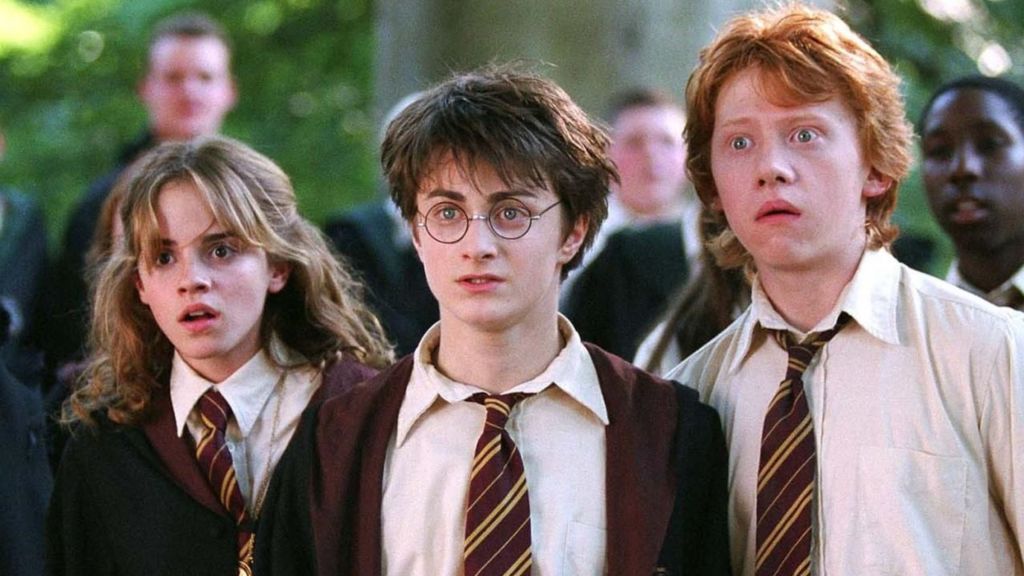
Time passes, and the Harry Potter franchise never loses its appeal — quite the opposite. It practically demands a rewatch to operate at its full potential, because it was conceived as an accumulative narrative. Each movie works mostly as a self-contained adventure; over time, though, the saga reveals itself as a large puzzle where small elements planted early return with unexpected emotional weight: objects that once seemed trivial, lines delivered in passing, and even framing choices start to read differently. Rewatching also reframes character arcs: figures who initially felt secondary gain thematic importance, while even some writing decisions become more coherent within the broader logic of the saga.
Watching the films back-to-back also highlights how the series matures alongside its characters, both in tone and narrative ambition. Sure, by now, most people know Harry Potter almost by heart, and none of this may feel entirely new anymore. Still, there’s something undeniably addictive about the magic woven into each installment — something that keeps pulling you back and offering comfort every time. The franchise is endlessly rewatchable because it trusts the audience’s memory and turns it into an active part of the experience: the more you remember, the more connections the universe gives you in return.
3) Spirited Away

Here’s a film that’s perfect at what it sets out to do, and that’s exactly why it gets better every time you revisit it. Spirited Away refuses to hold your hand, and that’s its strength. The experience is almost sensory: you’re dropped into a world that doesn’t ask permission and doesn’t bother offering immediate context. On a first watch, that unfamiliarity can feel overwhelming. But on rewatches, the strangeness stops being confusing and starts feeling deliberate. The bathhouse rules, the contracts, the transformations, even the seemingly erratic behavior of certain characters begin to click — not because the film explains them, but because everything follows a consistent internal logic.
Characters who initially register as just eccentric, like No-Face or Yubaba, start to reveal clearer narrative and emotional functions, while Chihiro’s journey proves to be incredibly controlled and precise. Her growth happens in small, gradual shifts (in posture, confidence, and autonomy) that are much easier to appreciate once you know where she ends up. Spirited Away doesn’t offer new answers with each rewatch; it offers new readings. That openness, paired with a world that’s rigorously constructed, is what makes the movie feel almost inexhaustible, even after countless viewings. There’s always something you missed, something that lands differently depending on when you’re watching it, which is exactly why it holds up across so many phases of life.
2) The Lord of the Rings Trilogy

It’s impossible to talk about fantasy without thinking of The Lord of the Rings. And when the topic is rewatch value, this trilogy is unavoidable. It was never designed to be a one-time experience. The initial impact comes from the scale, the world-building, and that unmistakable sense of a cinematic event, which is what most people remember first. But revisit the trilogy a few times, and it becomes clear that what holds everything together is the almost obsessive cohesion between characters, themes, and narrative choices. The decisions that once felt minor turn out to be crucial, lines of dialogue function as foreshadowing, and sacrifices that initially read as purely heroic reveal a much more tragic core. It’s actually similar to Harry Potter in structure, but with a key difference: while that franchise grows through emotional memory, J. R. R. Tolkien’s saga strengthens through the architectural precision of the whole.
Rewatching also highlights how carefully the trilogy distributes its attention, allowing even secondary characters to have complete, meaningful trajectories without ever losing focus on the central journey. Nothing feels improvised or disposable, and that sense of long-term planning becomes more obvious with time. The Lord of the Rings improves with every revisit because it was built patiently, with a clear long-range vision that most franchises of this scale rarely prioritize. And what’s even more impressive is how intact that vision remains decades later.
1) The Princess Bride

We’ve already seen that many films are worth revisiting because they reveal things a single viewing can’t fully capture. With The Princess Bride, though, there’s something extra at play — almost as if rewatchability is the point. On a first watch, it works through surprise and expectation-subversion. But over time, the real pleasure comes from how everything is put together. The script is sharply aware of its own artifice, using irony, narration, and self-referential humor without ever undercutting emotional investment. The jokes actually land better on rewatch because they don’t interrupt the story; they reinforce the rhythm, tone, and character dynamics. Everyone knows exactly what kind of movie they’re in, yet immersion is never broken.
Plus, the layered structure (a story being told within another story) also becomes more rewarding once you already know the narrative beats and can focus on how seamlessly each element clicks into place. In that sense, The Princess Bride stands out as one of the best fantasy movies to watch again and again because it understands something fundamental about both the genre and entertainment itself: repetition doesn’t wear a story down; it deepens the relationship with the audience. And that’s the difference.
Which of these do you keep coming back to? Leave a comment below and join the conversation now in the ComicBook Forum!
Most Viewed
-

Official art by Bastien Lecouffe-Deharme -
Image courtesy of Tor Books/Macmillan -

A photo of the Retrovolt Arcade taken in 2017, showing several classic arcade cabinets and stools.