It’s hard to compare today’s films to the ones from the ’90s, because anyone who grew up in later generations won’t be able to totally get the kind of magic going to the movies felt like back then. There was so much creativity and downright craziness in the ideas made for younger audiences, from absurd fantasies to completely random crossovers that somehow just worked. The difference was that, at the time, telling a fun story mattered more than making sure every little thing made perfect sense, since that captured the lightness and imagination of childhood at the time. And in 1996, specifically, there were some pretty strong examples of that.
Videos by ComicBook.com
In this list, you’ll find 4 features from that year that couldn’t be more different from one another, but share the same appeal: instead of trying to convince kids that something is fun, they really are. It was a time when cartoons, toys, sports, books, and some amazing characters were all popular, and these movies knew what to do with that.
4) James and the Giant Peach
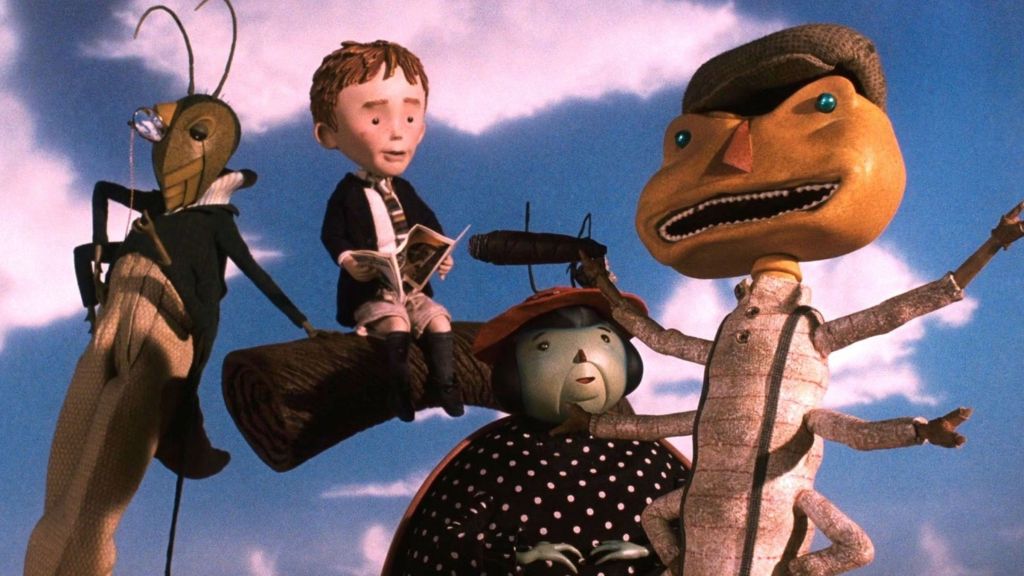
Just because it’s a movie aimed at kids doesn’t mean it needs to have a lighter, cuter aesthetic for children to have fun, and James and the Giant Peach proves that really well. The story here revolves around James, an orphaned boy who is forced to live with his cruel aunts until a magical substance causes a peach to grow to an enormous size, and inside it, he finds a group of giant insects who join him on a journey to New York. Basically, the idea is to take a situation that could be depressing, like a child being alone and mistreated, and turn all of that into an adventure filled with imagination.
In this film, you have a giant peach crossing the ocean, talking insects, mechanical sharks, songs, and a stop-motion aesthetic that is strange enough to not look like every ’90s animated movie for children. And for a kid back then, that was much cooler and more different than an overly safe and conventional story. James and the Giant Peach doesn’t try to hide the fact that some things are scary or weird — quite the opposite. It understands that those are exactly the things that make a fantasy memorable. If you watched it as a kid, you definitely recall it. It’s different, and that’s why it sticks with you.
3) Muppet Treasure Island
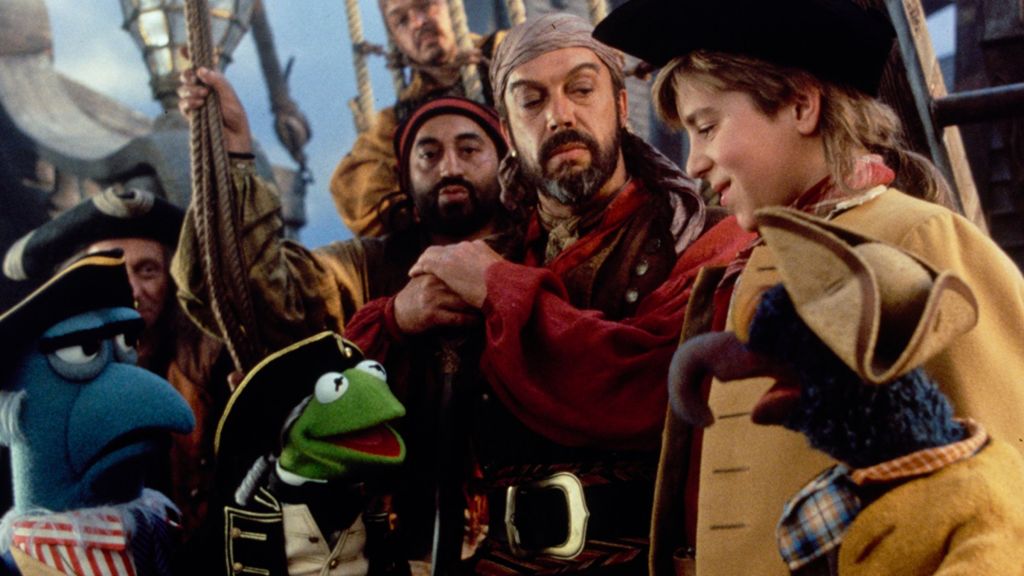
The Muppets are a classic that has managed to cross generations, but in the ’90s, with Muppet Treasure Island, they managed to take things to another level. Why? It wasn’t about adapting Treasure Island in a more serious way, but about giving kids a pirate movie that also had Kermit, Miss Piggy, and Fozzie causing complete chaos along the way. The story follows Jim Hawkins on his search for a lost treasure, taking him aboard the Hispaniola alongside Kermit as Captain Smollett and Tim Curry as Long John Silver. And the production as a whole is very creative since it has ships, maps, swords, treasure, and a villain, and then lets the Muppets be the cherry on top to keep everything balanced.
Fantasy with a more serious plot is definitely something that appeals to younger audiences, but in the ’90s especially, there wasn’t really a need to keep everything inside one box. Muppet Treasure Island perfectly shows that a kid can be totally invested in a treasure hunt and, five minutes later, want a ridiculous song with figures dressed as pirates (and the film simply gives them both). It’s a whole exaggeration that makes a kids’ adaptation feel like something a child would actually choose to watch rather than just a watered-down version of something adults decided they should know.
2) Matilda
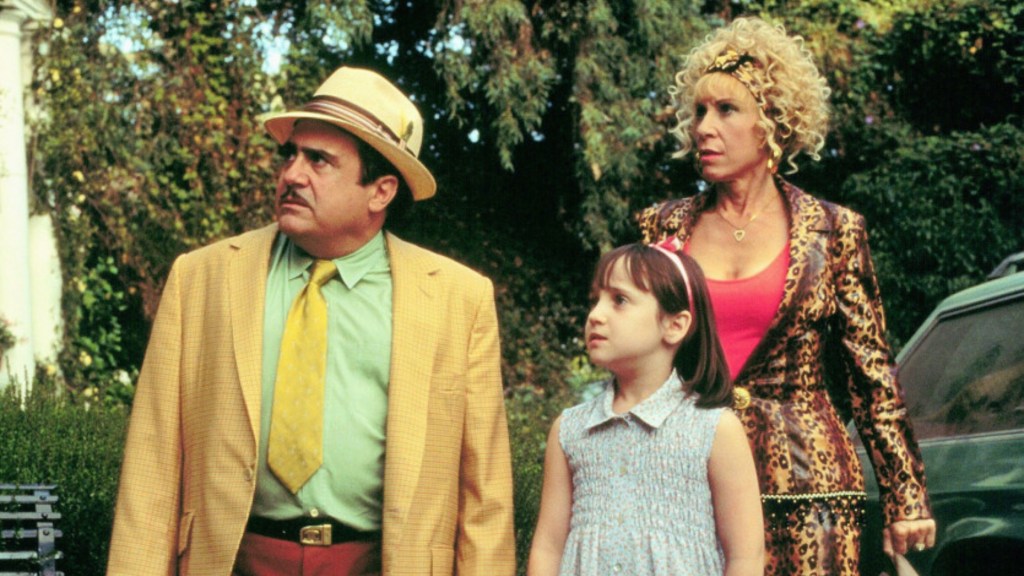
Matilda is a case of its own — it’s remembered with so much love that some people have even imagined the possibility of a sequel. And all of that affection for the movie comes from how relatable it is, because when you’re a kid, you realize that adults are in charge of everything, and they almost never listen to you. In the story, the titular character is an extremely intelligent girl who grows up in a family that doesn’t care at all about her books or her curiosity, and at school, has to deal with the terrifying headmistress Miss Trunchbull. And when Matilda discovers she can move objects with her mind, she finally gets a way to fight back against her problems.
But you know what the real trick is? This feature doesn’t make its protagonist an exceptional child because someone notices her potential, but because she understands that the adults around her are all wrong. So, she reads while her father would rather watch TV, questions things when people expect her to just obey, and doesn’t accept that older people are automatically right. It’s a very easy power fantasy to understand when you’re a kid: imagine finding out that, besides being right, you can actually have powers to prove it? And the movie takes that idea far enough to make it fun. On top of that, there’s Miss Honey, who represents something equally important: the adult who actually listens. Matilda is almost the peak of the most beloved nostalgic productions.
1) Space Jam
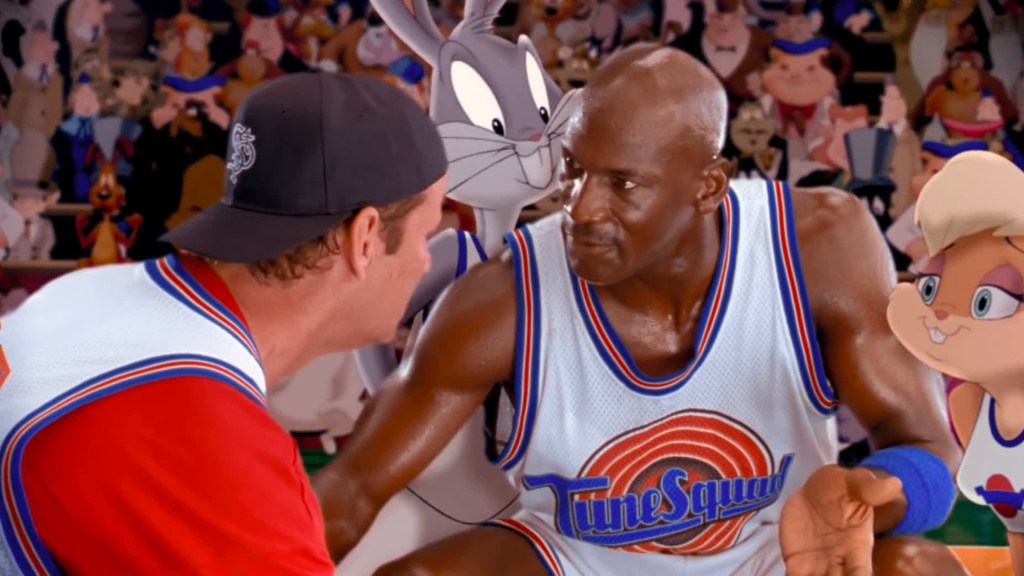
This is probably the most blatant example of a film looking at a ’90s kid and asking what they wanted most: Michael Jordan? Check. Bugs Bunny and the Looney Tunes? Check. The NBA? Check. Aliens? Check. Basketball? The entire movie. Space Jam basically takes the legendary athlete, who is trying to figure out what to do after stepping away from the sport, and puts him in the middle of a conflict where the Looney Tunes need his help to take on the Nerdlucks, aliens who have stolen the talent of NBA players — and that’s really all this movie needed to be. Today, it looks like an insane plot and almost like a giant merchandising machine, but for a kid back then, it didn’t need any reason whatsoever to be considered good.
The big secret of Space Jam was always knowing that, for its target audience, pop culture didn’t need to make sense to work: cartoons, sports, music, celebrities, games, and toys could all occupy the same space, and that was perfectly fine. Plus, Michael Jordan was one of the biggest stars on the planet and the Looney Tunes were characters kids had known forever, so putting the two together felt like a crossover nobody had asked for because nobody needed to ask for it. It would be pretty difficult to pull something like this off today, but in the ’90s, it was absolute cinema made entirely for a kid.
More Movies
-

Courtesy of 20th Century Studios -
Courtesy of 20th Century Studios -
Image Courtesy of 20th Century Fox