When a book gets the green light for a movie adaptation, it’s kind of a thrill, right? How do you balance the story, the pacing, and the emotional punch without leaving everyone confused? Will they stay true and actually do the source material justice? A lot of adaptations totally miss the mark, but lately, some have done the exact opposite: they’ve nailed it. Striking the perfect balance for both new audiences and book fans, these recent releases manage to capture the heart of the story and turn it into a full-on cinematic experience worthy of awards. Basically, they’re a masterclass compared to those adaptations we’d rather forget.
Videos by ComicBook.com
So here are 7 recently released films based on books that executed their source material so well, it’s impossible not to call them masterpieces. They give you that pure feeling of living the book on screen, while also delivering a story that’s absolutely epic and unforgettable.
7) The Hunger Games: The Ballad of Songbirds & Snakes

The biggest win of this prequel is how it expands the world of Panem without feeling repetitive. Unlike the original trilogy, The Hunger Games: The Ballad of Songbirds & Snakes focuses on showing how society and the Games can turn an ordinary person into a tyrant. The story dives deeper into politics, ambition, and manipulation than ever before, putting a young Coriolanus Snow (Tom Blyth) right at the center of it all. He’s assigned as mentor to tribute Lucy Gray (Rachel Zegler) in the 10th Hunger Games, and through that, he has to face political pressures and ethical decisions for the very first time.
The movie is one of the best adaptations ever made, staying faithful to the book, and most importantly, it knows how to make its protagonist understandable. Snow is morally detestable, but by showing his past, the audience gets a fresh perspective on him. The Ballad of Songbirds & Snakes never tries to copy the action beats of the main series; it builds tension through context, choices, and consequences, which gives the film a different kind of weight. By the end, you walk away understanding exactly how Panem shapes its villains — and you also get to see the Games themselves in a darker, more strategic light.
6) Dune: Part Two
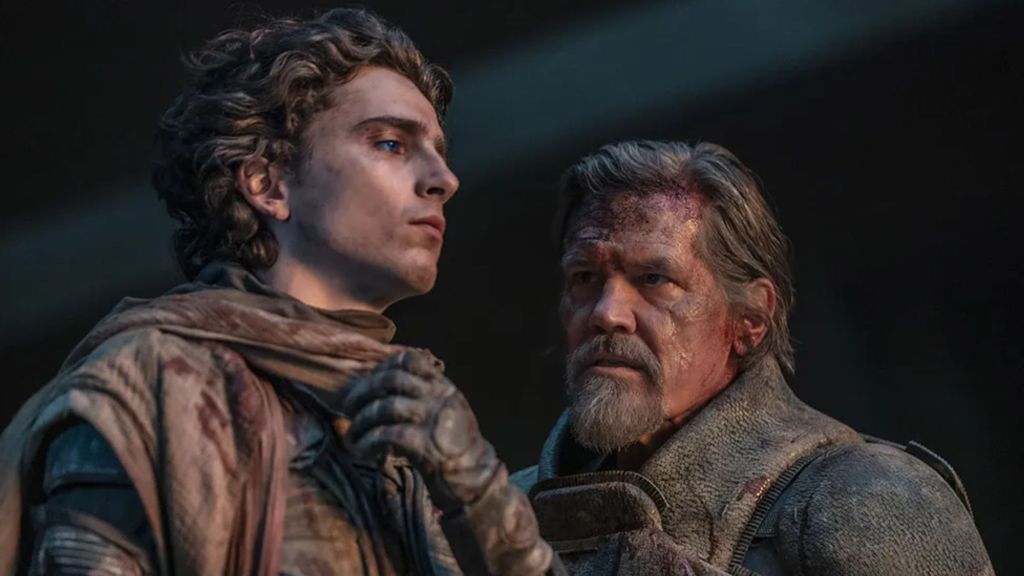
There’s really no other way to describe this movie than a masterclass in adaptation. While Dune was already a well-crafted production, it’s only with Dune: Part Two that Denis Villeneuve shows how to take a colossal, complex story and turn it into a fully engaging film. Here, Paul Atreides (Timothée Chalamet) joins the Fremen to take down the Empire and fulfill the prophecy surrounding him, testing his leadership and, more importantly, his moral compass. And the movie not only keeps the political, cultural, and religious density of the book, but also organizes all that material so every scene moves the story forward.
To put it in perspective, the book’s structure is massive and could have easily gotten lost in translation, but the adaptation flows seamlessly, focusing on characters’ choices and consequences rather than just battles. In short, it’s one of the strongest adaptations in recent years, translating a dense story with rich arcs and intrigue in a way that feels balanced and purposeful. Sure, there are some changes to fit the screen, but Dune: Part Two never loses the essence of the book — and that’s what makes it so remarkable. Plus, it looks absolutely stunning.

5) Frankenstein
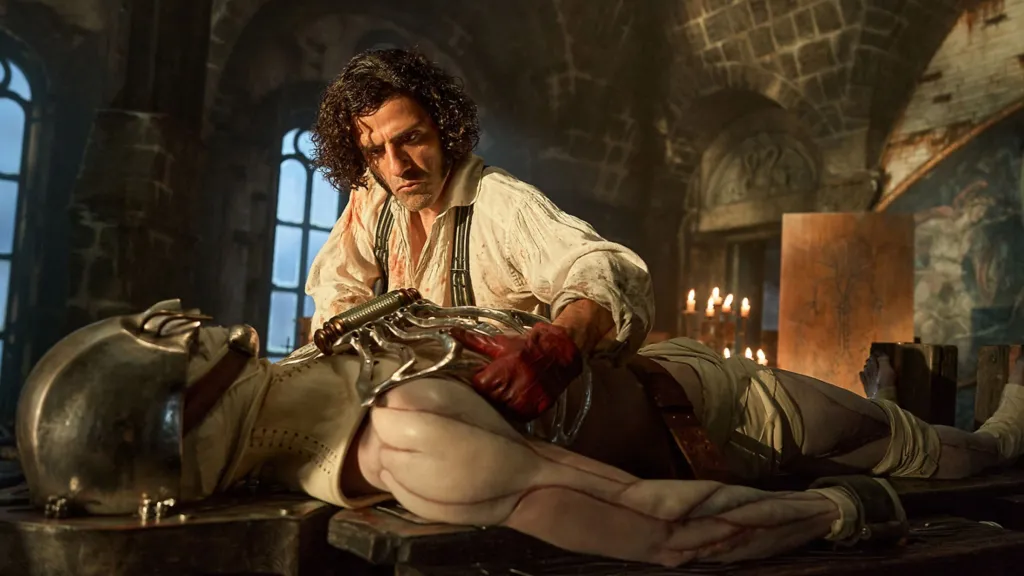
Already adapted plenty of times, it’s only with this recent version that one of literature’s most classic stories really nails the horror and the essence of human cruelty. In the famous story of Frankenstein, scientist Victor Frankenstein (Oscar Isaac) creates a being (Jacob Elordi) from corpses and has to deal with the consequences of his invention. It’s easy to say the monster is the creature itself, but this film makes you question that. Plus, it doesn’t get lost in visuals or jump scares, because the real strength is showing the story from different perspectives, making it interesting even for people who already know the tale.
But what’s really cool about Frankenstein is that it doesn’t demand anything from you as a viewer. The narrative focuses on the ethics of creation and responsibility, but all that weighty stuff is translated in a way that’s easy to understand and follow. And on top of that, it’s beautiful to watch — before you know it, you’re completely captivated by the creature. It’s easily one of the most impressive recent adaptations, with Guillermo del Toro fully grasping the meaning of the book and turning it into real, gripping cinema.
4) The Housemaid

The book is already one of the most praised, and the adaptation lives up to it (maybe even surpasses it, honestly). The Housemaid is a suspense thriller, but once you watch it, you realize it’s a highly strategic and psychological story — and that’s what makes it so amazing. We follow young Millie (Sydney Sweeney), a maid who gets involved with a wealthy family, and everything she does (or doesn’t do) creates problems. Every scene basically feels like a power move, full of manipulation, with a finale that can hit even harder than the plot twist itself. But the real reason the film works so well? It understands the story it’s telling and knows exactly what the audience wants.
A lot of adaptations get tangled up trying to bring a book to the screen, changing too much along the way. But with The Housemaid, you’re thrown into a compelling plot from the first minute because it sticks to the core of the story: conflict, control, and fallout. It’s intense cinema with a direct pace, no filler, no tricks. The suspense and weight come naturally, executed flawlessly. This is the kind of movie that surprises anyone, and when it comes to thrillers, there’s no doubt it’s the newest masterpiece of the genre.
3) Hamnet

In the book, Hamnet puts grief and loss at the center of the story, but in the adaptation, it does the same while making it something the audience can actually feel without reading pages and pages of description. The novel is introspective, focusing on William Shakespeare’s (Paul Mescal) family dealing with the death of their son in 17th-century England, but the film flows in a way that’s much clearer — visually and narratively. And the best part? The emotional impact stays consistent, driving the story, holding your attention the whole way through.
In other words, like The Housemaid, it proves you don’t need to add anything new; you just have to execute it with precision. Hamnet is a modern masterpiece, capturing the weight of losing someone and the profound consequences for each individual. It’s direct, understandable, immersive, and brutally honest, showing perfectly how this loss could have inspired one of Shakespeare’s greatest plays: Hamlet. It works not just because it’s a rich drama, but because it makes you feel exactly why Shakespeare made each of his artistic choices. Without a doubt, it’s a true masterpiece that deserves all the praise.
2) One Battle After Another

Here, Paul Thomas Anderson gives a masterclass in how to take a dense, complex book and organize it so every scene actually makes sense. And yes, it’s not about being strictly faithful, but about shaping a story from the source material. Does that work? Absolutely, but it has to be done right — and here, it totally is. One Battle After Another follows Bob Ferguson (Leonardo DiCaprio), an ex-revolutionary who has to confront his past while protecting his daughter, all in the middle of political and ideological struggles. As an adaptation, it captures the spirit and key themes of the book, like radicalism, culture, and resistance, and is a prime example of how to translate the essentials of a story to the screen.
What makes One Battle After Another stand out is the tension and pacing, even without following the source material to the letter. Every character faces real consequences, no mercy, with a smart exploration of politics, suspense, and family drama. Thomas Pynchon’s books are notoriously tough reads (complicated, fragmented ideas that don’t translate easily), but the fact that even hardcore fans were impressed says a lot. It’s a powerful film that’s more than worth watching, and it’s easy to see why so many consider it one of the best of the year.
1) The Long Walk

Stephen King’s books have been adapted to film countless times, right? But The Long Walk might be one of the rare times an adaptation actually nails it. Why? Because it understands that the power of the story lies in the psychological tension and the desperation of the competition, and it goes all in from start to finish. In the story, young participants enter a deadly contest where only one survives, pushing their physical and mental limits. The movie literally captures the energy King puts into the story, choosing to lean into the rules, the pace, and the extreme choices of the characters instead of adding visuals purely to shock (even though it includes graphic violence, as the author requested).
Unfortunately, The Long Walk didn’t get nearly the attention it deserves, but ask anyone who’s seen it, and you’ll understand what underestimation really means. The adaptation grips you and creates total discomfort simply by knowing how to structure the narrative visually — nothing more, nothing less. Most importantly, it delivers a true cinematic experience, putting the audience almost entirely on the walk alongside the characters, with no escape. Overall, it’s simple, unflinching, tense, grim, and direct — exactly the kind of adaptation a story like this needs.
What do you think about these adaptations? Leave a comment below and join the conversation now in the ComicBook Forum!
Most Viewed
-
Image Courtesy of Marvel Comics -
Sony Pictures -

Image Courtesy of HIDIVE -
Image courtesy of Bandai Namco