If there’s one thing everyone has learned when it comes to adaptations, it’s that messing with anything related to J. R. R. Tolkien’s universe is basically asking to be compared to his books down to the smallest detail. The same thing tends to happen with other stories and their worlds, such as Star Wars, for example, but the case here is a work that redefined (or even defined) what epic fantasy is, and has won several fans over the years who undeniably care about faithfulness to the source material. So when The Lord of the Rings: The Rings of Power premiered, a considerable part of the audience spent more time debating what it changed from the books than discussing what it was actually trying to do. And yes, that’s understandable, because when you know Tolkien’s work, seeing characters, the timeline, and all the events being rearranged can be pretty strange — but there’s a “but” here.
Videos by ComicBook.com
Very few people really know why the show has so much creative freedom in the first place. It’s naturally easier to point out the mistakes, because if you’re a fan of something, the bare minimum in an adaptation is for everything to be coherent and not go completely off the rails. But the thing is: the series never had access to everything fans use to point out why it’s wrong. Obviously, that doesn’t mean every change in the show should automatically be accepted, but it’s worth understanding what the process of making a TV series out of The Lord of the Rings actually looked like, because when all is said and done, saying the entire result is bad is just taking things too far.
The Rings of Power Didn’t Have the Rights to All the Books It Needed to Tell Its Story
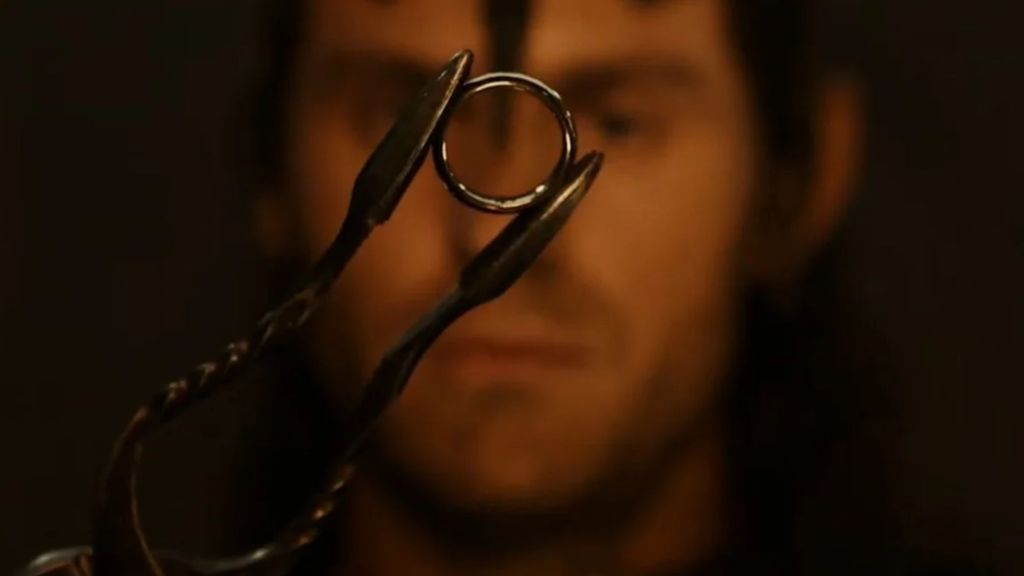
The story of The Rings of Power takes place during the Second Age of Middle-earth, long before the story of Frodo, Aragorn, and the rest of the gang. This is the period when Sauron begins to regain his power, the Rings are forged, Númemor reaches its peak before eventually heading toward its downfall, and Elves and Men unite against the Dark Lord in the War of the Last Alliance. You look at all of that and immediately think it’s the perfect material for a TV show, right? But if you’re a true fan, you know the problem is that Tolkien never wrote this period as a traditional novel that could be turned into a script. Plus, Amazon Studios also doesn’t have the rights to every text that tells this story in detail.
The deal that allowed the show to happen gave the studio the rights to use The Lord of the Rings (including its appendices) and The Hobbit, which was enough material to work with the Second Age. However, The Silmarillion, Unfinished Tales, and The History of Middle-earth were not part of the rights acquired for the series. And which ones would be essential for developing this production? Exactly the ones the team didn’t have access to. So they couldn’t simply take everything Tolkien had written about the period and put together a faithful, chapter-by-chapter adaptation; they had to work with the material they were actually allowed to use, consult the references available to them, and fill in the gaps themselves — and there are a lot of gaps.
The Second Age covers thousands of years, and for the most part, Tolkien presents it as the history of Middle-earth rather than as a continuous story following the same characters. You have dates, wars, kings, the founding of cities, and major events, but not necessarily scenes showing precisely how each event happened. For a TV show, that’s a big problem. A history book can skip 500 years in a paragraph, but a production has to figure out what the characters are doing during that time, how they met, what situations they face, what their individual arcs look like, and basically how to develop a story that can appeal to both Tolkien fans and a general audience.
So, for The Rings of Power to exist, the timeline had to be compressed, so events that were originally separated by centuries could happen much closer together within a story that moves forward step by step. If they followed Tolkien’s original timeline literally, it would be a nightmare to pull off, since the Second Age stretches for more than 3000 years. In that case, the Elves could continue to be around, but the human characters would have to be replaced by new generations every time the story jumped forward. This is where the creative freedom comes in, and in an interview with Esquire, showrunners Patrick McKay and J.D. Pyne explained how the process worked:

“We like the idea of tantalizing and teasing and alluding to that history, but ultimately that’s its own story with its own complexities and richness, told in another book that maybe someone down the road will adapt,” McKay explained. “But the aspects of it that felt germane to the conflicts and struggles of each of these characters, we felt were important to fill in.” And Payne compared the development process to playing jazz: it’s as if they had some of the instruments, but not all of them, so they had to create something that harmonized with what existed outside the rights and without actually using material they didn’t have the rights to. “It’s a constant dance of wanting to make sure that it harmonizes and doesn’t contradict, but also doesn’t use things we don’t have the rights to,” he said.
So yes, they made some things up, but doing that isn’t exactly a flaw when the source material leaves gaps that need to be filled for it to work in another medium. In fact, the question should never be whether something happened strictly that way in Tolkien’s texts; the question should be whether the change works within the series, because if it does, great; if it doesn’t, then the criticism is fair. This also helps explain some of the show’s more controversial choices, such as Galadriel, for example, who is a very different character from the one people got to know in The Lord of the Rings.
So, sure, some things work better than others, but they exist because The Rings of Power had to turn historical references into actual drama. If Tolkien wrote that Sauron deceived the Elves and the Rings were created, that’s a statement of what happened, but whether that entire event actually played out is where the show has to make its own decisions. But to make sure they were getting things right as much as possible, the production had Simon Tolkien, the author’s grandson and a member of the Tolkien Estate, as a consultant who took part in discussions about the characters and the overall development of the plot. Of course, that doesn’t mean he approved every single change, but his involvement is still a pretty significant contribution when it comes to adapting the material.
But Is The Rings of Power Actually Any Good?
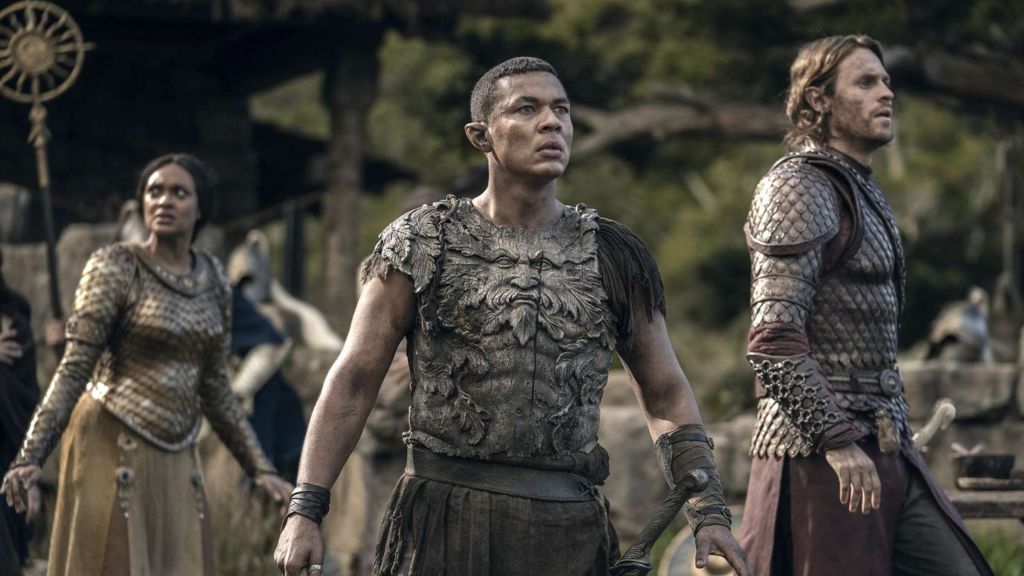
And considering all of this, someone might still say that it would’ve been better if The Rings of Power had never been made in the first place, but the truth is that this assumes the only valid way to adapt Tolkien is to have access to absolutely everything he ever wrote. It makes sense, but that’s not really a rule of adaptation. Why should not having every additional detail automatically mean the story shouldn’t be adapted? Especially when this is one of the most cinematic periods found in Tolkien’s original material. Nothing on TV is ever going to be 100% perfect, and pretending the show has no flaws would be a pretty weak defense anyway, since Season 1 has some obvious pacing issues and some creative choices clearly didn’t have the same impact the writers were probably hoping for. But saying the whole thing is bad feels like a bit much.
If you really think about it, Peter Jackson changed Tolkien too, cutting Tom Bombadil and the entire Barrow-downs sequence, giving Arwen a much bigger role, turning Faramir into an obstacle for Frodo and Sam, giving Aragorn an identity crisis that doesn’t exist in quite the same way in the book, and removing the Scouring of the Shire. The main difference is that he had an entire trilogy to adapt, while The Rings of Power is working with a much more fragmented amount of material.
In the end, The Rings of Power isn’t The Silmarillion on TV, and it never could have been. It also isn’t a perfect adaptation of the Second Age, and it definitely shouldn’t be treated as if every decision it makes is automatically brilliant just because Tolkien left gaps in the story. It’s a production that had to work within a specific set of rights, use the information available to it, take references from the Tolkien Estate, and build a lot of the story on its own. But as a whole, the show is pretty entertaining. There’s a reason it has stuck around, gained an audience, and has plenty of people still excited to see where Season 3 takes things. But if all of that still isn’t enough to convince some fans, then maybe it’s worth accepting that the series just wasn’t made for everyone, unfortunately.
More TV Shows
-
Image Courtesy of ABC Networks -

Image Courtesy of Disney