Sometimes you come across a great TV show, but the second you realize it’s an adaptation, you start looking at it differently (especially if you read the original material first). People usually tend to judge these kinds of productions more harshly since faithfulness is hard to let go of. But not every adaptation needs to be a one-hundred-percent copy of the source material to work. In fact, several hugely popular shows became famous because they made big changes — sometimes for the better, sometimes not. And that’s exactly why we decided to make this distinction here.
Videos by ComicBook.com
Here’s a selection of TV shows that turned out to be incredible, surprised audiences, and won over a lot of viewers. They’re all adaptations, but compared to their original material, they’re also very different. At the end of the day, being a faithful adaptation and being a genuinely good TV series are two completely different conversations, right?
10) Under the Dome

Many people would call Under the Dome a guilty pleasure throughout its three-season run before cancellation, and it’s easy to understand why. Somewhere along the way, the show completely lost sight of what made Stephen King’s book work, but it remained incredibly entertaining to watch. The story follows the residents of Chester’s Mill as they try to survive after a mysterious dome suddenly cuts the town off from the rest of the world. The thing is that the original material approached that premise in a very different way.
King was much more interested in the social and psychological collapse that would come from that kind of situation, while the show focuses on some over-the-top mysteries, chaotic twists, and increasingly wild conflicts. So, as an adaptation, Under the Dome simplifies a lot of its characters and drops much of the book’s social commentary. But as a TV series? It absolutely works since it knows how to keep viewers hooked episode after episode (even when the plot starts getting completely ridiculous).
9) Anne with an E
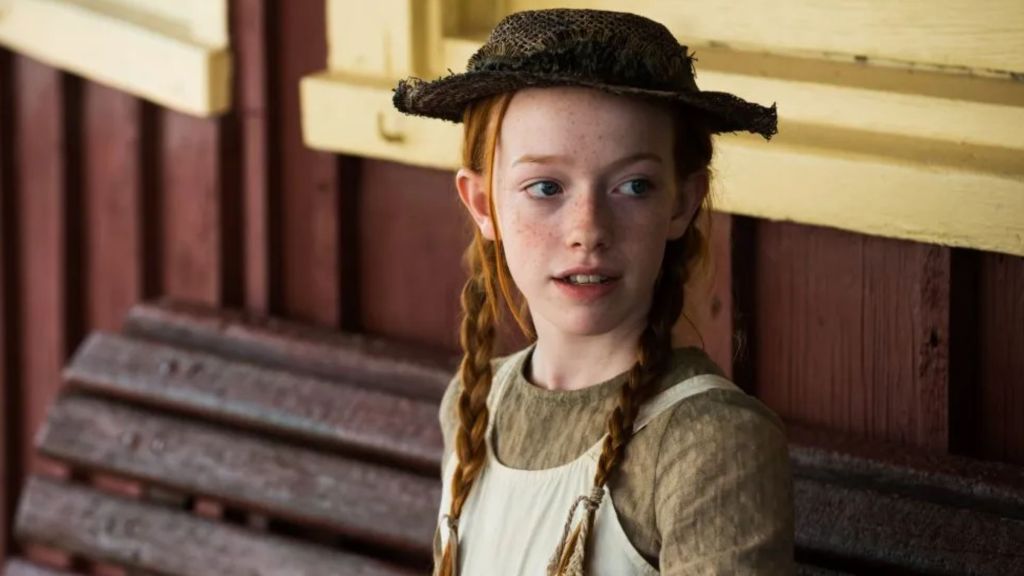
Everybody knows Netflix has a reputation for canceling shows too soon, but Anne with an E is still one of the platform’s most frustrating cancellations to this day. However, for those who read Anne of Green Gables, the adaptation may not have worked quite as well while it lasted. The reason is pretty simple: the series takes that already established world and replaces much of its light, comforting tone with something far more dramatic, emotional, and modern. The story follows Anne Shirley, an imaginative orphan who is sent to live with two siblings in Avonlea and ends up changing the lives of everyone around her.
What makes the show so good is that it portrays Anne less as an eccentric dreamer and more as a girl actively dealing with abandonment and trauma — but that also completely changes the energy of the story. If you look at it strictly as an adaptation, Anne with an E definitely won’t please everyone. But as a standalone TV drama, it understands its target audience extremely well.
8) The Lord of the Rings: The Rings of Power

The Lord of the Rings: The Rings of Power is a tricky case because it really frustrates J. R. R. Tolkien fans — and for understandable reasons. The series serves as a prequel to the famous movie trilogy, exploring Sauron’s rise and the events leading to the creation of the Rings of Power while expanding different regions of Middle-earth during the Second Age. The problem is that it changes timelines, merges events separated by thousands of years, and creates entirely new storylines that often feel far removed from what the author actually wrote.
Overall, The Rings of Power wins people over much more through its production quality than through its adaptation choices. For many viewers, the show feels more focused on looking epic than on capturing the mythological depth that defined Tolkien’s work in the first place. It’s still a solid fantasy show, and for people who have never really engaged with the original material, it can be very entertaining. On the other hand, as an adaptation, it’s hard to call it an ideal representation of LOTR‘s world.
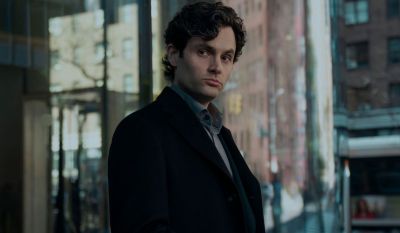
7) Foundation
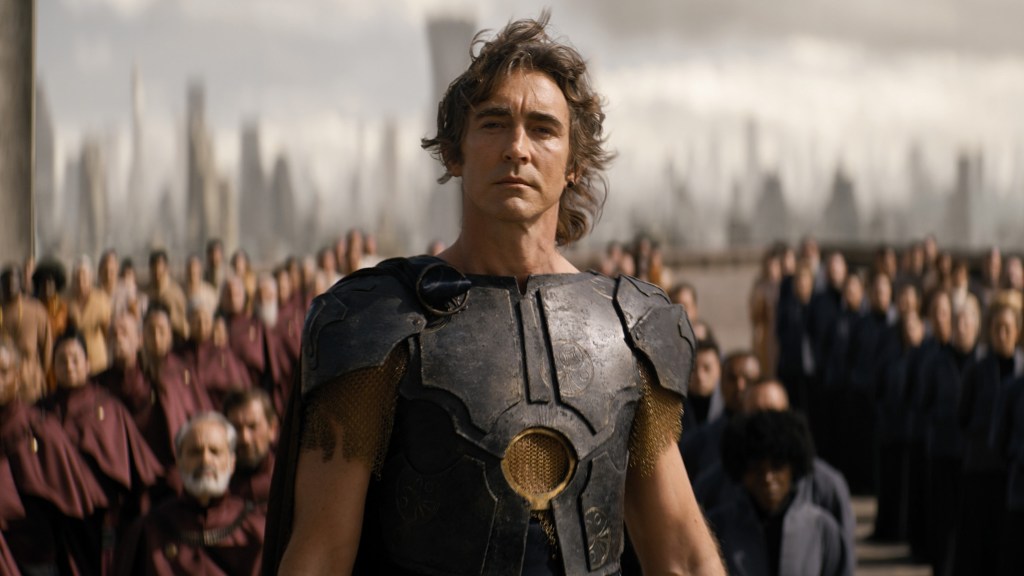
Adapting Isaac Asimov has never been an easy task since his sci-fi stories were always far more focused on ideas and philosophical discussions than on deeply emotional characters or engaging plots. Foundation is no exception, which is exactly why the series had to become something different in order to work on TV. The adaptation follows Hari Seldon as he tries to preserve humanity’s future after predicting the inevitable collapse of the Galactic Empire. And considering the serialized TV format, expanding the material was honestly necessary.
The show creates relationships, conflicts, and even entire storylines that never existed in the original books. But unlike something like The Rings of Power, this may have actually been the right decision. Those changes cause Foundation to lose some of the cold intellectual tone that made Asimov’s work feel so unique, but in exchange, the series gains a much stronger dramatic scale. The entire Imperial clone storyline, for example, is so compelling that it occasionally steals attention away from the main plot altogether.
6) One of Us Is Lying

Underrated, One of Us Is Lying is the adaptation of a book that never actually managed to please everyone. The original material moves fast, has tension, and uses several POVs really well, but the resolution is often criticized for not being as strong as the premise promises. And the adaptation tries to fix some of that. The story begins when five students walk into detention, and only four make it out alive, immediately turning the entire group into murder suspects.
What the show does differently is give the characters much stronger personalities and focus far more on the dynamics within the main group. That makes the overall experience a lot more entertaining. On the other hand, many of the changes also weaken the impact of some of the book’s biggest reveals. Overall, One of Us Is Lying has both strengths and weaknesses when it comes to its adaptation choices, but it still ends up being the kind of show that’s incredibly easy to binge-watch.
5) Game of Thrones

Game of Thrones is still controversial to this day. The series follows different families fighting for control of Westeros while some big threats begin to emerge in the background. It makes this list because it started incredibly strong, staying very faithful to George R. R. Martin’s books throughout its first four seasons, but after that, the creative freedom goes much further. For a long time, though, that wasn’t even a major issue, because what really mattered was that the show kept delivering massive episodes, remarkable characters, and huge moments (which is exactly how it kept attracting more and more viewers).
The problem came with the final season, because that’s when everything completely fell apart. Without proper source material and clearly rushing toward the ending, the show lost its sense of direction. Still, it’s hard to argue that the entire production is bad just because of its ending. Game of Thrones completely redefined what audiences expected from fantasy TV and became a phenomenon that still hasn’t really been matched.
4) Outlander

One of the things Outlander fans loved most about the show was just how faithful the adaptation initially was. At least during its first three seasons (especially the first one), the series followed the books very closely. The story centers on Claire Randall, a nurse who unexpectedly travels back in time to 18th-century Scotland and develops an intense relationship with Jamie Fraser in the middle of wars and political conflicts. And since the source material is absolutely huge, packed with historical detail and thoughts, adapting it exactly as written was never going to be easy.
Because of that, changes eventually became unavoidable — there’s simply no realistic way to fit every detail from books that large onto the screen. So, Outlander starts taking more creative liberties, but without losing the core of what made the story work in the first place: the relationship between its two leads. That’s ultimately what keeps fans emotionally invested in the series.
3) The Fall of the House of Usher

The Fall of the House of Usher is not a direct adaptation of Edgar Allan Poe’s work, that’s true. But saying the show isn’t really based on anything would also be completely wrong. What it does instead is take several of the author’s stories and build a series around wealth, corruption, and moral decay. The story follows the powerful Usher family as their empire begins to collapse after the heirs of their pharmaceutical company start dying in brutal and highly mysterious ways.
And of course, making that work requires major structural and narrative changes. But this is also a project created by Mike Flanagan, who has basically become one of the biggest names in modern TV horror, and he manages to preserve the exact sense of doom and inevitability that always defined Poe’s writing. A completely faithful adaptation probably wouldn’t have been nearly as entertaining, not to mention how difficult it would’ve been to pull off. So, The Fall of the House of Usher is a mix of horror, family drama, and social commentary without feeling like just a collection of literary references thrown together.
2) The Boys
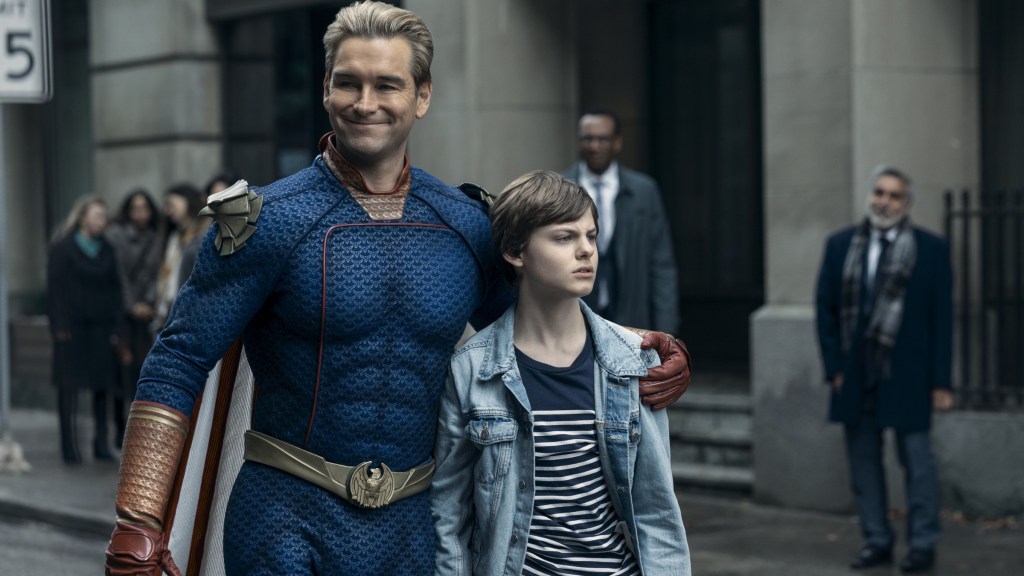
The Boys makes this list as it completely reinvented what a superhero show could look like on TV. And the most interesting part? It did that by moving pretty far away from the original material. The adaptation follows a group trying to take down corrupt superheroes who are treated like global celebrities and corporate products. In the comics, though, the story became infamous for its extreme violence, aggressively crude humor, and shock value. Does the series still have those elements? Absolutely, just in a very different way.
What the adaptation understood is that shock alone isn’t enough to sustain a great show. For the story to really work, it needed stronger character development and actual emotional weight behind the chaos. That’s why characters like Homelander, Butcher, and Starlight have far more depth in the series, and it makes a huge difference. The tone is also more serious overall. The TV version of The Boys is still brutal at times, but now there’s real emotional tension underneath all the violence and satire.
1) Interview with the Vampire
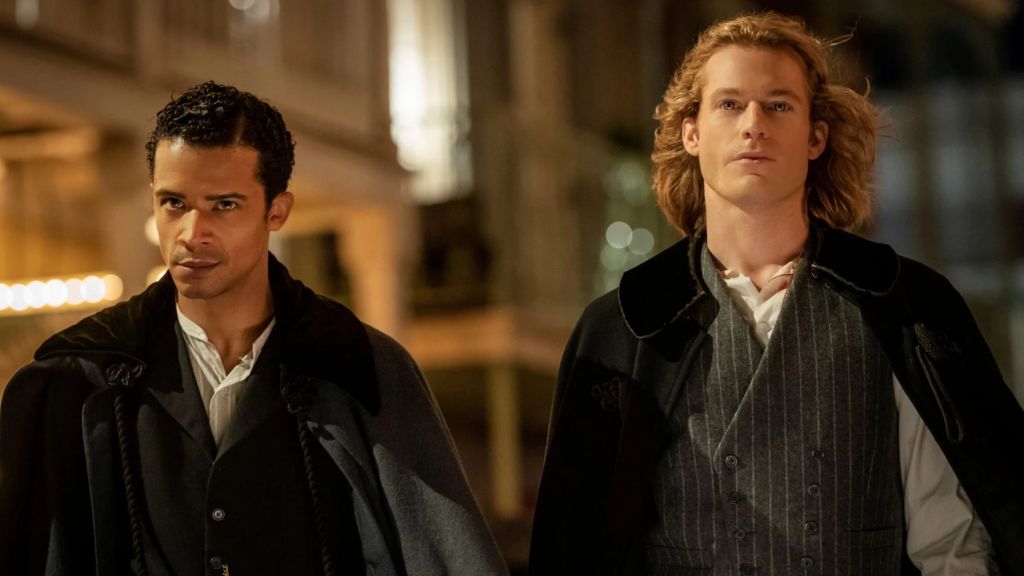
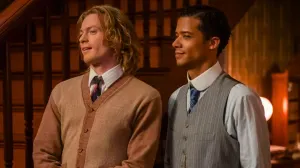
Out of so many TV adaptations today, Interview with the Vampire might be one of the ones that strays the furthest from its source material. The series changes so much from Anne Rice’s books that it would’ve been easy to imagine fans completely rejecting it. We’re talking about major shifts in historical periods, reworked character structures, and relationships that were once more subtle, becoming far more emotionally explicit. The story follows Louis as he recounts his life as a vampire and his intense, destructive, and obsessive relationship with Lestat across several decades.
So why does it work so well? Because every single one of those changes is incredibly intentional: the purpose is to deepen themes that already existed in the books. It’s not that Interview with the Vampire was difficult to understand on the page, but subtly modernizing the story and creating a more distinct approach for TV ends up being a really smart strategy. Of course, that kind of reinvention could’ve easily gone wrong if it hadn’t been handled carefully, but the series pulls it off. It’s one of the strongest genre shows released lately.
Have you watched any of these shows? Which one do you think should’ve made the list? Leave a comment below and join the conversation now in the ComicBook Forum!
More TV Shows
-
Courtesy of 20th Television Animation / Hulu