It took nearly ten years for Stranger Things to finally reach its long-awaited conclusion, complete with both highs and lows. When Volume 1 of the final season dropped, many fans were relieved to see the show already closing some arcs and answering questions that had lingered for years. For others, it still didn’t feel like much, but that was understandable — it was clearly meant as an introduction. Then Volume 2 arrived, cracks started to show, and discussions quickly took over social media, with some fans even launching a petition asking Netflix to release deleted scenes. By the time the series finale aired, plenty of viewers said they were satisfied, while others walked away feeling their expectations hadn’t quite been met.
Videos by ComicBook.com
It’s normal for series finales to divide audiences (as long as they don’t follow the Game of Thrones route). Still, the worst thing Stranger Things ultimately did was refuse to give definitive consequences to the characters who actually matter. When it comes to Eleven (Millie Bobby Brown), her fate depends on how the viewer chooses to interpret it, but overall, the reality is that no main character met a truly tragic end (which had been one of the most heavily debated topics since the first announcements of the final season). That decision is understandable, considering the Duffer Brothers have repeatedly said the show was always about friendship, growth, and hope rather than gratuitous brutality. Even so, understanding a choice doesn’t automatically make it narratively coherent, right?
Why No One Dying in Stranger Things Was a Mistake
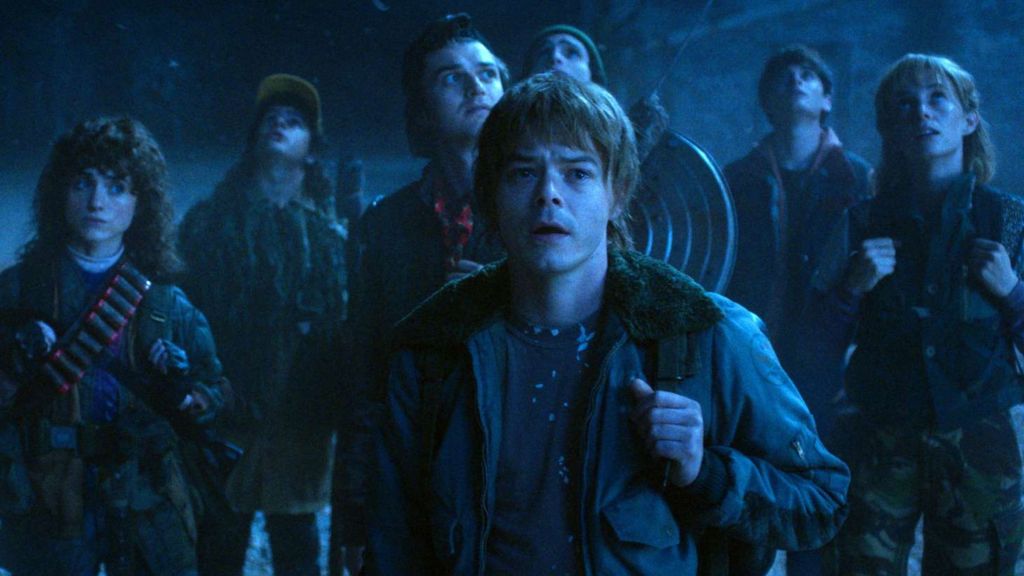
When you spend years teaching your audience to fear danger, to fear a major villain, and to believe the world could genuinely end, choosing a completely safe ending feels less like thematic consistency and more like hesitation to go all the way. And the main issue isn’t the absence of death itself, but the contrast between what the show carefully built and what it ultimately delivered.
Stranger Things evolved far beyond the youthful adventure of its first season. Starting with Season 4, it fully embraced horror right out of the gate: explicit mutilations, graphic deaths, and heavy themes like depression and guilt. Vecna (Jamie Campbell Bower) was never just another monster — he was personal, psychological, and deeply intimate. But the finale largely ignores that weight and lets every main character walk through the “apocalypse” more or less untouched. The result feels like a strategic retreat rather than an organic creative choice.

That becomes even more obvious in how the series repeatedly toys with danger. Stranger Things spends a lot of time crafting fake-out goodbyes, framing scenes to look like final moments, and placing characters in situations where death seems unavoidable. From Steve (Joe Keery) surrounded by monsters, to Hopper (David Harbour) on near-suicidal missions, to Nancy (Natalia Dyer) and Jonathan (Charlie Heaton) nearly being consumed by an exotic substance from the Upside Down, to Eleven pushed to the absolute limit of her powers — the show constantly signals that something irreversible is coming. These scenes are designed to create anxiety, but they lose impact because the audience has been conditioned not to believe the threat. When everything turns out fine, tension gives way to a sense of manipulation.

Comparing this to past deaths only makes the issue clearer. Characters like Bob (Sean Astin), Billy (Dacre Montgomery), and Eddie (Joseph Quinn) died to prove the universe had stakes, but they were always secondary figures, introduced — as many viewers eventually realized — with an expiration date. To avoid killing core characters, the show regularly brought in new faces to keep the plot moving, even though it was clear they wouldn’t survive. This established a pattern: Stranger Things kills characters who can be sacrificed without damaging the emotional core. By the end, that pattern works against the show. The audience can clearly see the narrative armor protecting the protagonists, which drains any real sense of danger, even in the final battle.
And the truth is that some character arcs practically demanded a harsher ending. Hopper is the most obvious example: a man defined by loss, guilt, and a constant willingness to sacrifice himself. His journey always pointed toward a conclusion that felt consequential rather than comfortable (even though in Season 3, with his fake-out death, the show made it clear nothing would really happen to him). Steve is another case, which is why so many fans believed he was a prime candidate for a tragic end that would give his entire arc deeper meaning. In the series finale, when it looks like death has finally caught up to him, it turns out to be just another scare. And then there’s Eleven, who arguably carries the heaviest narrative burden of all.
The Stranger Things Epilogue Feels Too Safe
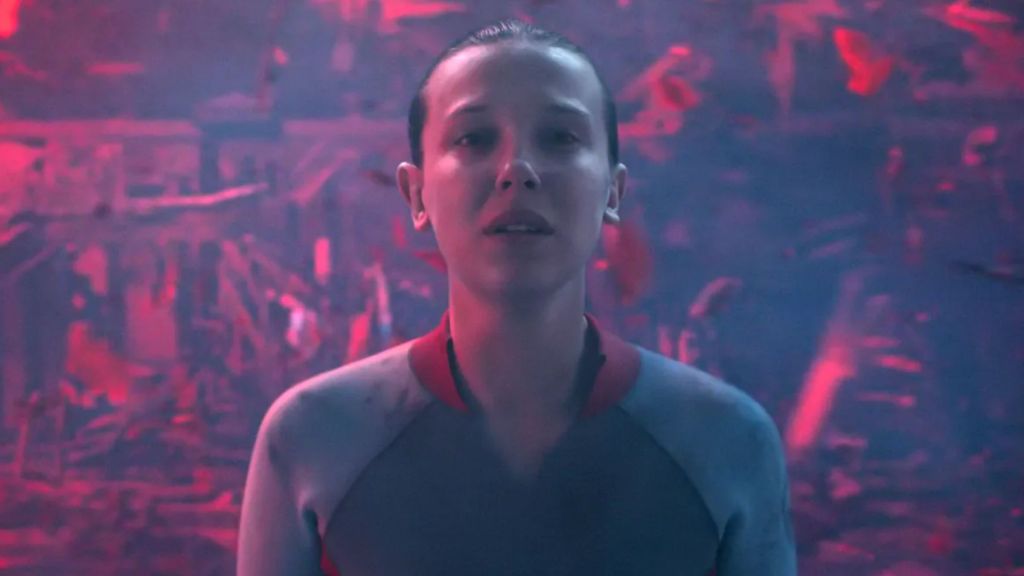
Honestly, leaving Eleven’s death as a question mark for both the audience and the characters isn’t a terrible idea on its own. But when you consider every major decision the show has ever made about death, her fate feels like something that needed clearer emphasis. If there’s one thing that always made sense, it was that something irreversible would eventually happen to her. From the very beginning, her story has been about giving things up like childhood, identity, and normalcy to save others. Because of that, a tragic ending to her arc felt inevitable, especially given her direct connection to the Upside Down. So, wrapping up that entire journey without a clear loss on her part significantly weakens the impact of everything that came before. And if there’s one thing Stranger Things was always known for, it was being impactful.
And okay, it’s easy to see why many viewers walked away satisfied. The show closes its arcs in an emotionally honest way, delivers reunions that feel earned, and uses the epilogue as a kind of affectionate goodbye after years of shared history. However, the issue isn’t that the ending is emotional or comforting, but it’s that when you spend so much time flirting with the end of the world and the idea that nothing will ever be the same, you can’t treat that fallout as a secondary concern in the final stretch.
That’s where the argument that emotional trauma can replace death starts to fall apart. If the series truly wanted to stand by that idea, the epilogue needed to focus less on restoring balance and more on showing a world permanently altered by what happened. Instead, Hawkins is still standing, the group remains together, and the future feels challenging but manageable. That creates an odd disconnect, because the final battle against Vecna carries strong moral weight (justice, revenge, and doing what’s right), but very little structural weight. It’s no surprise that many fans felt the confrontation was rushed. It isn’t poorly executed, but it feels abrupt exactly because the promised “end of the world” never fully materializes.

The scene prioritizes emotion over spectacle, and that choice alone isn’t a flaw — Stranger Things has always worked best when it leans into relationships and feelings. The problem is that, in a finale, those elements don’t have to cancel each other out. The show carefully established Vecna as more than just a villain; he was the direct consequence of everything Eleven endured and unleashed as a child. Resolving that threat without a clear, irreversible loss — especially when Eleven’s survival itself is treated as a near-procedural ambiguity — dilutes the sense of danger the series promised from the very start. A definitive death wouldn’t have improved the scene through shock value, but by making the stakes tangible. Without it, the ending works and resonates emotionally, yet still feels like it holds back at the exact moment it should have gone all in. The Season 4 finale remains the clearest example of the direction the final chapter arguably should have followed.
In the end, no one is saying Stranger Things needed to turn into a bloodbath to earn a great series finale. But after promising real danger, like the kind that had audiences around the world anxiously convinced someone wouldn’t make it out alive, delivering pure emotional safety creates a clear imbalance between expectation and execution. The Duffer Brothers had valid reasons to protect their characters, but overprotection can weaken a story just as much as excess cruelty. Stranger Things ended without central losses, and that doesn’t make the finale bad at all — it simply makes it smaller than it could have been.
Do you think the Duffer Brothers made the right call when it comes to character deaths? Leave a comment below and join the conversation now in the ComicBook Forum!
Most Viewed
-

Image Courtesy of Netflix -

Image Courtesy of Ufotable -

Warner Bros. Pictures -
Image courtesy of Warner Bros. Pictures -
Image Courtesy of Netflix -

image courtesy of Studio Ghibli