If hit adult animated dark comedy Helluva Boss has had one constant over its chaotic two-and-change seasons, it is that Stella, the estranged wife of the owl-like Goetia demon Stolas, is the absolute worst. Stella is loud, angry, physically violent, and seemed to take pleasure in psychologically tormenting her husband for no good reason while simultaneously— no exaggeration here— hiring an assassin to kill him. She also seemed to harbor malicious intentions towards her and Stolas’ daughter Octavia, wanting to keep Octavia away from Stolas and gain tight control over the younger Goetia’s path in life. It is barely exaggeration to say that, until the premiere of Helluva Boss Season 3 episode 5 this past week, the fandom was united in absolute hatred of this character with everyone wishing her nothing but the worst. The only occasional breaks from this trend where people who loved her as a villain or “mean girl icon”, people who criticized her (seemingly) one-dimensional depiction as the evil ex-wife, and the occasional hint of awareness that Stella, despite her abusive nature, had been forced into this arranged marriage just as much as Stolas had and thus was also a victim on some level.
Videos by ComicBook.com
In fact, despite Helluva Boss sharing a universe with Hazbin Hotel— a show focused on the concept of Redemption— Stella was one of the few characters in this shared universe widely believed to be utterly irredeemable. However, this past Wednesday, all of that came crashing down as the release of Season 3 episode 5 “The Auction” left many fans shocked to realize that not only do they now care about, and even sympathize with, Stella, but that the truth about her character had been hiding in plain sight all along.
Stella Never Loved Stolas— She Needed Him
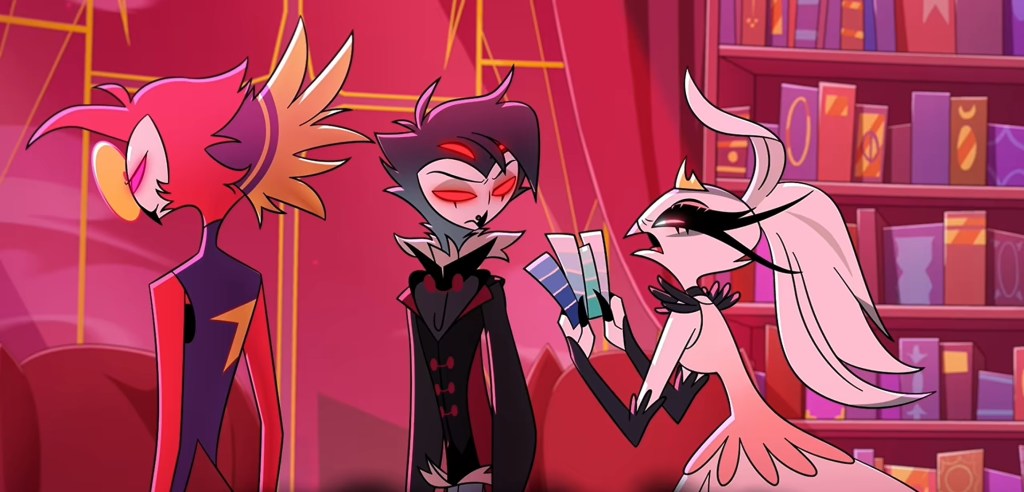
Before we get into the reasons for Stella’s sudden acceptance in the eyes of the fandom, it needs to be clarified that none of this information excuses anything she did. Stella is abusive, cruel, and murderous, that much is clear, canon, and unchangeable. The context behind her actions puts them in a new light that, while it does not exonerate her, casts her behavior as geared towards survival rather than wanton, cartoonish villainy.
In “The Auction”, it is revealed Stella’s brother Andrealphus, having previously usurped Stolas’ throne in Season 2’s penultimate episode, is now selling off both Stolas’ and Stella’s possessions, effectively giving him complete control over his sister’s finances and wellbeing under Goetia inheritance laws. This total control has only empowered Andrealphus to intensify his cruel and creepy treatment of Stella, and these scenes— combined with a flashback that shows that this behavior is far from new— shed light on the true disturbing nature of the siblings’ relationship. Stella has been the target of consistent control, manipulation, and deeply inappropriate behavior— at least sexual harassment, though we don’t currently know the full extent of it — from her own brother. Her loveless arranged marriage to Stolas was not merely about keeping up appearances or producing an heir— it was her only way out.
Stella never loved Stolas, and she knew that he didn’t love her, but she did not want nor expect his love. Her marriage to Stolas was all that Stella had to keep her tied to some level of stability in the comfortable, socially-accepted role as wife and woman of the household. Stella understood how tenuous this security was from the beginning, as if Stolas chose to leave her— which he has visibly wanted to do since before their wedding— both Stella and her underage daughter Octavia would be thrown back into Goetia social circles with little or no protection. Initially, Stella tried to make stolas aware of her needs, albeit indirectly— in the flashback scene, a younger Stella is whining and carrying on, begging a younger Stolas to “be a man for once” and stand up to Andrealphus about her right to choose her own wedding dress and decor. This sort of speech and behavior may seem overdramatic when applied to the color of wedding decorations, but in the context of Andrealphus’ controlling and inappropriate behavior around her it is clear that Stella’s tantrum here has a deeper meaning.
Unfortunately for Stella, Stolas, as is the case in more than one of his relationships, is seemingly unaware of — or perhaps unwilling to confront — the power he holds over his partner. Instead of understanding the cry for help and using his status to make Andrealphus back down, Stolas dismisses his betrothed’s pleas as self-centered and annoying. To Stella, Stolas’ lack of care and action on her behalf in that moment was— intended or not— the first of many failures to fulfill his expected social role and thus ensure Stella’s safety. We see that by the time Stella is expecting Octavia, she has been given no further reason to believe Stolas will be a dependable partner and is already pushing him away— and the thing is, Stella is right.
Stolas’ Actions Threatened Stella and Octavia’s Safety
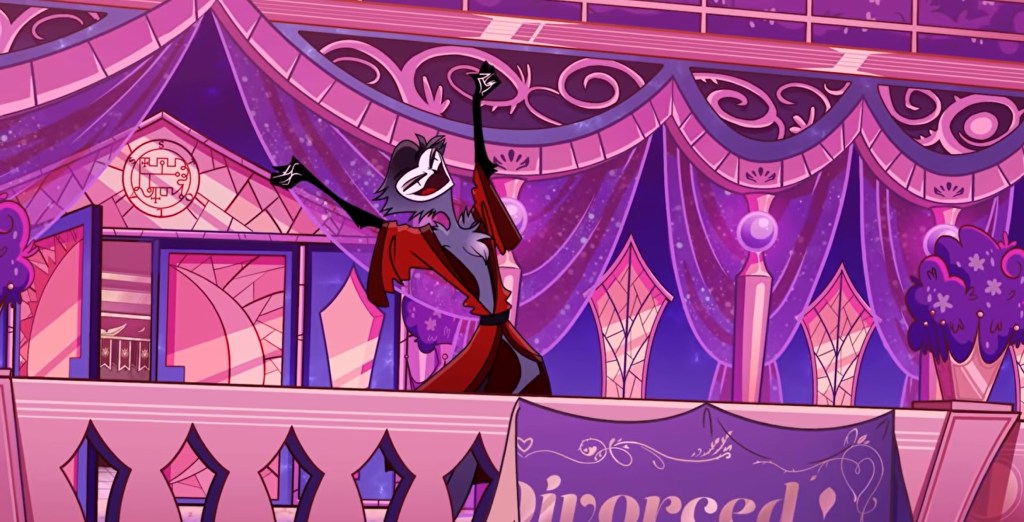
Even in Stella and Stolas’ earliest interactions, Stolas is lost in his own head, brooding over the misery of an arranged marriage and fantasizing about running away. He’s had one foot out the door since before they were wed, and Stella knows that. Holding no power over him and unable to bring herself to speak the truth of her situation out loud, she retaliates the only way she’s ever known— with anger, outrageous tantrums, and casual cruelty.
It is in this context— shown to us via flashback in Season 2 episode 1 “The Circus”— that Stolas, chafing within his loveless marriage and literally henpecked by his cruel wife, sneaks away from Stella’s “Not Divorced Yet” themed anniversary party to sleep with an imp. Said imp, Helluva Boss‘ protagonist Blitzo, falls off Stolas’ balcony mid-getaway and crashes into Stella’s table at the party, a disruption which Stolas uses to announce that he’s divorcing her. As prior to “The Auction” this was the first time that viewers had met Stella, it was easy for audiences to assume that Stella’s demeaning, explosive, and violent behavior towards Stolas was the cause of his unfaithfulness— however, it now seems that Stolas’ unreliability came first, with Stella’s frustration and cruelty being only the reaction.
“The Circus” showed how with just one impulsive decision, Stolas put in motion the destruction of the social, legal, and financial protections that Stella relied on to create a safe space for herself and Octavia away from the prying eyes and touchy hands of Andrealphus and the other Goetia. Stella’s violent initial reaction and increasingly abusive behavior makes more sense coming from someone who has just had their hard-earned social status and safety, and the safety of their child, undermined for the sake of a fling. The impending danger that Stella faces becomes even clearer during Stolas’ and Stella’s confrontation on the balcony later in the episode. There, Stolas completely disregards Stella’s panic as she demanded that Stolas not go through with the divorce due to the stigma they would face— and due to the fact that Andrealphus would doubtless find a way to insert himself into the situation— standing firm in his intent to divorce and repeatedly ordering Stella to leave. However, sure enough, the unhappy couple’s next appearance together features Andrealphus as mediator, where he is already making inappropriate verbal and physical advances on Stella— not that Stolas notices or cares.
It is also in this episode where the audience received— and utterly missed— several more strong hints as to what Stella was truly facing in this moment. Stella has hired the assassin Striker to kill Stolas, and when Andrealphus confirms that she intends to kill her soon-to-be-ex-husband, his reaction is strange. While he normally appeared during this period of the show to be Stella’s cartoonish, cackling co-conspirator, here Andrealphus first suggested, and then forced Stella to spare her cheating husband, pointing out that if Stolas dies, Octavia will inherit his titles and wealth, whereas deposing Stolas could give Stella a chance to claim his riches for herself.
Stella’s seeming inability to understand why this is a problem, coupled with her reluctance to call off the murder, is played off as stupidity and irrational bloodthirst during the episode. However, knowing what we know now about inheritance and women’s agency among the Goetia, it seems increasingly likely that Stella chose to have Stolas killed for that exact reason. Stolas’ death would have put his wealth, and at least some of his power, safely in Octavia’s hands rather than risking it (and thus Stella and Octavia themselves) falling under control of a male relative during divorce proceedings— an outcome that would eventually come to pass as Andrealphus himself took Stolas’ throne at the end of Season 2.
Stella’s Actions Have Trapped Her and Octavia in the Very Fate She Feared Most
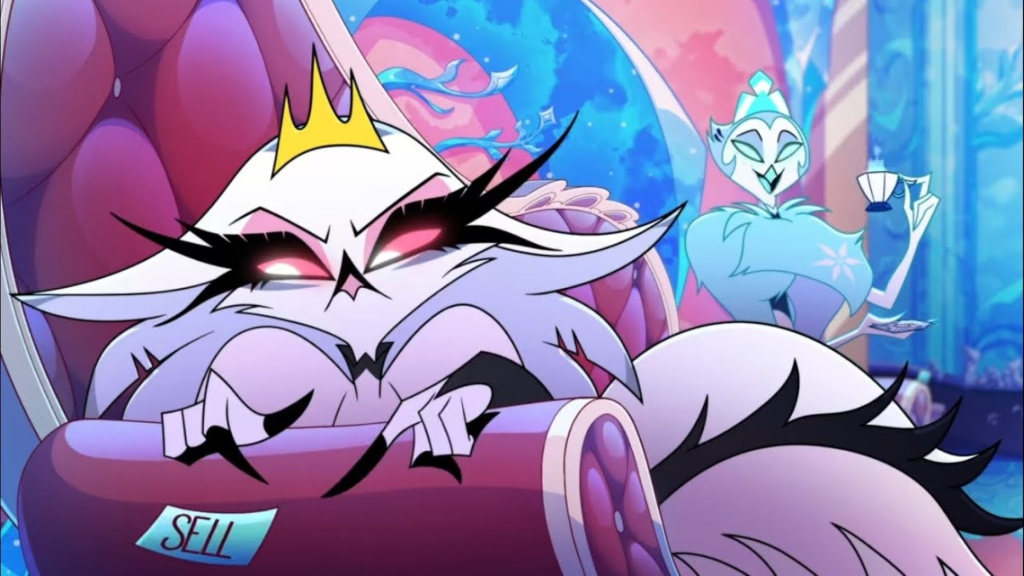
While, following Stolas’ banishment, Stella and Andrealphus initially appeared to be celebrating their victory as equals, it’s clear that Andrealphus didn’t keep up the ruse for long. Stolas’ palace literally has encased in a prison of ice, physically trapping Stella and Octavia inside. In fact, while Octavia has been seen stepping into the palace’s frontcourt during Sinsmas, and escaping via Grimoire portal to go to concerts in the Helluva Shorts minisode “The Princess and the Pupper”, Stella had not been seen at all until the events of “The Auction”— a fact that does not bode well for her quality of life under Andrealphus’ rule. Now, in “The Auction”, as Andrealphus systematically sells off all of Stolas’ valuables, he strips Stella and Octavia of any last vestiges moveable wealth not tied to their titles and status. He says he’s giving the proceeds to Stella, but it seems abundantly clear that this will come with strings attached, if she even sees the money at all.
Stella is not the only one in danger here, as “The Auction” also had Andrealphus making at least one very creepy when discussing Octavia’s engagement prospects. This is another cruelly ironic turn for Stella, as it now seems, with the context provided by this episode, that her control of Octavia (and specifically her desire to get her daughter to side with her over Stolas, despite not ever seeming especially interested in raising a child) is most likely due to her own trauma. Stella is very aware of the dangers faced by young Goetia women, and likely wants to protect Octavia, both from awareness of her own objectification within her social circle, and from connecting with a parent— Stolas— who is unaware of these dangers and unable to protect her from them.
Once again it must be stated that blame for this situation rests at least partially on Stella’s shoulders. Unable to confide the truth of her situation to Stolas and lacking faith in him to be the person she needs in her life, she chose to displace all of her anger, grief and insecurity onto her husband. Eventually, she became so blinded by that displaced anger that, rather than confront Stolas about his failure to protect her, she allowed herself to be led right back into Andrealphus’ control. When talking to Andrealphus in “The Auction”, Stella’s physical and verbal mannerisms are that of a little girl— swinging wildly between pitiful begging, immature and brattish tantrums, and displays of shallow, vain pride. It is clear that at this point, she is fully lost in old trauma, even if she does not have the vocabulary or self-awareness to understand that.
Will Stella be Redeemed?
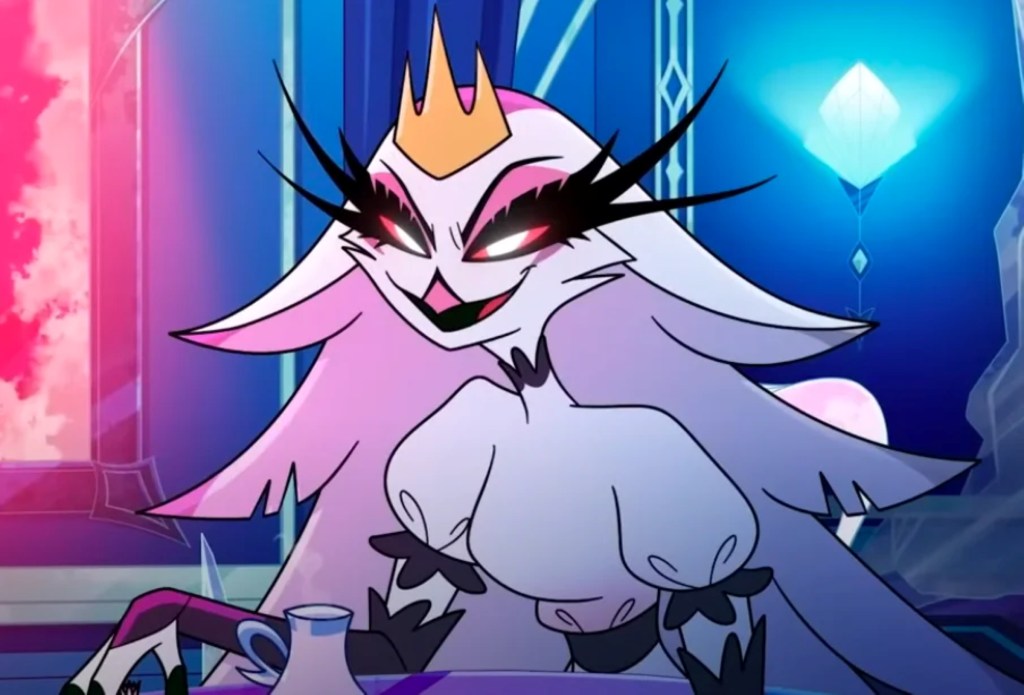
So, with all this in mind, will Stella be redeemed, either in canon or in the eyes of the fandom? It is of course fully possible that, despite us now knowing the reasoning behind her actions, Stella remains a bad guy, albeit more complex and better-liked by the fandom. Sympathetic motives and a traumatic past do not excuse a person’s actions in the present. It could easily happen that Stella continues to react to her circumstances with misdirected and irrational anger, unable to confront the truth of her past or her present— a tragic and trapped villain, but a villain nonetheless. However, it is also very possible that the reality of the situation will fully click for Stella, and that, if for Octavia’s sake rather than her own, she will act to address at least some of the harm she has done.
So, what does that look like? Helluva Boss‘ Season 2 finale, and some of the Helluva Shorts, have already foreshadowed Octavia’s moving in with Stolas and Blitzo, and it seems increasingly likely that this will happen less due to Octavia preferring Stolas, and more as a necessity as life under Andrealphus’ control becomes increasingly dangerous for her. Whether this inevitable escape is Octavia’s own choice, or Stella is the one to make the call on moving her daughter to Stolas’ custody, Octavia will likely be the common thread that brings Stella around to the side of our heroes. Of course, this does not mean that Octavia would join the I.M.P crew, or be forgiven for anything, or that she and Stolas need to reconcile— all redemption arcs aside, she’s a mean and shallow person at heart, and there is no reason that she and Stolas need to try to like each other.
For Stella, redemption is not about undoing her actions, mending relationships or even being a good person. If Stella’s villainous role throughout the series has truly been based in misguided attempts to preserve a safe and stable life for herself and Octavia— and in projecting her anger onto Stolas rather than face the true source of her trauma— then her redemption must come from her confronting, face-to-face, the person who groomed her into fear and cruelty, the same person who is the reason she and Octavia are so desperately dependent on Stolas’ male-gendered protector role for their safety, and who has now reaped the rewards of Stella, Stolas, and Octavia’s pain and conflict. If Stella is to truly make amends for her prior role in the show, she must face Andrealphus and finally turn the full force of her rage on its proper target — and hey, if she does, maybe we’ll finally see her use her powers.
More TV Shows
-

Sauron holding the One Ring in The Lord of the Rings: The Rings of Power. -
Halloween is Grinch Night shows the Grinch at his most unhinged and fearsome state. -

Image Courtesy of South Park Studios