You know when a show blows up, becomes a hit, and before it even ends, they already greenlight a spin-off? The thing is, that’s become so predictable that, most of the time, it’s a decision that should be questioned over and over before anyone officially signs off on it. The industry tries to sell it as universe expansion, but it’s usually just brand maintenance, and everyone knows it. If you actually stop and look at how many spin-offs exist right now, you’ll notice that a huge chunk couldn’t even survive long enough to keep going, and the rest rarely has the same level of appeal as the original show. Most of them are made to fill streaming space, keep fans hooked, and make more money — not because there’s a story that truly needs to be told.
Videos by ComicBook.com
What’s funny is that, because of that, when a spin-off actually works, it automatically feels even better than it is. And that’s because it breaks a pattern that has basically become the rule. And with that in mind, there’s one series that, despite having a very loyal fanbase and being connected to one of the few truly consistent shows on TV right now, almost nobody seems to know exists. It’s easy to see the internet debating the same titles, posting endless threads about Game of Thrones or Stranger Things, but here you’ve got a show with drama, character development, and narrative cohesion from the very beginning that’s kind of enviable.
Outlander: Blood of My Blood Is One of the Best Spin-Offs a TV Series Has Ever Had

Outlander: Blood of My Blood isn’t “more of the same.” It’s a prequel that follows two parallel love stories: on one side, Brian Fraser (Jamie Roy) and Ellen MacKenzie (Harriet Slater) in 18th-century Scotland; on the other, Henry Beauchamp (Jeremy Irvine) and Julia Moriston (Hermione Corfield) during World War I. It’s the story of Jamie (Sam Heughan) and Claire’s (Caitríona Balfe) parents from Outlander, but told with its own structure. At first, it might’ve seemed like an experiment to see if it would stick, especially since it doesn’t have a book series backing it up the way the original show does, and no one really knew if fans would even want to see that story explored in detail. But it’s already heading into its second season this year, which pretty much tells you everything you need to know about whether it worked.
It’s never been as widely talked about as it should be, but if you’ve watched Outlander, you know the series was never just a period romance with time travel. It always had a very specific edge: characters who evolve over time without forced arcs, conflicts that have real consequences like wars and murders, and historical accuracy that makes the whole story feel grounded, balanced, and real. And even if it’s underrated or doesn’t attract the mainstream crowd, it never really needed that to be one of the best-written sci-fi fantasy shows out there. So what makes its prequel so interesting is that it clearly understood all of that and didn’t try to reinvent what already worked.
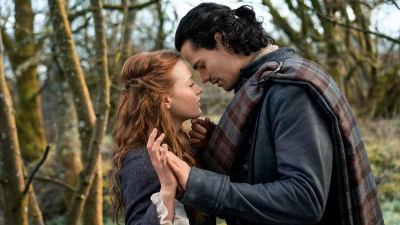
What Blood of My Blood does is take Outlander‘s DNA and use it as the foundation for a story that genuinely adds something. It’s not a show created out of the need to explore something just because there’s an audience for it. The goal is to show where the emotional legacy that always sat at the center of the original series actually comes from. Try finding a spin-off today with that kind of purpose, and you’ll realize how rare it is. That’s why this show deserves way more credit than it gets.

Plus, the biggest win for Blood of My Blood is that it feels like a real production, not some kind of appendix meant to explain random details from Outlander. Ever since it premiered in 2025, it’s never felt like filler content made to hold people over until the final seasons of the original. It carries the same tone, but it has its own pacing, its own situations, and most importantly, its own identity.
The two-timeline format is also a smarter move than it might seem at first, because it’s not just a decision meant to keep things visually fresh. The series uses that structure to create parallels and contrasts between two types of love and two types of survival. 18th-century Scotland has a cultural and political weight that’s completely different from England in the middle of World War I, and that contrast gives each storyline its own personality (especially when both couples end up in the same time period because of time travel).
And when you put all of this next to what’s happened with other shows and their spin-offs — most of which end up drowning in too much lore, messy writing contradictions, or seasons that feel rushed — it’s even weirder that this one hasn’t become a bigger conversation. These days, people are paying closer attention to consistency and are actively looking for shows that feel like they know what they’re doing. Nobody wants generic TV anymore.
Why This Prequel Actually Makes Sense to Exist

Honestly, most spin-offs (especially prequels) don’t make sense. Or worse: they only make sense inside a writers’ room or an executive meeting. A lot of them are built around an idea that’s basically become a cliché: “What if we showed how it all began?”, as if viewers are desperate to see the origin story behind every single detail. But Outlander has always been a story where past and present blend together in a very organic way. Time travel is literally the engine of the series, so a prequel that explores the roots of both main families and how that sci-fi element may have started and shaped everything feels like a natural extension.
Blood of My Blood doesn’t need to force connections. Its link to the original show is the fact that it’s built into the story itself. Outlander has always portrayed love as something shaped by fate, historical context, and trauma. So, going back to earlier generations reinforces the core theme: how someone’s life can be defined by misinformation, incomplete versions of their own history, and events they never had any control over. A good example? In the spin-off’s first season, we learn that Claire’s parents didn’t die the way she always believed they did, which means there’s a real reason this story exists, and it makes you look at the original series differently.

Besides, there’s another important detail: the characters are treated like actual leads, not just younger versions of people the audience already knows — and that’s crucial. A classic prequel mistake is reducing everyone into a function, like “this is character X’s mom” or “this is character Y’s dad,” as if they only exist to explain someone else’s origin. Blood of My Blood avoids that, because Brian, Ellen, Henry, and Julia (and obviously the supporting characters) all have their own struggles, conflicts, and goals, plus lives that don’t revolve around the future you already know is coming. In fact, in this spin-off, anything can happen because Outlander‘s past is full of mystery. You might assume you know a character will die later on, but are you sure that’s what really happened?
Blood of My Blood doesn’t exist to replace Outlander or to stretch the universe just for the sake of it. It exists because there’s real dramatic potential there, and that’s a big difference in today’s TV landscape. It’s a spin-off that knows how to deepen its world, enrich its characters, and give us a story that stands on its own without using nostalgia as a crutch.
Outlander: Blood of My Blood is available to stream on Starz, with Season 2 confirmed to premiere this fall.
Were you already familiar with this show? Leave a comment below and join the conversation now in the ComicBook Forum!
More TV Shows
-
Image Courtesy of Marvel