Cartoons in the 90’s were a different breed compared to the decade prior. The times had shifted from silly animals walking away unharmed after being blown up by sticks of dynamite into a gritty landscape that, while still fantastical, were grounded in reality. It was the era of extreme, trading bright neon colors for darkness and adding muscles on top of muscles. But there was one series that pushed the limits of what a toon on TV could show that may have gone too far – and surprisingly, the company behind it was Disney.
Videos by ComicBook.com
Gargoyles was Disney’s answer to Fox Kid’s Batman and X-Men animated series, which were dominating ratings and driving merchandising revenue in a way that made the entire animation industry stop and take notice. Starring a group of monstrous medieval statues who awakened at night to become crime-fighting forces of good in modern times, Gargoyles was at the threshold of a bold new era for kids’ cartoons. It wasn’t long before Disney’s new animated experiment tested the limits of this concept, but the results might not have been what they hoped for. What should have been a milestone for children’s television turned into a huge headache with a load of controversy that permanently affected this otherwise bold and brilliant cartoon.
Gargoyles’ Most Controversial Episode
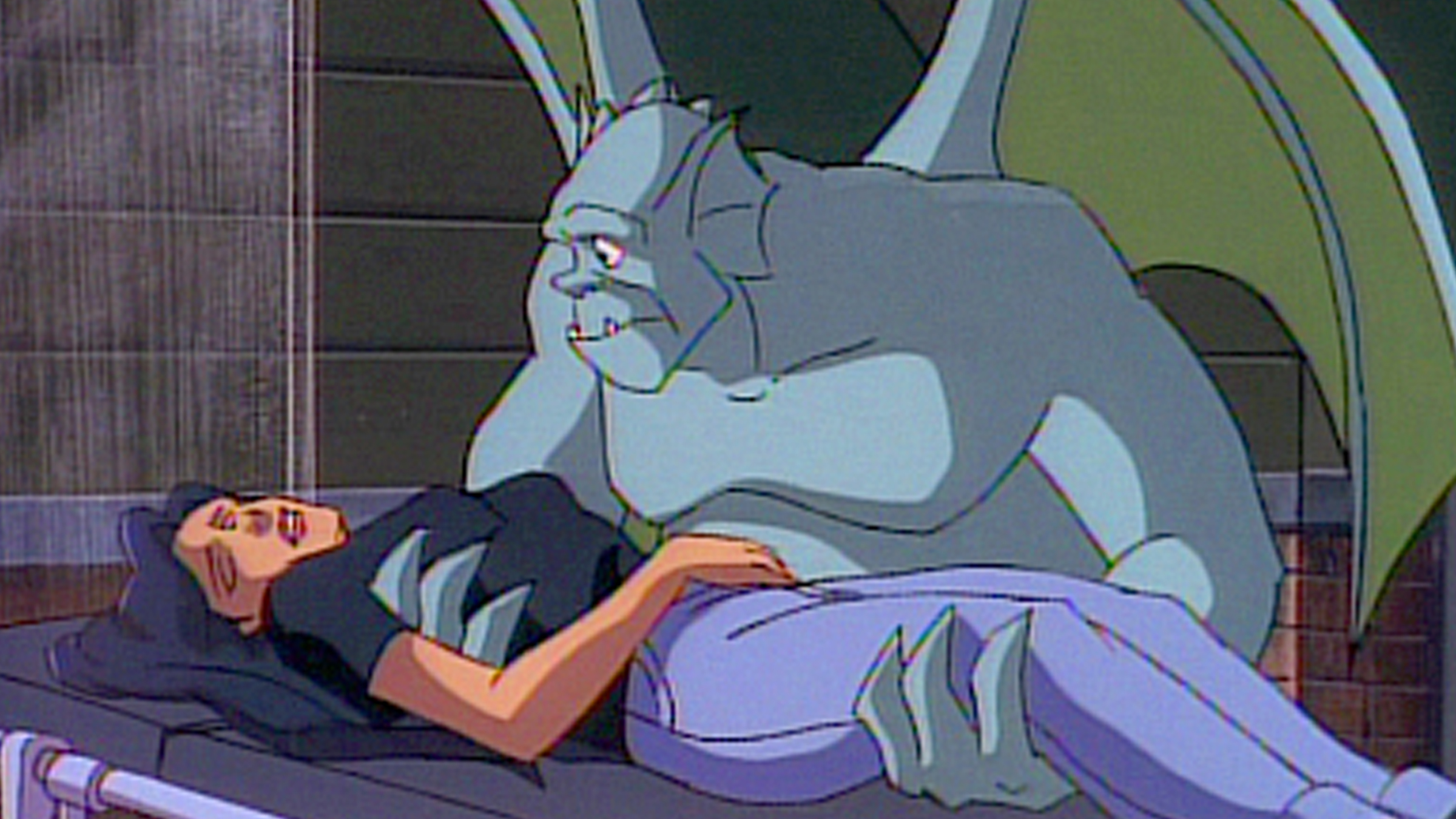
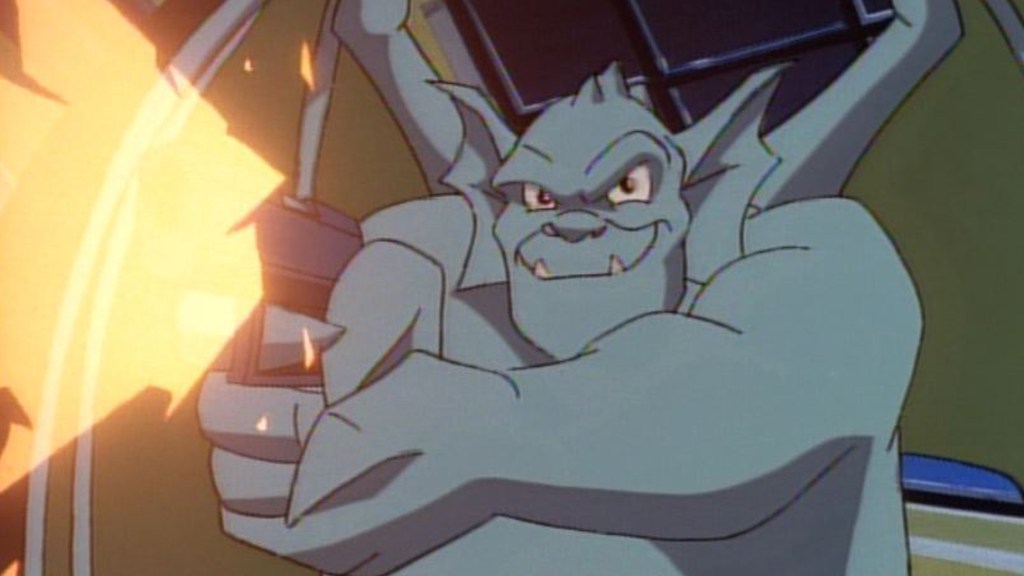
“Deadly Force” premiered on November 18, 1994, the eighth episode of Gargoyles first season. The plot for “Deadly Force” involves an arms robbery and some racketeers, but the real story is what happens in Detective Elisa Maza’s apartment after Broadway (who’s become a cinephile and fan of six-shooter spaghetti westerns) pays her a visit. As Broadway wander through her place, he discovers her holstered police-issue firearm under her hung jacket. Smiling at this discovery, he draws the weapon and gleefully jumps around the room, recklessly aiming it in every direction until suddenly — BANG!
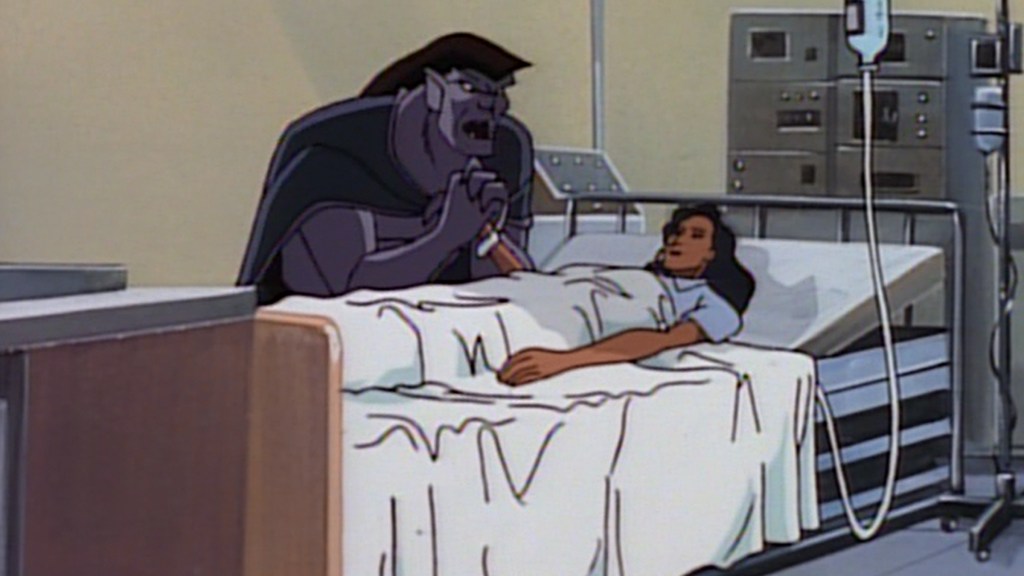
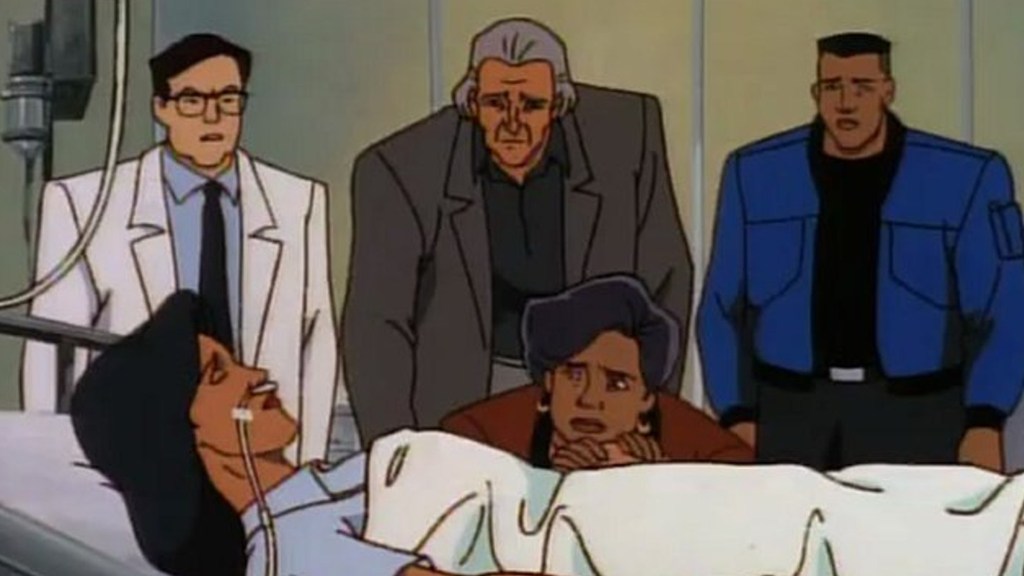
The thunderous boom is met with silence as Broadway discovers Maza’s lifeless body on the floor, a puddle of red leaking under her. With blood literally and figuratively on his hands, Broadway brings Maza to a hospital then hits the streets to take down the source of the arms robbery. As he makes his way to the arms dealer, Goliath joins the fray and prepares to take his own vengeance. Before the killing blow is delivered, Broadway intervenes and admits he shot Maza by accident. The pair drop the racketeer off to the authorities before visiting Maza, now awake and responsive. Broadway apologizes for playing with her weapon while Maza apologizes in her negligence for leaving it out in the open, and the two Gargoyles climb to the hospital roof to stand watch over their recovering friend as the sun rises on a new day.
Clipping Their Wings
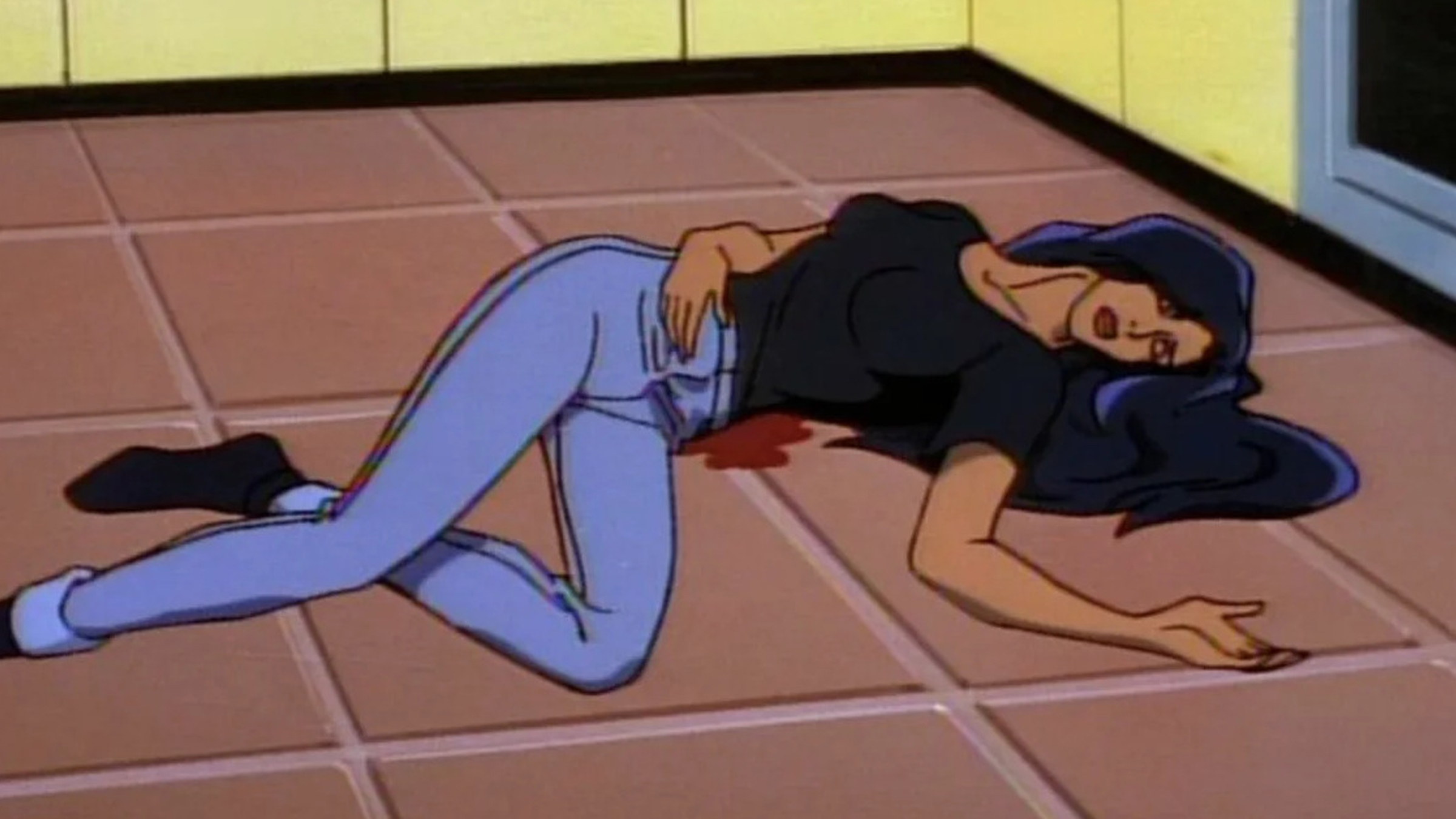
The critical reception for “Deadly Force” was surprisingly positive, and Disney was fine with the content in the episode. The problem with it had little to do with the sight of guns on a kids’ show. Instead, the issue was showing what happened after a person was shot by a firearm with bullets that struck a human, and not a neon laser beam fired in the general direction of a faceless enemy that never actually hits its target.
Disney was forced into action immediately, pulling the episode from re-runs until a permanent solution could be applied. “Deadly Force” eventually made it back into rotation, but it wasn’t the same version that viewers saw when it first aired. Instead of Broadway finding Maza’s bloodied body on the floor after the firearm was discharged, Disney removed the sanguineous liquid around her to offer a less gruesome sight.
Subsequent airings on Toon Disney and Disney XD took the censorship a step further, digitally zooming to the downed officer’s face to prevent any glimpses of her wound and its effects. The aftermath remained the same, but that first look at the accident became more obscured with every revision.
Gargoyles’ Creator Speaks Out
“Movies, television, video games,” laments elder gargoyle Hudson early in the episode. “These days, it’s hard to tell what’s real and what’s not.” This statement was one shared by the series creator, Greg Weisman, who has remained very proud of what was accomplished with the story, even if Network Standards & Practices felt differently.
Weisman always felt Gargoyles needed to be about repercussions, and wanted to show that actions have consequences. In this case, Broadway was the vehicle to show what happens in a very ugly situation that was a common worry in the late 1980’s and early 90’s as crime and fatal incidents with youth and guns began to rise. Weisman chose the child-like innocence and naivety of Broadway to be the vehicle to bring his message to light.
”We had limitations to what we could do with realistic guns, what you call imitable behavior” Weisman explained on the Voices From the Eyrie podcast. “And so the idea was to do the ultimate in horrible imitable behavior, which is to show someone picking up a gun and playing with it like it were a toy, and we were gonna show the consequences of it.”
For Weisman, the episode wasn’t necessarily about being anti-gun, but more about highlighting gun safety, putting the onus for the incident on Maza as much as it was on Broadway. ”If you’re an adult, you don’t leave a gun just hanging around,” Weisman continued. “Elisa’s kind of justified in her doing so because, A, she’s a cop. She has a good reason to have that gun. And B, she lives alone. It doesn’t occur to her that she needs to secure that gun. But adults should secure firearms, and kids should not be picking them up and playing with them as if they are toys. And that, I think, is something that pretty much everyone can agree on.”
Weisman also noted that the infamous pool of blood seen in this episode was originally drawn much larger by the animation team in Japan, but he and his local crew asked for it to be redone. The reason? Weisman didn’t want kids focused on an ocean of red that might appear goofy, nor did he want viewers to worry that Maza had already bled out.
As someone who grew up the son of a police officer, I was taught from an early age to respect firearms. Growing up as a regular viewer of Gargoyles, I vividly remember seeing Detective Maza lifeless on the floor, showing me something I had been warned about but never seen before – especially in this format. It was as shocking to me as another of my earliest pop culture memories, witnessing Tasha Yar being offed by a pile of sentient tar in Star Trek: The Next Generation. The emotions and imagery of that single frame stuck with me for years, moreso realizing that it wasn’t a villain who fired the gun. It was a friend who didn’t know better and made a horrifying mistake.
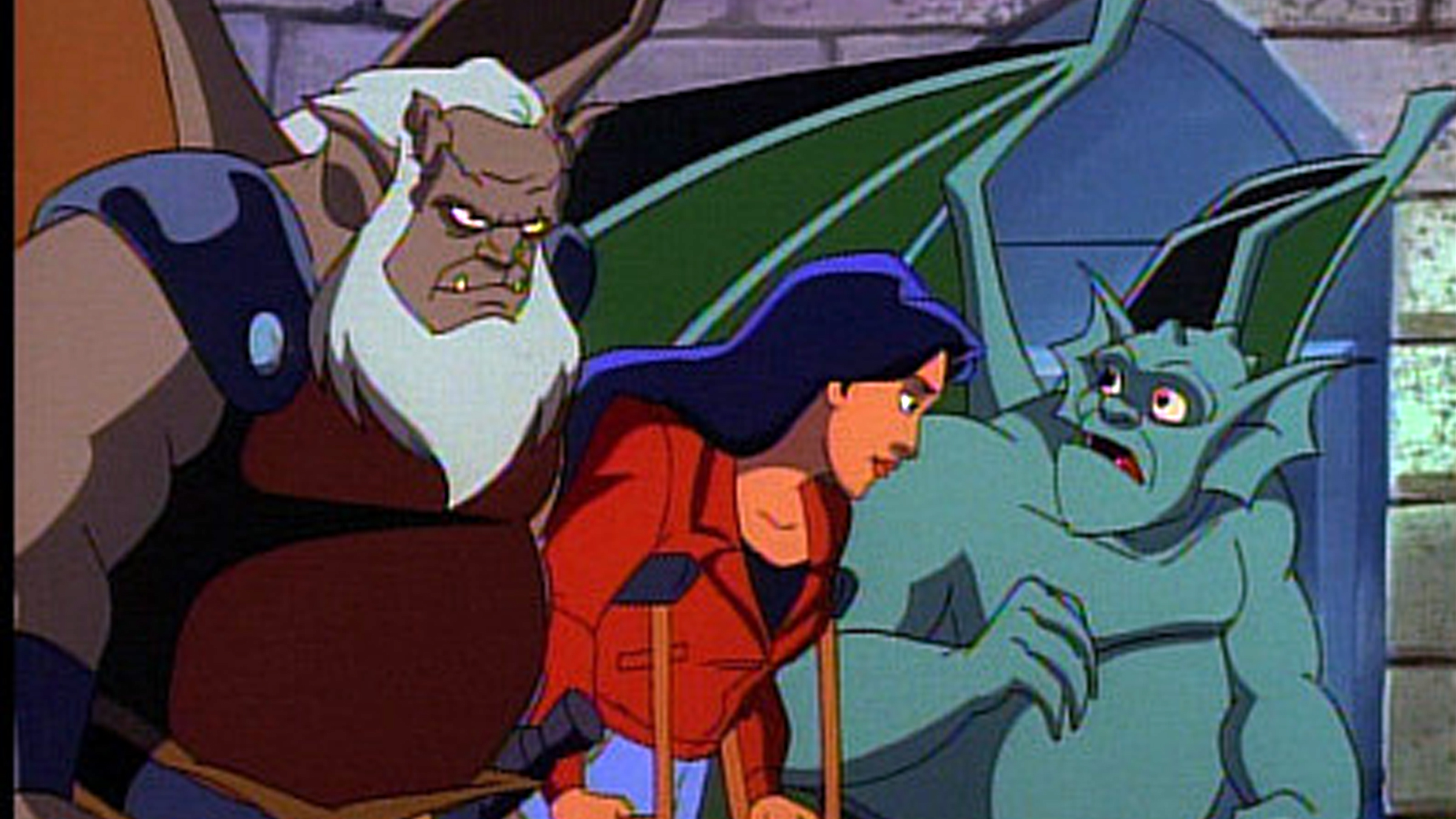
In the episode that immediately followed “Deadly Force,” Maza walks using crutches. When she returns to duty in the 10th episode, command assigns her a permanent partner in the field. Much later in the series, we learn Maza locks her weapon in a safe when she isn’t wearing it. As for Broadway, he destroyed any firearm he encountered, never forgetting what happened to his friend.
A live-action Gargoyles reboot was planned for a launch on Disney+, but was recently scrapped by the streaming platform. The story of Goliath’s clan, however, continues in the ongoing Dynamite Entertainment comic series helmed by Weisman, tackling other important stories while further exploring the mythos of his beloved mythical characters.
If you watched this episode of Gargoyles — either the uncensored version or its edited re-airings — let us know in the comments how you remember reacting to it!
More TV Shows
-

Image Courtesy of Disney -
Image Courtesy of UGT / Fuzzy Door / MRC