It’s no secret that Game of Thrones is one of the most successful and popular fantasy series of all time. Based on George R. R. Martin’s A Song of Ice and Fire novels, HBO’s Game of Thrones proved to be a massive global phenomenon, quickly becoming known as one of the best fantasy TV shows of all time. While fantasy stories have long been among the most enduring and popular in fiction, Game of Thrones marked a shift in small-screen entertainment. As well as ushering in a new era of prestige television, Game of Thrones also definitively proved that, if appropriate care was taken in the adaptation process, bringing fantasy stories to life in live-action could provide compelling entertainment that would grip audiences around the world.
Videos by ComicBook.com
There can be no massive success in the entertainment industry without a wave of imitations following in its wake. The same was certainly true for the adaptations of GRRM’s iconic novels, as numerous shows were made to target Game of Thrones fans following the show’s unprecedented popularity. However, of all the shows that tried to become the next Game of Thrones, none really achieved it, earning mixed success that failed to live up to the series that kicked off the modern fantasy TV boom. While the following shows each have their own qualities that make them worth watching, none had the compelling stories or longevity that made Game of Thrones such a major success.
5) The Bastard Executioner (2015)
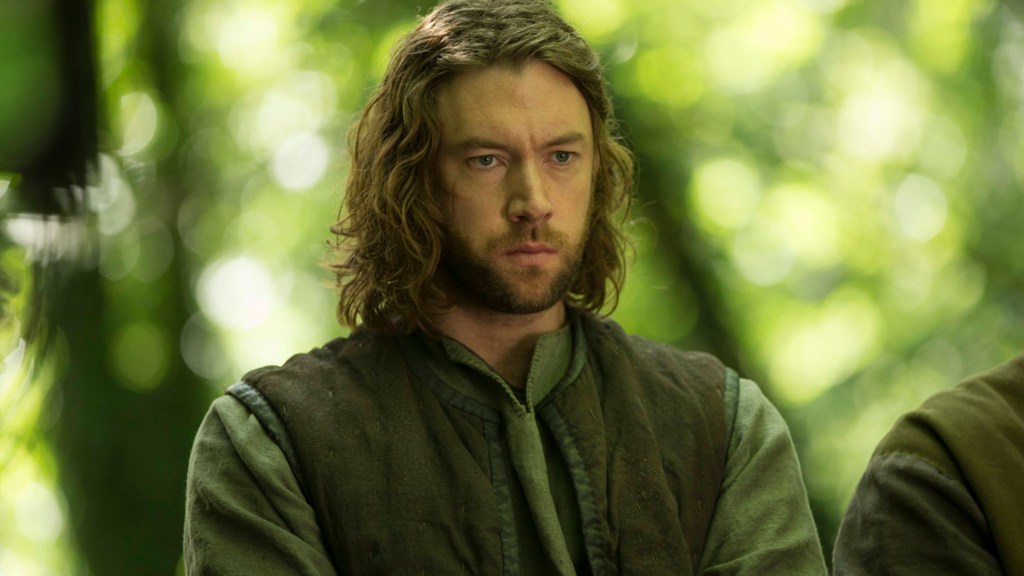
Even as Game of Thrones was approaching its peak, other networks were attempting to capture its success with their own similar projects. The mid-2010s saw a wave of medieval TV shows featuring a mix of political intrigue and brutal violence, and, considering the sheer quantity of these series that were introduced in that period, it’s no surprise that some were pretty quickly forgotten. Created by Kurt Sutter of Sons of Anarchy fame, The Bastard Executioner was just one such show, airing for just one season before its cancellation.
In terms of tone, it’s clear that The Bastard Executioner was angling to become the next Game of Thrones. Trying to establish an ensemble cast of morally complex characters alongside a whole medieval mythology was always going to be a huge undertaking, and it’s something that The Bastard Executioner really struggled with. It proved to be a passable series in many ways, but it was never any sort of match for Game of Thrones‘ sprawling universe of intricate familial hierarchies, resulting in Kurt Sutter’s show failing miserably at challenging the HBO behemoth.
4) Cursed (2020)

When it comes to fantasy TV shows cancelled too soon, it’s genuinely staggering just how many can be attributed to Netflix refusing to give shows the time they need to grow. This was exactly what happened with Cursed, a series based on Frank Miller and Tom Wheeler’s novel of the same name, which itself was written as a reimagining of Arthurian legend. Taking well-known fantasy source material and putting its own unique spin on the tale could have proved a route to success, and while Cursed got off to a bit of a slow start, the potential was plain to see for many fantasy fans.
While Cursed was tipped by many as Netflix’s attempt at creating its own successor to Game of Thrones‘ fantasy crown, the streaming service opting to axe it after just a single season was ultimately the reason it failed. It might not have been the same instant success as Game of Thrones, but Netflix choosing to swiftly cut its losses wasted a huge amount of potential. Cursed had political intrigue, eye-catching fantasy action, and a large-scale fantasy setting that could possibly have grown into a major contender in the fantasy genre, but by cancelling it prematurely, Netflix ironically secured Cursed‘s status as a failed fantasy experiment.
3) Shadow and Bone (2021-2023)

Of all the shows that tried to follow in Game of Thrones‘ footsteps, Shadow and Bone stands out as one of those that came closest to achieving comparable results. Another fantasy TV show cancelled by Netflix, Shadow and Bone aired for two seasons before its untimely end was announced. Based on Leigh Bardugo’s Grishaverse novels, the series balanced faithfully adapting its source material with some original additions, a move that proved popular with fans and secured the series a considerable following.
Despite a growing fan base, Netflix’s decision to cancel Shadow and Bone prevented it from securing the sort of legacy it probably deserved. In terms of pure quality and appeal, it might not have quite matched up to Game of Thrones, but it was an impressive and original fantasy show that really did deserve much better. It was a show whose unique elements and quality could easily have grown into a major fantasy success, but Netflix’s hasty decision to end its run marked another instance of bizarre self-sabotage in the streaming giant’s apparent intention to recreate Game of Thrones‘ popularity.
2) Emerald City (2017)
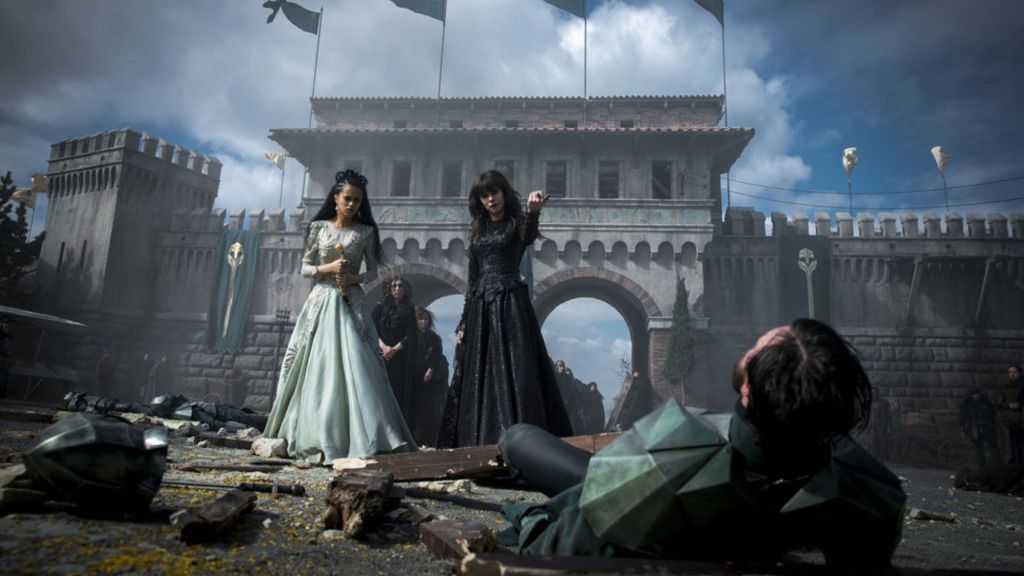
NBC was another network that tried to jump on the prestige fantasy boom, only to fail miserably. 2017’s Emerald City sought to reimagine the iconic fantasy world of L. Frank Baum’s The Wizard of Oz, putting a unique spin on the well-loved story that would allow it to step into the shoes of Game of Thrones, whose run was beginning to approach its end at the time. Taking the familiar setting and characters and rewriting them to incorporate a more mature tone and a much darker atmosphere, Emerald City certainly seemed to have potential.
That is, however, on paper. In reality, Emerald City was incredibly disappointing and is cited by some as ranking among the worst fantasy shows ever made. For all the imaginative ideas that went into reworking the world of Oz, the show simply never did anything to make it stand out as particularly unique or innovative. Instead, it felt like a generic fantasy series desperately seeking major success by trying to replicate the ideas of much better shows. By trying too hard to be just like Game of Thrones, Emerald City only succeeded in cementing itself as a poor imitation that wasted an interesting central idea concerning its beloved source material.
1) The Wheel of Time (2021-2025)

Very few fantasy TV projects seemed, on paper at least, to be better positioned to become the next Game of Thrones than Amazon’s adaptation of Robert Jordan’s The Wheel of Time. Taking source material that is actually far more beloved than George R. R. Martin’s novels and casting Rosamund Pike to lead its ensemble, The Wheel of Time seemed poised for great things. As the book the show sought to adapt was one of the most seminal, groundbreaking works of fantasy fiction out there, The Wheel of Time seemed a perfect fit to fill the Game of Thrones-shaped hole in fantasy fans’ lives.
Instead, The Wheel of Time proved to be a fantasy TV show where the worldbuilding was better than the story. It painted a picture of an intriguing fantasy world that felt rich and original, but its actual narrative was a little underserved. The sheer scale of the source material worked against the adaptation in a major way, and despite the show getting consistently better as it went on, declining viewership led to it being cancelled after just three seasons. While The Wheel of Time probably deserved, on balance, to become the next Game of Thrones, the slightly botched execution ultimately prevented it from living up to that potential.
More TV Shows
-
Courtesy of Cartoon Network