When The Avengers was released, it felt like Marvel Studios was doing the most surreal and exciting thing imaginable. Bringing Iron Man, Captain America, Thor, and Hulk together, along with Black Widow and Hawkeye, was everything fans could have wanted from a comic book adaptation. It felt like the biggest step the studio could possibly take — and, in a way, it really was at the time. The Marvel Cinematic Universe essentially set the template for the shared universe model that Hollywood would eventually chase with other franchises. However, this movie (as well as every other Avengers film that followed) also represents just one part of what makes Marvel what it is.
Videos by ComicBook.com
This universe has always been much bigger and more varied, and some other movies managed to show that in ways an Avengers crossover simply couldn’t. So, that’s what this list is about: each feature captures a different part of what made Marvel such a massive part of pop culture. While it’s still extremely difficult for any other film to match the Avengers installments, there are some that prove the MCU never really needed them to work.
5) The Fantastic Four: First Steps

Before The Fantastic Four: First Steps even came out, it already felt like a big event, and when it finally did, a lot of people felt like the magic of the MCU was coming back — which is reason enough to put it here. The movie does the opposite of what you might expect from the Avengers-style energy, showing the Marvel Universe can also work without a crossover, just by having a really good story. The plot revolves around Reed Richards, Sue Storm, Johnny Storm, and Ben Grimm as they deal with being a family, a superhero team, and public figures in a retro-futuristic version of the ’60s, while also having to face Galactus and the Silver Surfer. And when you watch it, it feels like the entire production came straight out of the comics.
Basically, the essence of Marvel is there from beginning to end; there’s a return to that sense of wonder that the MCU had lost over time, from the Jack Kirby-inspired visuals to the cosmic exploration and a family of heroes that actually feels like a family. First Steps is something completely different and outside the box, but still knows how to go back to its roots and explain why its characters are so important to Marvel’s history. So much of the franchise has focused on crossovers and the multiverse, and while those ideas have their strengths, the legacy established by Kirby and Stan Lee was always about much more than that.
4) Guardians of the Galaxy
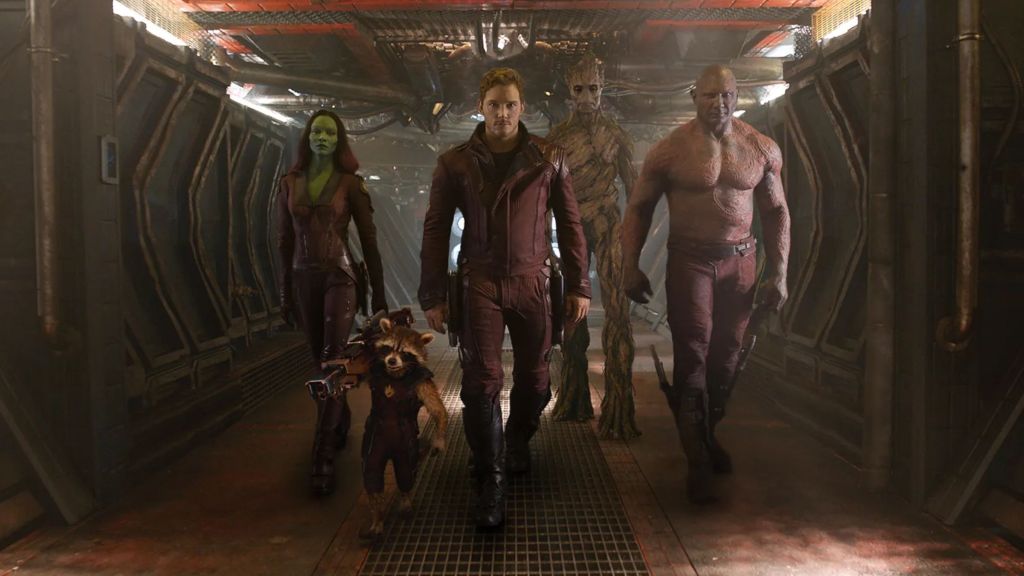
If The Avengers made Marvel feel huge just by putting several well-known heroes together in its first installment, Guardians of the Galaxy did it in a totally different way: it showed that there was an entire universe happening somewhere far away that nobody knew about. The story focuses on the cosmic side of the universe, following Peter Quill after he steals a powerful orb and ends up forming a team with Gamora, Rocket, Groot, and Drax, who have to stop Ronan from using the artifact to destroy Xandar. Then, everything that had already been established about Marvel stops being just New York, S.H.I.E.L.D., and superheroes trying to save Earth.
In Guardians of the Galaxy (including all of its movies), there are alien planets, different species, space prisons, wars, and characters that seemed completely outside the formula shaped by the MCU’s earlier movies. And without needing the Avengers, the franchise builds its own corner of Marvel while still connecting it to the larger story through Infinity Stones and Thanos. So basically, it doesn’t just expand the universe, but shows just how much of it was still out there waiting to be discovered and revealed. It was the first time fully committing to this as its main focus, since Thor and Thor: The Dark World had only scratched the surface of it.
3) Captain America: Civil War
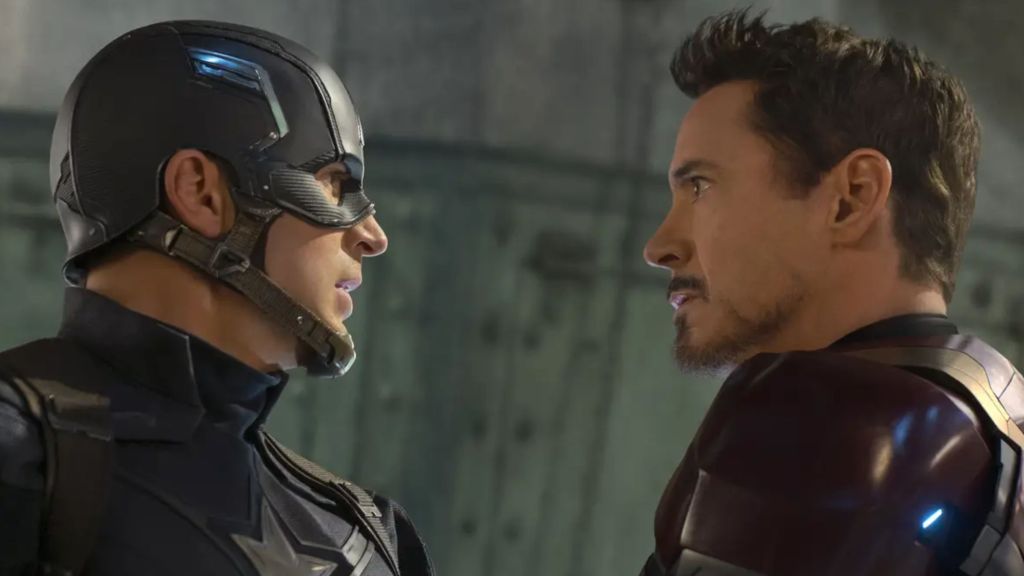
A fan favorite, Captain America: Civil War is the movie that best shows why a universe like Marvel’s can be much more interesting without just putting many heroes together on the same mission. In the story, after yet another disaster involving the Avengers, Steve and Tony disagree over the proposal to put the team under government supervision, and the conflict ends up splitting them apart. In the middle of all that, the film also introduces Black Panther and Spider-Man to the MCU and brings together pretty much every major character who had been introduced up to that point. But hold on, because the number of heroes isn’t exactly what puts this feature on this list.
The point here is that each of these different characters comes into the story carrying everything that happened in the previous movies: Steve is still dealing with Bucky, Tony still feels guilty about the events of Avengers: Age of Ultron, Natasha is trying to keep the team together, and even Spider-Man’s arrival makes sense within the whole setup. So, when they finally turn against each other, it feels like all the stories Marvel had been telling separately are finally colliding for the first time — and that feeling is only going to become stronger in the movies that follow. Civil War focuses on showing what can happen once each hero becomes part of the others’ lives.
2) Spider-Man: Into the Spider-Verse
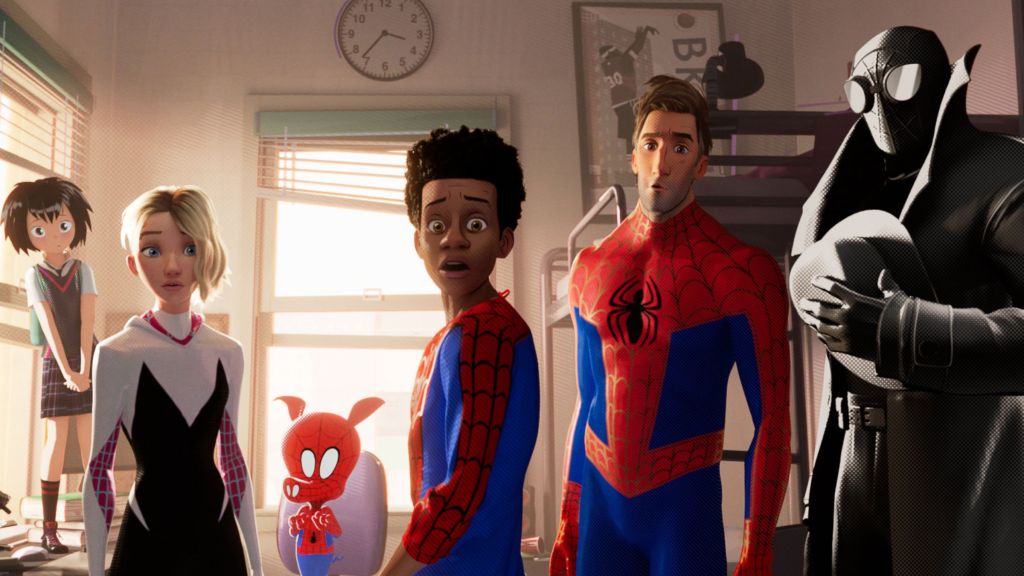
All the Spider-Man movies should be here, but if we have to pick just one, it has to be Spider-Man: Into the Spider-Verse, which takes one of the oldest ideas in Marvel Comics and makes it the very heart of the film: the existence of different versions of the same character. Here, Miles Morales is bitten by a spider and finds out his powers just as a machine created by Kingpin breaks the barrier between dimensions, causing several Spider-Men to end up in the same universe. But the movie doesn’t bring Peter Parker, Gwen Stacy, Spider-Man Noir, Peni Parker, and Spider-Ham together just to have a big reunion.
In this animated production, each version shows that there isn’t just one way to be Spider-Man, and Miles has to figure out which version of the hero he wants to be. And that’s an idea that fits perfectly with the way Marvel works in the comics, where different universes can reinterpret characters without one version having to invalidate another. This gives the movie a freedom that The Avengers simply doesn’t have: instead of showing several heroes coexisting within the same reality, Spider-Verse shows that there can be countless realities, Spider-Man variants, and stories happening at the same time. It’s perhaps the best representation of the multiverse, highlighting just how huge Marvel can really be.
1) Iron Man
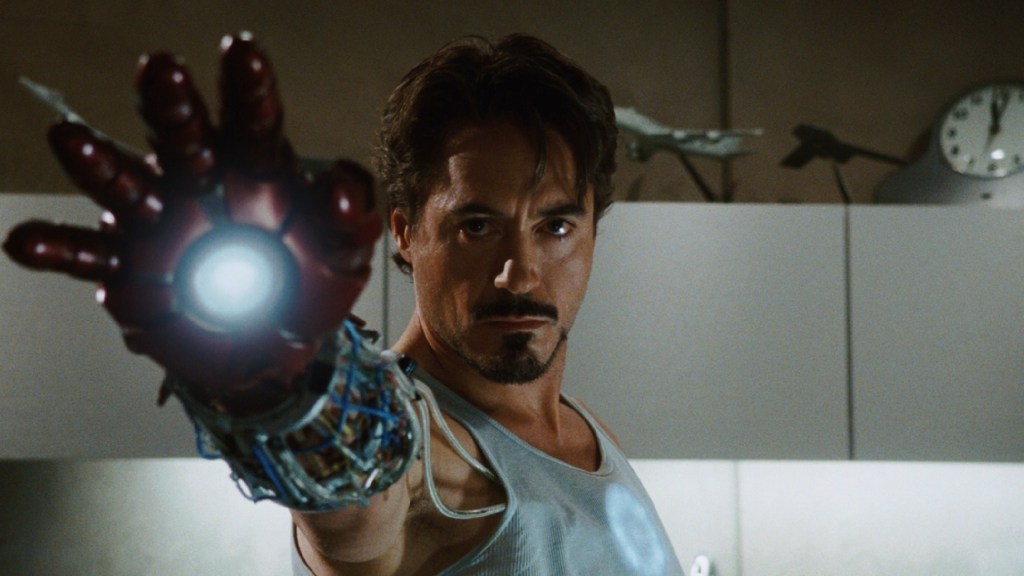
Iron Man might be the least obvious movie on this list, but it’s arguably the one that best explains why the Marvel Universe works to this day (even though the MCU is still trying to find its footing again). Here, Tony is introduced as a billionaire weapons manufacturer who is kidnapped in Afghanistan and builds an armored suit to escape, and the experience makes him rethink the kind of person he wants to be. There are no Avengers, intergalactic battles, or dozens of characters waiting to show up; it’s just him, his armor, Pepper Potts, Rhodey, Obadiah Stane, and a relatively normal world — until you realize there’s something bigger behind it. And that’s the whole point.
Marvel didn’t start by building an entire universe from the beginning, right? It started by developing a character who was interesting enough to make audiences want to return to the world for more stories. The post-credit scene with Nicky Fury represents that perfectly when he tells Tony that he’s not the only superhero out there, while at the same time, the movie doesn’t depend on other characters to be an incredibly good MCU feature on its own. When you put Iron Man side by side with The Avengers, for example, one is proof that the experiment worked, and the other is proof of why building the universe in the first place was worth it.
More Movies
-
Courtesy of Universal Pictures -

Image Courtesy of Columbia Pictures