
There might not be anyone with more comic book movies on their résumé than Samuel L. Jackson. He’s basically an institution when it comes to this category, and a lot of people associate him with it since he helped hold the Marvel Cinematic Universe together from the very beginning and showed up in some of the biggest events in blockbuster cinema. But the truth is that his nerd-friendly filmography goes beyond that too, including adaptations that are wildly different from each other and exist outside that universe. It’s a long list of comic book movies, but what if we ranked them to see which one is the worst and which one is the best of his career?
Videos by ComicBook.com
Next, you’ll find all of Jackson’s projects in this category, ranked by the full package: the overall quality of the film, its impact on the genre, and how much the actor actually matters on screen.
15) The Spirit

This definitely wasn’t a very good movie on multiple levels. That’s because The Spirit tries to draw inspiration from the DC character of the same name, but it does so with an approach that puts style above any kind of narrative logic. The original comic is built around short episodes, irony, urban noir, and a more melancholic sense of humanity that relies on silence and observation. But the film drops almost all of that in favor of extreme stylization, trying to replicate the visual punch of Sin City without the same understanding of tone or even the story itself.
Here, Jackson plays Octopus, and he’s pushed into a completely over-the-top performance as the villain fighting a masked vigilante. Is it good? Not really, because the movie doesn’t build a coherent world that can actually support that kind of acting. So The Spirit lands in last place because it fails at two essential things: understanding the source material and delivering a functional adaptation.
14) Afterburn
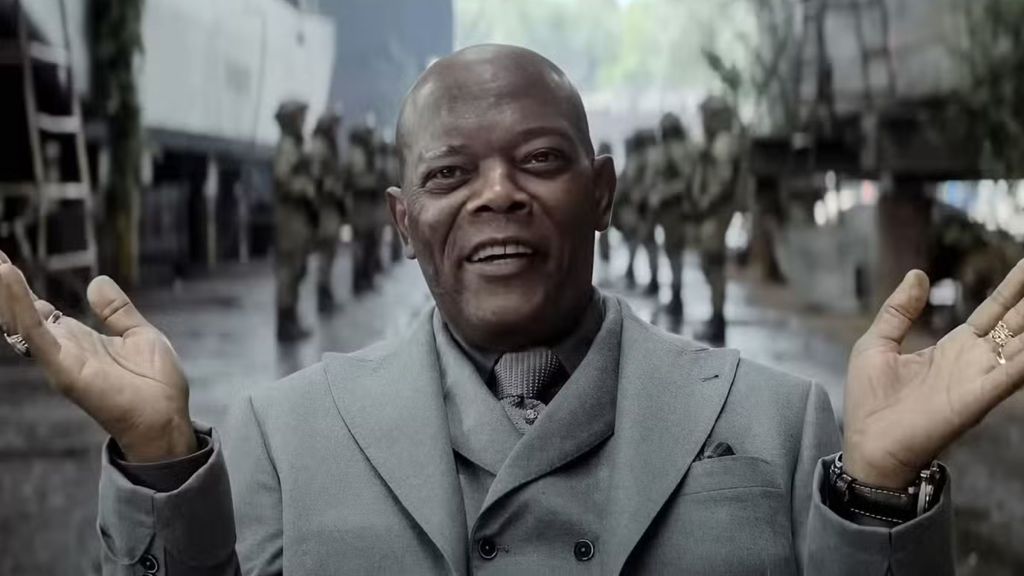
Not many people have even heard of Afterburn, which adapts a post-apocalyptic action graphic novel built around the idea that a world devastated by an extreme solar flare forces survivors to recover cultural artifacts from dangerous regions. In this one, Jackson plays August Valentine, a powerful and influential figure in this new global system. But what’s the problem here? Simply the fact that even though the concept works well enough for the genre, the movie never really goes beyond the basics.
Unlike other films in the actor’s career that reimagine or expand their source material in a much clearer and more memorable way, Afterburn still feels like it’s on shaky ground. It manages to translate the graphic novel’s idea, but it doesn’t elevate the material enough to really stand out. It’s watchable (which is why it ranks higher than The Spirit), but it’s also the kind of film no one really remembers afterward.
13) The Marvels
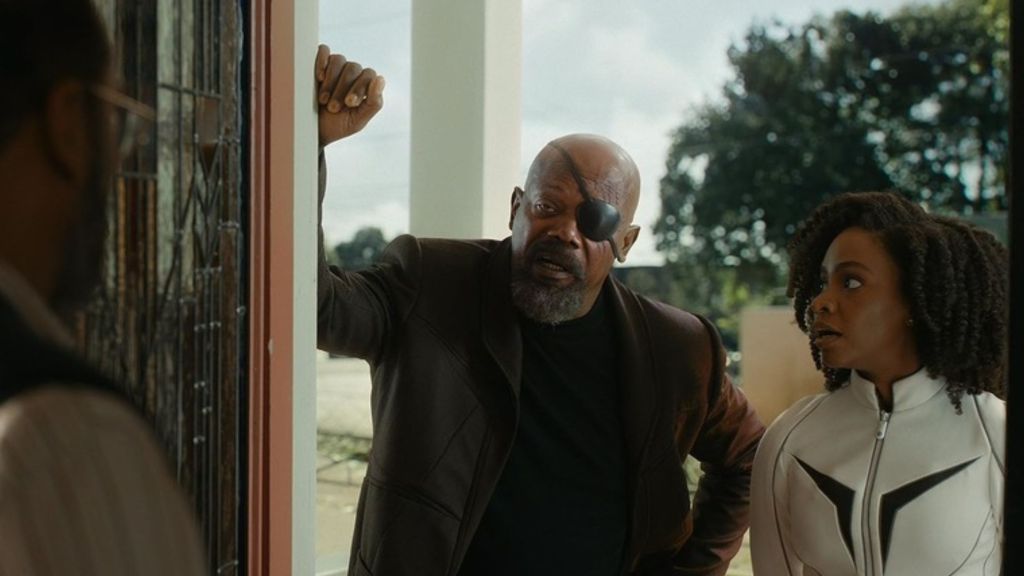
Here we’re already stepping into a slightly higher tier, since this is a movie that, even if it’s not exactly great, at least knows what story it’s trying to tell. By bringing Carol Danvers, Monica Rambeau, and Kamala Khan together, The Marvels tries to merge three heroines with very different narrative threads into one plot that links their powers and forces the trio to learn how to work as a team. Is it good? That depends, since it isn’t really pulling from one specific comic run, but more like a collage of ideas taken from several different ones.
Jackson returns as the iconic Nick Fury after so many MCU appearances, but his role here is more structural, basically acting as the bridge between the cosmic events and their consequences. Still, The Marvels lands in this spot because it never really commits to what it wants to prioritize. There’s good energy and some fun moments, but it also feels like it’s missing a clearer identity.

12) Iron Man 2

As the sequel to a classic, Iron Man 2 is where the MCU starts expanding toward something bigger, but at the expense of a more focused Tony Stark story. The movie pulls from several different comic elements, like the reactor poisoning arc, industrial conflicts, and a more direct introduction of S.H.I.E.L.D., but without fully adapting any single storyline from start to finish. And Fury comes in as a key piece of that expansion, serving more as a “universe connector” than as an active character within the main plot.
Overall, Iron Man 2 represents a transition period where Marvel still hadn’t refined the balance between telling a strong solo hero story and building a shared universe. Because of that, it has its highs, but also major flaws, mostly feeling overloaded and unfocused, with no storyline getting enough development to stand on its own. It’s more of a patchwork of ideas, honestly.
11) Avengers: Age of Ultron

Avengers: Age of Ultron is one of the least beloved Avengers movies, and there’s a reason for that. The idea is obviously rooted in Ultron’s comic book legacy, but the MCU completely rewrites his origin by shifting the responsibility to Stark and Bruce Banner. It’s a change that pushes the film toward the franchise’s themes rather than staying true to the original storyline. Jackson returns as Fury to reinforce the idea of rebuilding after the team’s trust starts to fracture because of everything that happens.
It’s a film that’s still entertaining, but as an adaptation, it ends up pulling the source material in too many different directions, and that’s where the mess starts. Comic book Ultron is more philosophical and structurally terrifying, tied directly to creation and scientific responsibility. In the movie, he plays more like a standard action villain with simpler motivations, and that takes away a lot of the impact he should’ve had. Avengers: Age of Ultron isn’t bad by any means, but it could’ve been much better.
10) Kingsman: The Secret Service

Based on the comic by Mark Millar and Dave Gibbons, Kingsman: The Secret Service follows Eggsy, a young man recruited into an international intelligence agency, who ends up having to stop a global plan led by the eccentric Valentine. And who plays that villain? Jackson — but in this adaptation, it’s a deliberate subversion of the typical comic book bad guy. Valentine rejects direct violence, yet operates through corporate logic and advanced technology. This is also a movie that isn’t really trying to stick closely to the original tone, since its goal is to reinterpret the concept as a commentary on the genre itself.
Basically, Kingsman: The Secret Service is an adaptation that’s aware of its own artificiality. And instead of translating the source material literally, it uses it as a starting point for a more heightened approach. That works extremely well as entertainment, but at the same time, it sacrifices dramatic weight and the kind of impact that the higher-ranked films on this list manage to give.
9) Thor

Adapting Thor always seemed tricky because the big question is: how do you balance Norse mythology with the superhero genre in a modern, accessible way? The movie solves that by simplifying Asgard’s divine scale and focusing more on the protagonist’s personal redemption arc. So here we see Thor stripped of his powers, forced to learn humility on Earth while Loki pulls strings back in their realm. Fury only shows up in the usual MCU world-building context as well.
So why does it land in this spot? Thor is a solid adaptation, but if you look at the character’s later solo projects, you’ll easily find stronger ones. Everything here still feels restrained. The comics often dive into much bigger cosmic topics, including Asgardian politics and conflicts between realms, while this movie narrows things down into a personal growth story. It works well as an origin film, but it doesn’t have that much complexity.
8) Captain Marvel
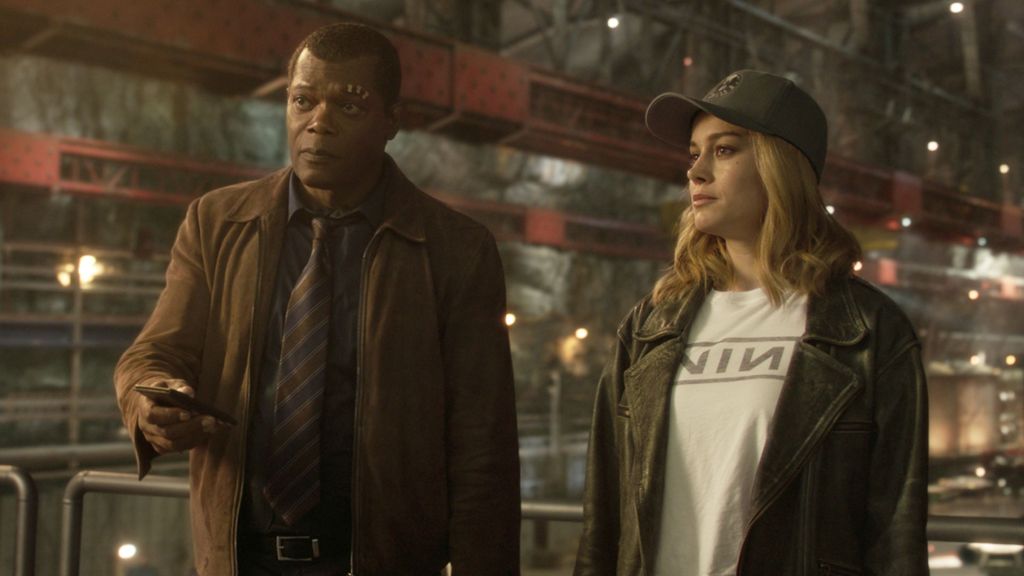
In Captain Marvel, the heroine takes center stage as one of the MCU’s most powerful female figures, starting as an agent and becoming what she becomes after coming into contact with alien technology. The film draws from more modern versions of the character, but it also completely reshuffles her timeline to fit the structure of the shared universe. And in this one, Jackson’s Fury plays an important role: he isn’t just a strategic agent, but an emotional and narrative anchor. His relationship with Carol is one of the few grounded, human elements holding the story together.
Captain Marvel is one of Marvel’s biggest origin movies when it comes to power-building and mythos expansion. However, it’s also true that it doesn’t dig very deep into identity, which is something more recent comic runs explore with far more nuance. Still, it earns this ranking because it translates the core idea of discovery and autonomy really well, even if it does so in a more simplified way.
7) Captain America: The First Avenger
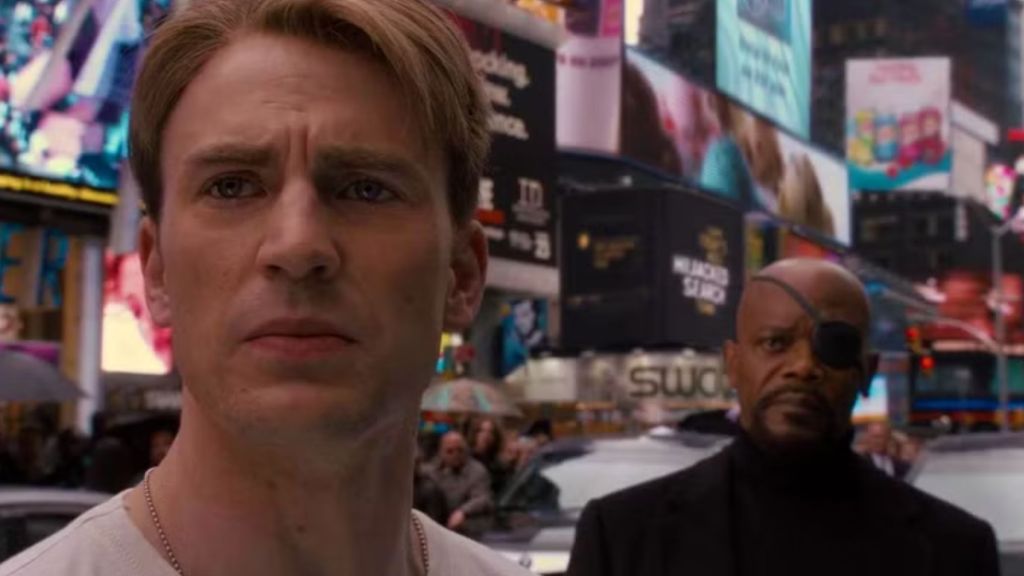
The adaptation here is relatively direct, drawing heavily from classic comics. Captain America: The First Avenger keeps the core of the character intact (courage, sacrifice, and a strong sense of duty) to tell the story of a man who becomes a super soldier and goes to war against HYDRA. It also streamlines some of the more complex elements, but in a way that works perfectly for general audiences. Like in a few other entries on this list, Fury doesn’t have a massive role here, showing up mainly in the post-war framing, but his presence matters as it reinforces the MCU’s timeline and the idea that Steve’s past is tied to its future.
Without a doubt, Captain America: The First Avenger is one of the most faithful adaptations in terms of spirit, even if it doesn’t aim for narrative complexity. It’s the kind of Marvel movie you watch and immediately understand why the studio built such a strong reputation in the genre. Everything is balanced, classic, and accessible at the same time. Still, other movies manage to shine more as a complete cinematic experience.
6) Avengers: Infinity War
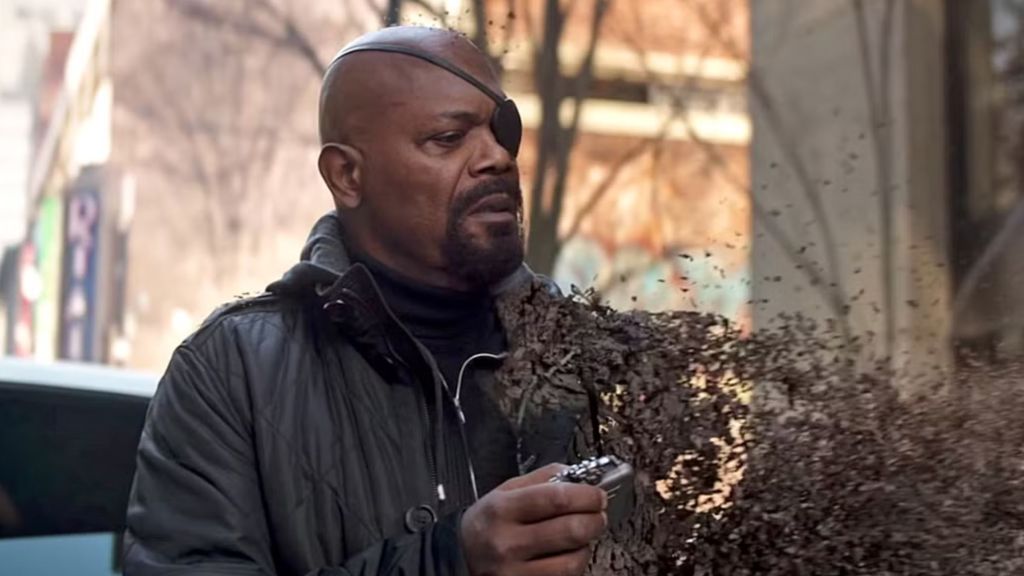
Here’s where the level jumps up, and not just because it’s an Avengers movie, but because it actually captures the kind of energy the comics were always meant to give. Avengers: Infinity War puts everything around Thanos, a villain determined to wipe out half of all life in the universe — and the film gives him enough space to feel layered and disturbingly convincing. It’s the idea of a massive threat boiled down into something surprisingly tight and focused. Fury only shows up in the post-credits scene, but it’s still a symbolic presence because his role is what helps bridge the weight of this ending into what comes next.
In other words, Avengers: Infinity War is one of the MCU’s best movies in terms of scale, but it doesn’t completely sacrifice storytelling to get there. You’ve got an absurd number of characters and arcs, yet they all funnel into one central conflict without everything collapsing under its own weight. Still, it can’t rank any higher since so much of its power relies on the payoff in Avengers: Endgame.
5) Spider-Man: Far From Home
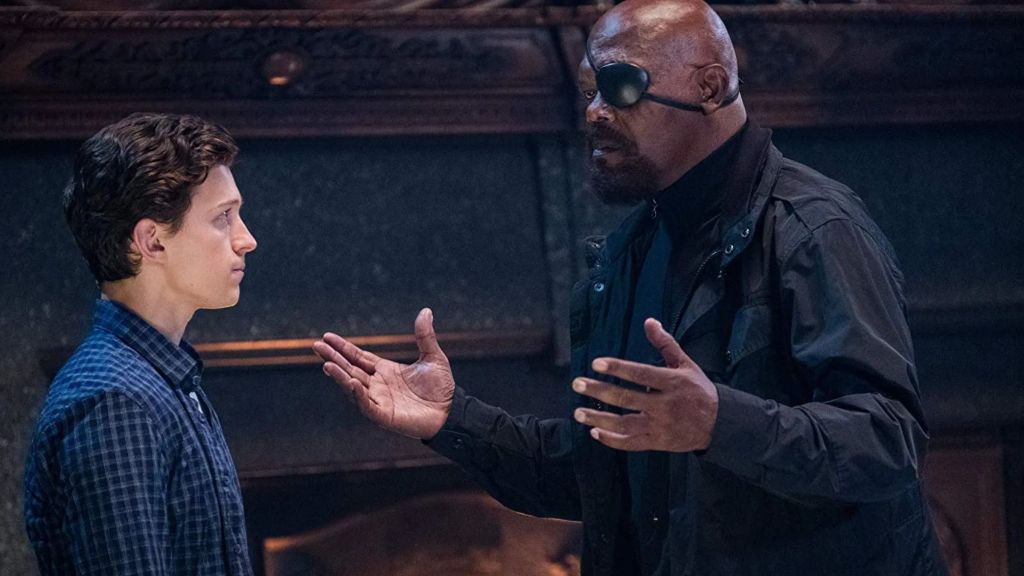
Here, Fury is the one pulling the strings, and he actually plays a very active role in the story. Spider-Man: Far From Home takes some of the most modern elements of the character (especially the relationship between identity, perception, and trust) and adapts them in a way that perfectly sets up what Spider-Man is meant to become in the MCU long-term. In the plot, Peter heads off on a school trip across Europe, and everything turns into a global crisis thanks to the illusions created by Mysterio.
Even if it isn’t Spider-Man’s biggest movie, it’s definitely one that fans still talk about a lot. It ranks here because it manages to blend a lighter tone with real MCU consequences, basically working as an epilogue to the Infinity Saga. On the other hand, while Far From Home is strong in concept and theme, and far less messy than some other films, it doesn’t quite hit the same level of structure and lasting impact as the more airtight productions higher up on the list.
4) The Avengers

The Avengers is straightforward from the very beginning, just like the comics: bring individual heroes together into a single team that actually works. And here, Fury is literally the architect of that union — a character who watches, connects the dots, and organizes events in order to form the group. It’s basically another MCU classic that everyone likes. In the story, Loki invades Earth and forces everyone to work together to stop his plan.
That’s why it’s hard to rank The Avengers too low. It’s entertaining, it introduces a new era perfectly, it’s well-planned from start to finish, it’s an adaptation that understands what it means to have heroes united as a team, and it basically sets the standard for shared cinematic universes. It was the first time we saw something on screen that we didn’t even think was possible. Still, compared to some of the other comic book movies in Jackson’s career, it’s also the simplest and least mature one.
3) Captain America: The Winter Soldier

Considered one of the absolute best, Captain America: The Winter Soldier is one of the MCU’s high points because it manages to take the genre and mature it in a way that even people who don’t normally like superhero stories might actually want to watch. As a sequel to Steve Rogers’ solo story, it dives into paranoia and surveillance, forcing him to face his best friend, Bucky, as the Winter Soldier. At the same time, the film unfolds into the discovery of deep internal corruption within S.H.I.E.L.D. It adapts major topics in a way that feels far more structured and grounded.
Plus, Fury isn’t just a connector here; he’s a central piece of a story that’s all about the collapse of trust. Captain America: The Winter Soldier earns this spot because it’s one of the best examples of translating comic book tone into film while still feeling sophisticated. It’s one of the least “spectacle-first” MCU movies (even though it still has one of the franchise’s most iconic action scenes), and it makes up for that with an incredibly tight, satisfying plot.
2) Avengers: Endgame
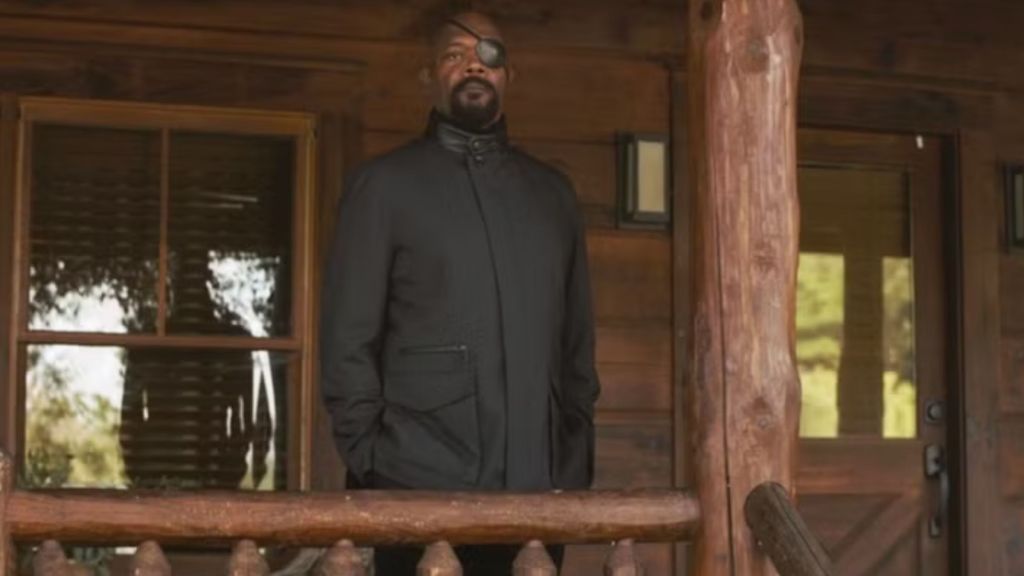
It’s impossible for this movie not to land near the very top of the ranking. Avengers: Endgame is basically the benchmark for the entire genre, and even for the MCU itself when it comes to payoff and triumph. It’s literally the reward for more than ten years of buildup, sending the Avengers into time travel, reconnecting with several other Marvel heroes, and finally defeating Thanos to reclaim the Infinity Stones. It’s not perfect, but the emotional weight and the sense of closure are undeniably massive.
In this film, Fury only shows up as a cameo at the end, since the entire story is focused on the characters who are truly essential to the plot’s resolution. But when you look at Jackson’s career, having Avengers: Endgame on his filmography almost feels like a peak moment. It’s a film that represents the closing of an entire system, which is something very few adaptations ever manage to pull off. The only reason it isn’t the top spot is because, as a standalone movie, it relies on everything around it to actually work.
1) Iron Man

The best Jackson comic book movie is, without a doubt, Iron Man, which adapts Stark’s story — one of the biggest (if not the biggest) symbols of the MCU — as a self-aware, flawed, tech-driven character. This is Marvel Studios’ most complete movie to date, and it’s also the strongest standalone entry because it doesn’t rely on any other to make sense. By focusing on an arrogant billionaire who becomes a hero after building world-changing technology, the production gives near-perfect pacing, excellent character development, humor, and an arc that feels complete.
And even though Fury only has a small scene, it isn’t just fan service — it’s literally the birth of an empire that would grow out of that moment. On top of that, Iron Man helped define what a modern blockbuster looks like in terms of franchise-building. It works as an independent story, but it also kicks off the entire structure that supports every other movie on this list. Plain and simple.
Which of these Samuel L. Jackson movies is your favorite? Leave a comment below and join the conversation now in the ComicBook Forum!
