Normally, when a prequel gets announced for any story, our first reaction is usually a sigh, and not because it’s automatically a bad idea, but because we never really know what to expect. A lot of the time, the new movie only exists to answer questions nobody asked, stretch a franchise as far as it can go, or give unnecessary backstory to a character who didn’t really need it. It’s the classic “Let’s show how it all began” move, but for it to actually work, the writing and execution need to be handled carefully. However, every once in a while, a prequel comes along that understands it’s not there just to explain things, but to really improve the story.
Videos by ComicBook.com
And we’re talking about the best ones here, the kind that should honestly be the blueprint. Not only did they strengthen the overall story of their originals, but they also make you want to rewatch them just to see everything from a whole new angle.
7) The Hunger Games: The Ballad of Songbirds and Snakes

The best thing The Hunger Games: The Ballad of Songbirds and Snakes did was realize that the previous movies didn’t need another story about a rebellion against the Capitol. The franchise had already delivered that. So instead, the film takes a different route: it puts Coriolanus Snow (Tom Blyth) at the center and shows how an intelligent, ambitious, desperate guy can slowly turn into the worst kind of monster. In the movie, we see him (still a student and broke) becoming Lucy Gray’s (Rachel Zegler) mentor in the Games and starting to use manipulation as a tool, first to survive, and later because he enjoys the control.
And that’s why it improves The Hunger Games as a whole, because it gives the entire universe a much bigger and more complete context. Before, Snow was just the villain everyone feared and hated. Now, there’s another way to look at him: as the system’s perfect product. It also shows the Hunger Games while they’re still being shaped and figured out, which reinforces the idea that Panem was carefully planned, tested, and perfected by people like Snow. So, going back to Katniss (Jennifer Lawrence) after The Ballad of Songbirds and Snakes, the horror feels more real, since you understand better the mindset behind it all.
6) Furiosa: A Mad Max Saga
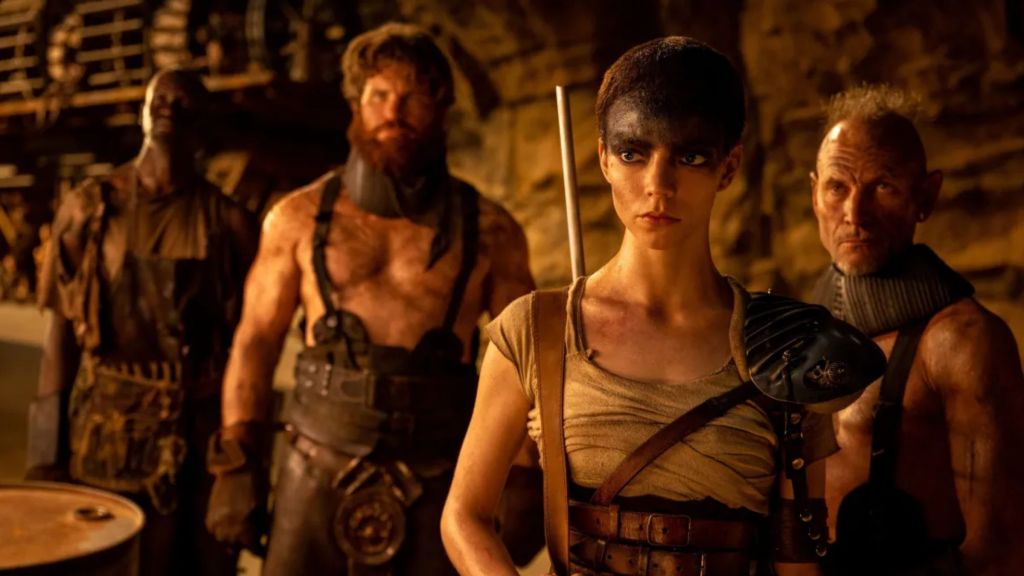
There was definitely a risk when Furiosa: A Mad Max Saga was announced: making a movie that existed only because the character became popular in the franchise‘s most iconic entry. But what we get here isn’t a glorified cash-grab prequel, but a full story with a clear beginning, middle, and end. We follow Furiosa (Anya Taylor-Joy) from childhood, ripped away from her home and thrown into the political hellscape of the Wasteland, growing up surrounded by war, scarcity, and people even worse than the desert itself. And the action is exactly what you’d expect, but the movie’s real focus is on showing how Furiosa was shaped the hard way.
The film strengthens everything that came before because now the fully-formed character has real history, weight, and scars. Fury Road was always a masterpiece of pure momentum, but it never stopped to explain anything. Not that it had to, but Furiosa builds that backstory without killing the mystery, because it keeps emphasizing that the Wasteland is about survival and the price you pay for it. You watch and realize she isn’t strong just because she’s badass, but because the world destroyed everything in her and she kept moving anyway. The result is that every decision we see her make later feels more earned and makes a lot more sense.
5) Pearl
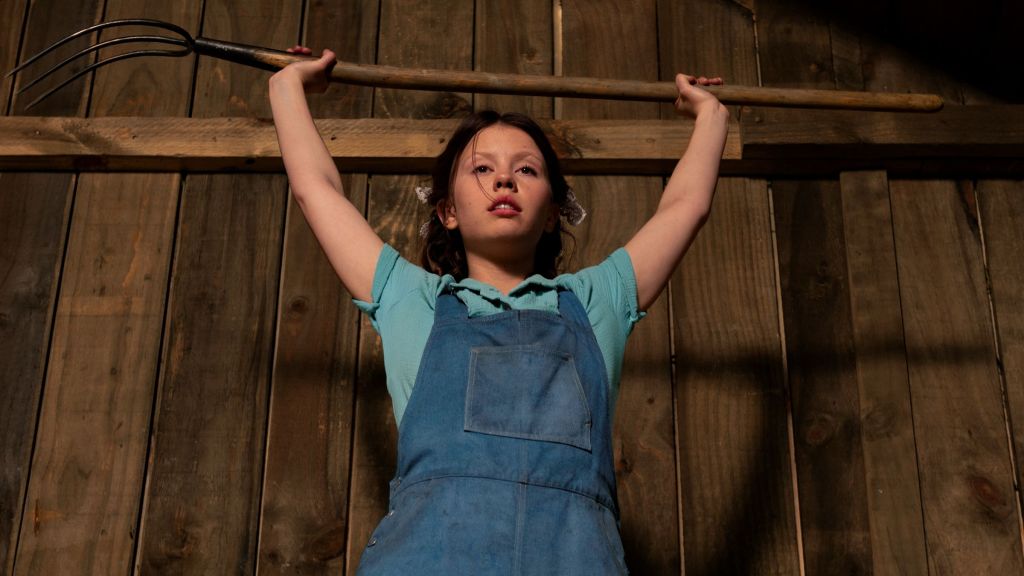
Pearl should honestly be considered a landmark, since it’s the kind of prequel that feels like it was made out of pure frustration with bad prequels. It doesn’t exist just to explain how the villain became the villain in the most predictable way possible, because the whole point is to make you uncomfortable. The story follows the title character (Mia Goth), a young woman stuck on a farm, crushed by a controlling mother, a sick father, and an obsessive dream of becoming famous. But the movie shows that the problem isn’t just her environment — it’s her as well. So her frustration turns into delusion, and that delusion turns into violence, all in a way that feels inevitable.
In X, Pearl is terrifying, but she’s still basically “the creepy old lady in a slasher movie.” After Pearl, she becomes something else entirely: a character with genuinely tragic energy, and not in a “feel bad for her” way, but in the sense that you can finally understand the emptiness eating her alive. And that makes the horror of the first film feel even crueler. The violence stops being just shock value because it’s the final explosion of someone who spent her entire life feeling invisible. And when a prequel can completely change how you read the original without feeling forced, that’s how you know it nailed it.
4) Prey

Here we have the most basic idea in the world, but that’s exactly why it works so well. Prey remembers that Predator was never really about complicated alien mythology; it’s about the hunt. Here, we follow Naru (Amber Midthunder), a young Comanche woman who wants to prove she’s capable of being a hunter, only to realize something far worse is stalking the forest: a Predator testing its weapons and hunting for sport. From there, the movie turns into a battle of intelligence, patience, and survival, with a protagonist who has to learn fast or die.
And that’s the key point: Prey improves the original because it captures the spirit of the 1987 movie more accurately than any sequel ever has. There’s no overload of fan service, no unnecessary explanations, and none of that “franchise product” vibe. It’s tight, direct, and well-paced. And setting it in a different time period is honestly genius, because it removes the modern advantage of automatic weapons, drones, and vehicles — Naru has to win through pure observation and strategy, and that makes the Predator genuinely scary again. Overall, it works because it’s a simple story told well, with real tension behind it.
3) X-Men: First Class
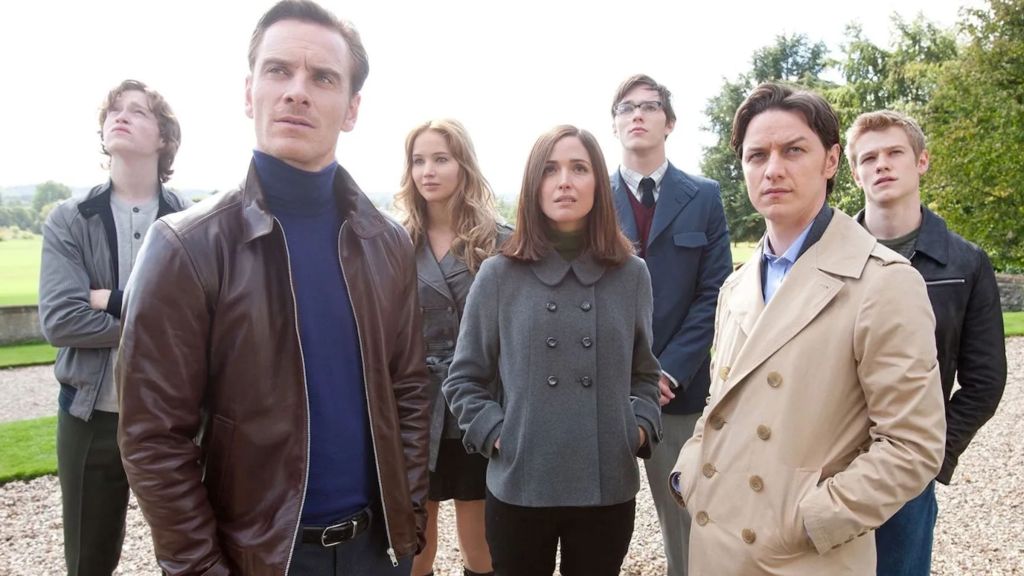
Sometimes, a franchise with too many movies can start feeling messy and directionless, and in this case, the prequel saved things in the right way. How? X-Men: First Class goes back to the core of what the story is actually about. Set in the ’60s, it follows Charles Xavier (James McAvoy) as he builds the first mutant team while Erik Lehnsherr (Michael Fassbender) hunts down Nazi criminals and gets pulled into Xavier’s world. But the real tension is never about who’s going to win some big final fight, but the fact that the two most important figures in the entire X-Men universe are heading toward opposite sides. And that adds emotional weight to the Xavier vs. Magneto rivalry in a way the original movies only hinted at.
Before this, we mostly had the finished versions of them: the wise professor and the villain with the big speeches. In First Class, you actually watch friendship, respect, and frustration build scene by scene until it naturally explodes into a complete break. Besides, the movie also places mutants inside a real political context, which fits perfectly with the X-Men’s long-standing social metaphor. So the result is that when you go back to the earlier films, Xavier and Magneto don’t feel like static characters anymore, but like people with history, wounds, and resentment — that makes the whole franchise more compelling to watch.
2) Rise of the Planet of the Apes

Rise of the Planet of the Apes had every reason to end up as just another reboot trying to modernize a classic. But it does something smarter than that: it builds an origin story that actually makes sense. In the movie, we follow a scientist testing an experimental drug meant to cure Alzheimer’s, but the experiment ends up creating Caesar (Andy Serkis), a chimpanzee with intelligence far beyond what should be possible. And as Caesar grows, he starts realizing just how much humans control and exploit everything around them, until rebellion stops being a possibility and basically becomes destiny.
What makes this movie strengthen the entire reboot (and even improve the 1968 original) is that the dystopia isn’t just a cool concept, but a logical consequence. The classic film is still iconic, but it drops you straight into a world that’s already formed. Rise of the Planet of the Apes builds the emotional path that gets you there, and that naturally makes a difference. Caesar isn’t just the ape leader; he’s a character with pain, awareness, and years of anger piling up, and the film makes sure you feel every bit of that. Plus, with him, that future stops feeling like pure fiction, because you watched it start small.
1) The Godfather Part II
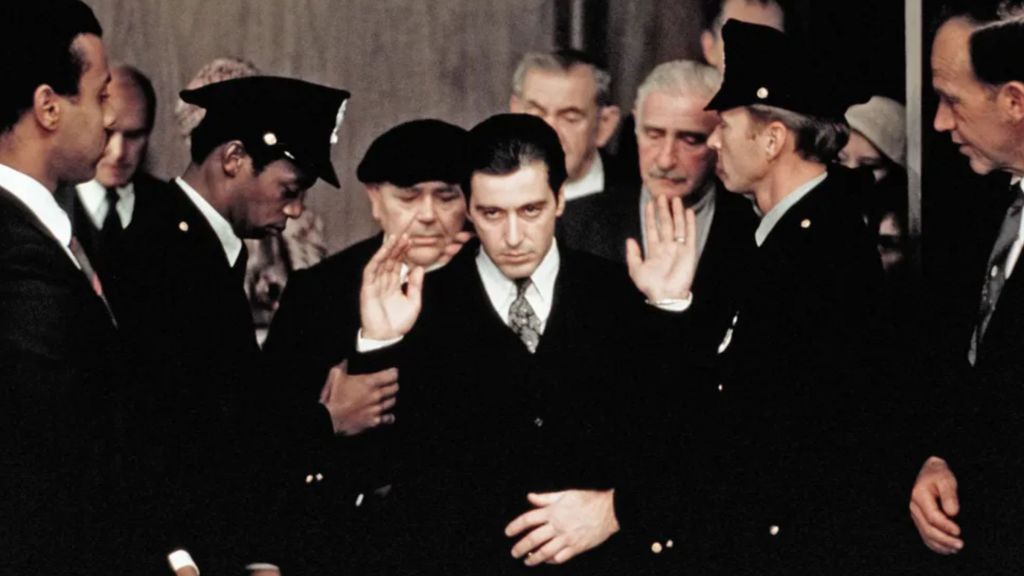
The first movie in the trilogy is still the best one, but the second one makes you look at pretty much every prequel ever made and realize just how lazy most of them are. And that’s because The Godfather Part II doesn’t exist to satisfy curiosity, but to deepen the tragedy. The film jumps between two stories: the rise of Vito Corleone (Robert De Niro), leaving Sicily and building his power in New York, and the reign of Michael Corleone (Al Pacino), growing more paranoid, colder, and more isolated as he tries to expand the empire. So it’s not just a “before and after”; it’s a mirror held up between father and son.
Because of that, you end up seeing the first movie in a completely different light. The Godfather already showed Michael slowly becoming corrupted, but Part II proves this wasn’t just a transformation — it was a sentence. Vito rises because he understands people, while Michael stays on top by threatening and eliminating anyone who gets in his way. And the more Michael claims he’s protecting the family, the more he destroys everything that should actually matter. Every detail builds toward his inevitable downfall, and that’s something very few prequels ever manage to do. Most of them add lore, but they don’t add meaning.
What do you think of these movie prequels? Leave a comment below and join the conversation now in the ComicBook Forum!
More Movies
-
Image Courtesy of Marvel Comics -
Image courtesy of Paramount Television