When people think about gangster and mob stories, it’s usually the same core elements that come to mind: family, rise to power, and, of course, the inevitable downfall. But over time, TV started exploring the other side of that coin, and since then, the genre has expanded far beyond the obvious. These shows can dive into politics, financial markets, the war on drugs, and even legal backroom maneuvering. Crime stories don’t have to rely solely on violence to keep audiences hooked. They can thrive on strategy, ambition, and power plays. And while The Sopranos is still a benchmark to this day, there are plenty of series just as compelling that can deliver the same level of satisfaction it did back in 1999.
Videos by ComicBook.com
If you enjoy watching different kinds of characters trying to control the power around them and paying the price for it, here are 10 must-see gangster TV shows beyond HBO’s iconic classic that are absolutely worth your time.
10) The Blacklist

This isn’t a classic mob drama, but it’s a fascinating look at what criminal power looks like in the information age. The Blacklist follows Raymond “Red” Reddington (James Spader), a former intelligence officer who becomes one of the world’s most wanted criminals and then unexpectedly turns himself in to the FBI, offering up a curated list of high-level international offenders. And you shouldn’t expect a traditional structure like The Sopranos here, because the focus is on crime operating through networks, influence, and strategic blackmail. Instead of leading a crime family, the protagonist leads connections.
The show’s biggest strength is how it builds Reddington as a highly sophisticated operator who understands politics, finance, and geopolitics better than many federal agents. His power doesn’t come from controlling territory, but from knowing who owes whom, which governments are compromised, and which criminals can be leveraged as bargaining chips. The Blacklist is all about strategy (across ten long seasons), and in doing so, the series updates and modernizes what we typically think of as a gangster show.
9) Power
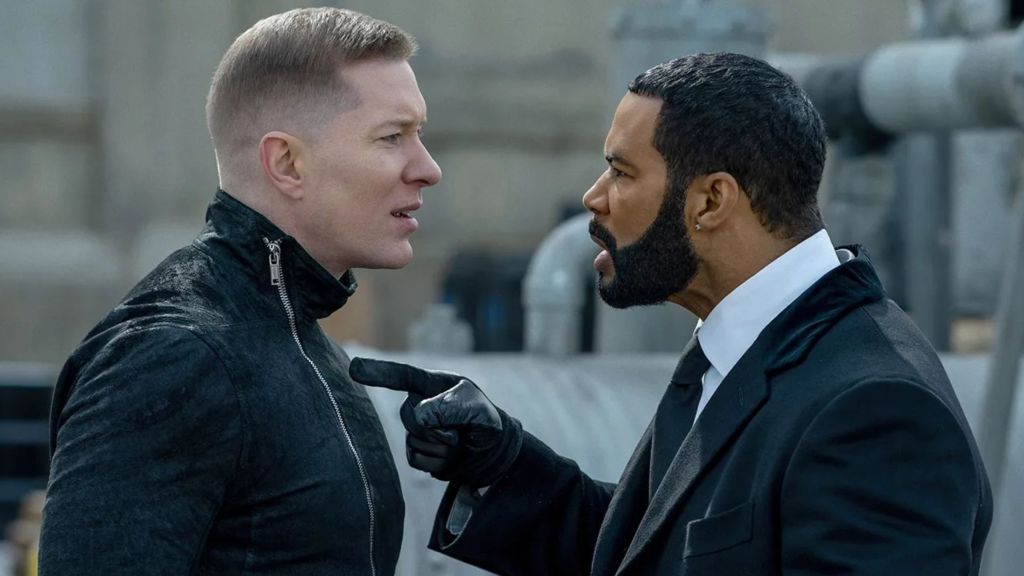
A series that honestly deserves to be talked about more, Power is basically a corporate ambition drama disguised as a drug-trafficking production (which is probably why you won’t always find it on traditional “gangster TV” lists). The story centers on James “Ghost” St. Patrick (Omari Hardwick), who’s trying to leave the drug game behind and reinvent himself as a legitimate businessman — while still quietly maintaining control of his criminal operation. And what makes the show compelling is its structural conflict: crime isn’t just a source of income, it’s identity. Ghost believes he can separate those two worlds, but the very system that made him powerful is also the one keeping him trapped.
Unlike more traditional mob narratives, Power leans heavily into branding, legitimacy, and market expansion within organized crime. It treats the drug empire almost like a business portfolio that needs to be managed, protected, and scaled. There are moments of heightened melodrama, but the pacing and constant power shifts create a real sense of instability that keeps the tension high. At its core, it’s an effective portrayal of the modern gangster who wants to be perceived as a polished entrepreneur, even if he’s still operating like a kingpin behind closed doors.

8) Sons of Anarchy

Sons of Anarchy has been widely discussed and praised over the years — and for good reason. It earns its spot on this list because it’s essentially a study of criminal inheritance. The series follows the motorcycle club SAMCRO, deeply involved in gun trafficking and tangled alliances with cartels and rival gangs. At the center is Jax Teller (Charlie Hunnam), a leader trying to redefine the organization’s future. On the surface, the plot seems straightforward: keep the club alive and profitable. But what makes the show gripping is how it slowly shifts the focus toward the tension between tradition and evolution.
The motorcycle club operates very much like a classic mafia family: rigid hierarchy, internal codes, loyalty rituals, and brutal consequences for betrayal. And within that structure is Jax, who doesn’t just want power — he wants reform. So the real hook of Sons of Anarchy is its insistence that meaningful change is nearly impossible once crime becomes institutionalized. The later seasons may wobble at times, but the series remains impactful because it understands a key truth about gangster stories: sometimes the biggest threat to a criminal empire isn’t law enforcement, but the system from within.
7) The Penguin
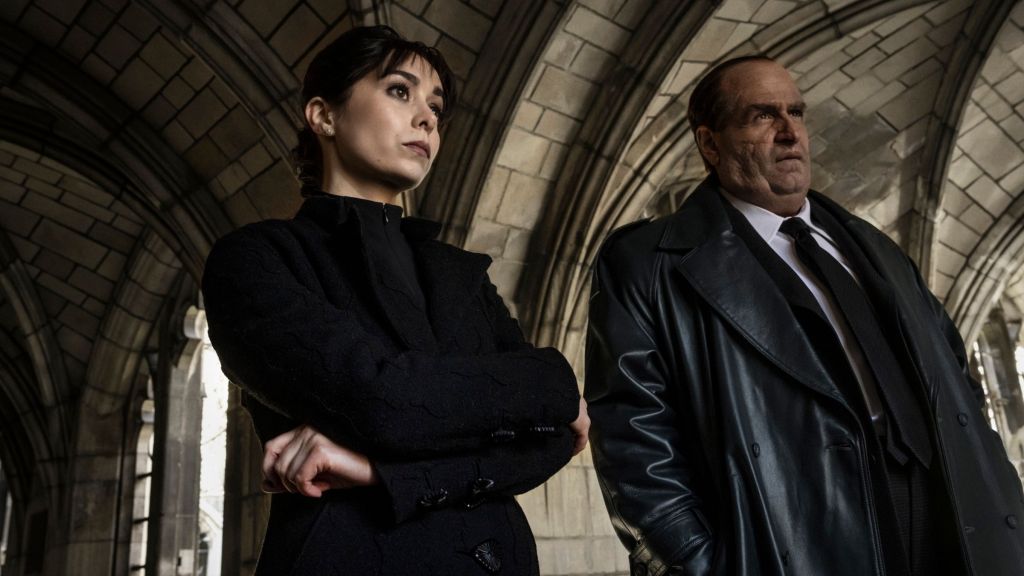
This one works both for gangster TV fans and for superhero audiences (especially those who follow DC). The Penguin is one of the most striking crime dramas lately, since it’s unapologetically about the rise to power. Set after the events of The Batman, the show follows Oswald “Oz” Cobb (Colin Farrell) as he tries to fill the vacuum left by a major mob boss in Gotham. The main goal is to consolidate territory, eliminate rivals, and negotiate alliances — that’s the core engine. But what makes it really stand out?
The strength of The Penguin lies in how corporate the criminal climb feels. Oz isn’t a cartoonish comic-book villain; he’s calculated, resentful, and strategic — and that layered characterization gives the story weight. The show also leans heavily into the internal politics of Gotham’s underworld, framing every decision in terms of risk and return. To sum up, it delivers everything you’d expect from a grounded gangster narrative, just set inside a fictional city. And importantly, the superhero element stays in the background. What drives the plot is pure ambition and the constant need to secure leverage and assert dominance.
6) Gomorrah
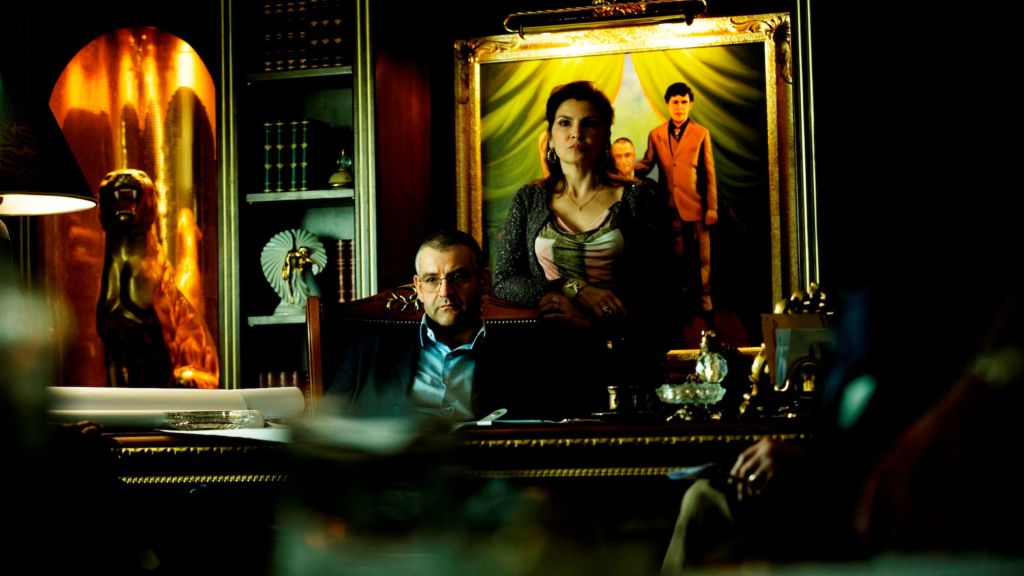
One of the most underrated and least talked-about shows on this list, Gomorrah is probably the rawest entry here. The story centers on internal power struggles within the Neapolitan Camorra (the criminal organization based in Naples, Italy) as different players fight to survive in a world where trust is often a liability. And this series doesn’t romanticize crime, glamorize wealth, or soften consequences. What you get instead is a system where every single decision can mean life or death. Compared to more mainstream gangster dramas, which often lean into humanizing their leads, Gomorrah takes a far colder approach.
Here, the goal isn’t to make you root for anyone — it’s to underline how unstable and temporary power in organized crime really is. The show treats hierarchy like a minefield: the higher someone climbs, the more exposed they become. There’s no illusion of permanence and no myth of the untouchable boss. Every rise carries the built-in warning of a fall. So yes, that makes the viewing experience harsher and more uncomfortable, but that discomfort is exactly the point of Gomorrah.
5) Boardwalk Empire
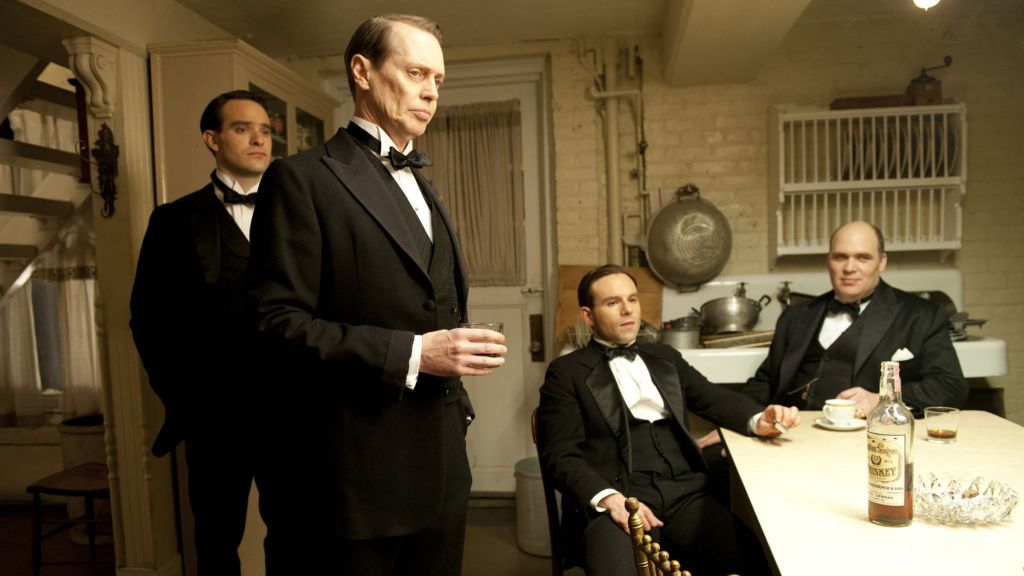
Before The Blacklist, Boardwalk Empire is essential viewing for anyone who wants to understand how modern gangster structures are formed. Set during the Prohibition era, the series follows Nucky Thompson (Steve Buscemi), a political figure who leverages his public office to control the illegal alcohol trade in Atlantic City. And the premise revolves around expanding the black market and building alliances with real historical crime figures. That’s why it’s a bit complex and made for viewers who appreciate this kind of approach, which naturally leans toward a slower pace.
But why is Boardwalk Empire really worth your time? Because it zeroes in on the interdependence between crime and politics. There’s no clean divide between the two worlds; instead, the production shows how organized crime professionalized itself through institutional deals, backroom agreements, and political influence. In many ways, it depicts the blueprint of what we now recognize as the American mafia structure. On top of that, the show excels in detailed world-building and delivers a precise examination of structural power. Taken as a whole, it’s a masterpiece of the genre.
4) Narcos

Narcos elevates everything by turning real events into an engaging crime saga. And why is that? Scale. The show focuses on the rise and fall of Pablo Escobar (Wagner Moura) and later the Cali Cartel, while American and Colombian agents work to dismantle these massive operations. Unlike other entries on this list, the crime here isn’t local — it’s global. The cartel operates like a multinational corporation, complete with complex logistics, political corruption, and market-driven strategies. And Escobar himself is portrayed as both a strategic mastermind and a force of chaos, capable of building an empire and destabilizing a nation at the same time.
What makes Narcos stand out, though, is how it balances dramatization with historical grounding. The use of archival footage, real dates, and political context always reminds you that this isn’t just entertainment, but a reconstruction of events that reshaped Latin America and influenced U.S. foreign policy. When a rival is eliminated, or a war is declared, it’s not just a narrative twist; it’s a catalyst for bombings, diplomatic crises, and nationwide structural shifts. And that added layer of real-world consequence gives the series a weight that few gangster dramas can match.
3) Peaky Blinders
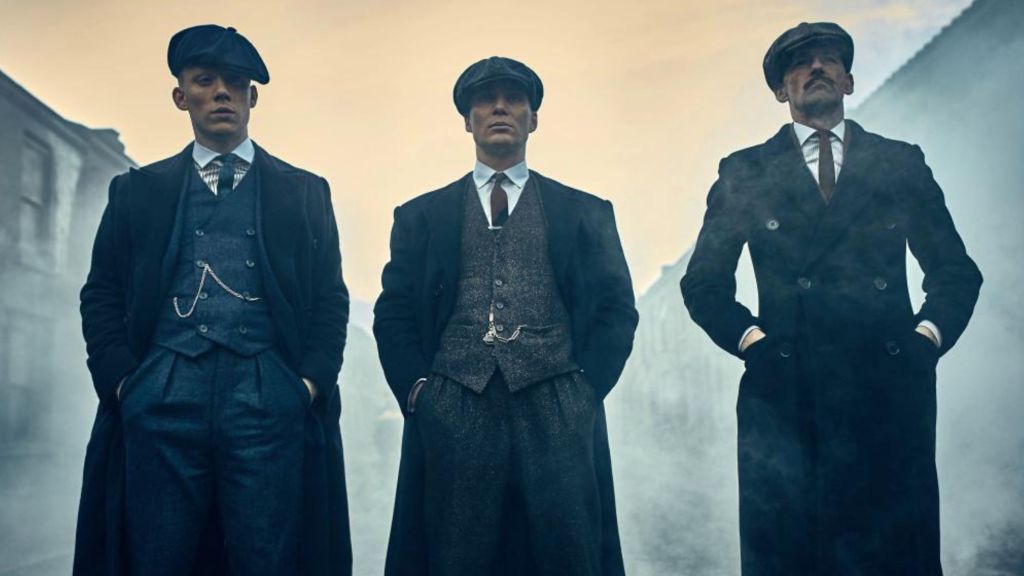
Who hasn’t heard of Peaky Blinders, right? It’s one of the most amazing entries in the genre since it frames crime as a calculated business strategy paired with intentional violence. Plus, even though it follows the classic gangster blueprint, the series injects it with a modern energy that makes mob storytelling feel fresh again (drawing in even viewers who wouldn’t normally gravitate toward mafia dramas). The story follows the Shelby family as they expand their illegal operations after World War I, with Tommy Shelby (Cillian Murphy) leading the shift from a local Birmingham gang to an organization with international reach.
Peaky Blinders is phenomenal at showing that criminal growth requires constant adaptation with political alliances, diversified operations, and careful manipulation. And while the show is undeniably stylized, it never loses sight of its core theme: power has to be expanded, consolidated, and protected at all times (that message is reinforced repeatedly, especially through Tommy, who understands that stability is an illusion). And each season functions as another stage in empire-building, raising the stakes and the cost. So add in its strong visual identity, layered protagonist, and real consequences, and it’s easy to see why the show remains so relevant — so much so that a feature film is on the way.
2) Better Call Saul
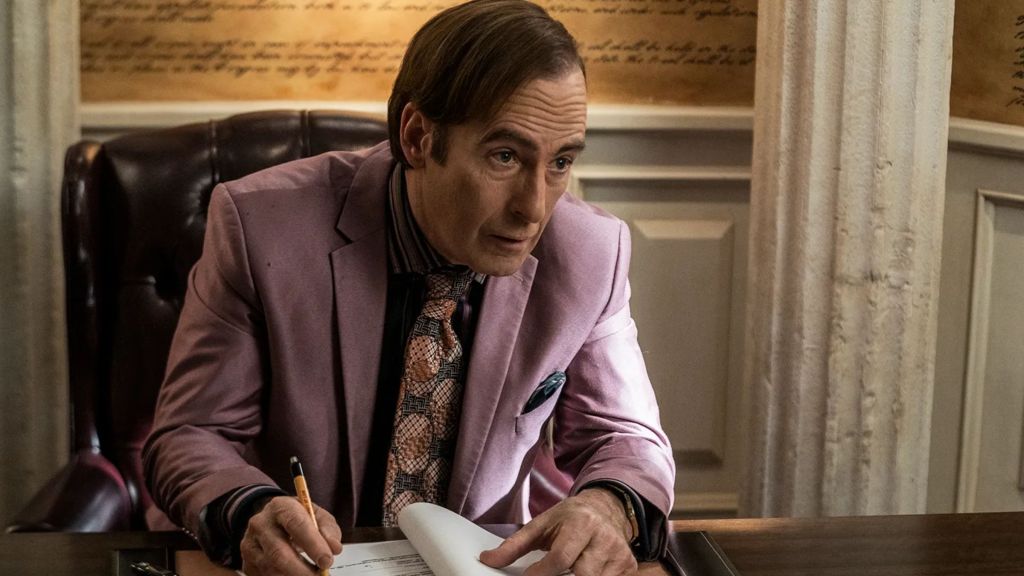
If you’re a Breaking Bad fan, chances are you’ve already seen or at least heard of Better Call Saul, right? But if you somehow skipped it, that’s a mistake. This isn’t your classic gangster story, but it takes an interesting angle by showing organized crime from the perspective of the people keeping it running behind the scenes. The series follows Jimmy McGill (Bob Odenkirk) as he struggles to make a name for himself as a lawyer before becoming Saul Goodman, the go-to attorney for cartel figures. And no, you don’t need to have watched the original series to follow this spin-off.
What sets it apart in the mafia/drama world is its slow-burn approach. Crime here doesn’t explode; it seeps in. In Better Call Saul, every bad choice Jimmy makes is part of a larger mechanism that eventually drags him deeper into the underworld. At the same time, you watch the methodical expansion of criminal operations led by other characters with a strategy running through every move. Basically, this is a show about process: it’s not about the moment someone becomes a criminal, but about all the steps that make that transformation bound to happen. And that makes it way more engaging than many gangster dramas, which often focus almost exclusively on violence.
1) The Wire
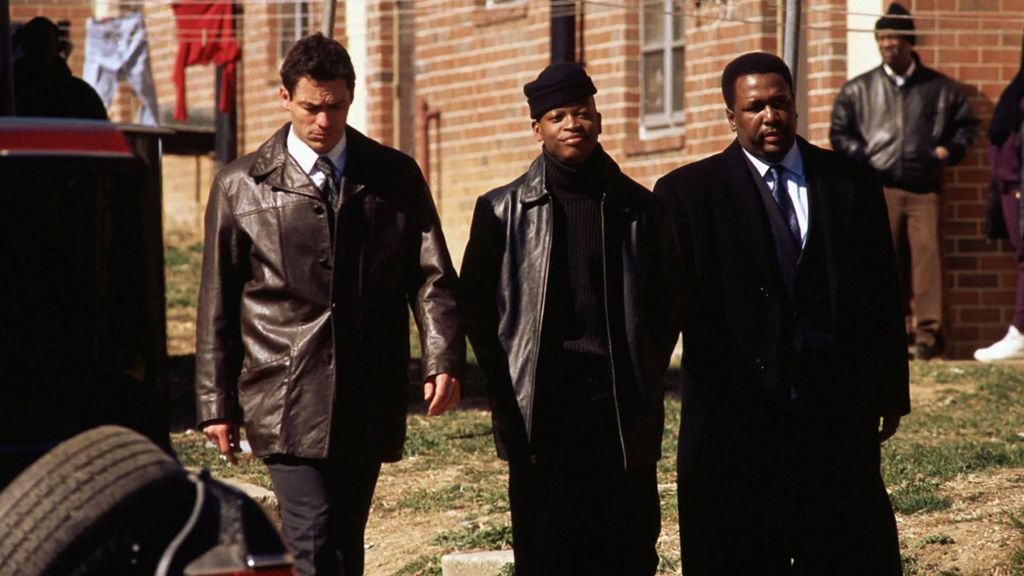
As a top-tier TV production overall, The Wire easily goes toe-to-toe with The Sopranos. And when it comes to gangster stories, it’s one of the best to watch because it redefines what telling a crime story can mean. The show starts by following a police investigation into Baltimore’s drug trade, but expands to cover politics, education, and the press. And there’s no glamour here, just raw reality, with crime portrayed as part of a much bigger system than the street-level hustle.
What The Wire does brilliantly is show drug leaders operating with near-corporate discipline while facing the same institutional limitations as law enforcement. Besides, the series never hands viewers easy answers: there’s no absolute hero, and the villains are multi-layered, never one-dimensional. Its focus is on structure, complexity, and making the system feel real. In short, The Wire isn’t just telling another crime story — it’s spotlighting why the system allows organized crime to persist. It’s a masterclass in both storytelling and life.
What’s your favorite gangster show? Leave a comment below and join the conversation now in the ComicBook Forum!
Most Viewed
-

Image Courtesy of Netflix -

Courtesy of ENGI / Kadokawa / Sentai Filmworks -

Courtesy of Wizards of the Coast -

Image Courtesy of Studio Bones