A show becomes a hit, and a spin-off quickly follows. The problem is that most of the time, this new attempt to revisit the universe starts at a disadvantage. Most spin-offs are created with the obvious goal of stretching a franchise, recycling popular characters, or simply keeping a universe alive for a few more years. But every once in a while, the opposite happens: a derivative series finds its own rhythm, adjusts the tone, deepens characters who were previously stuck in the background, and ends up revealing everything the original show never actually explored. These are the cases where a spin-off improves how we see the source material, whether by fixing its excesses or delivering more mature versions of the same ideas.
Videos by ComicBook.com
Sometimes it’s just a matter of shifting the story’s focus, completely changing the vibe, or betting on a side character who always had more to offer. With that in mind, this list highlights 7 spin-offs that were so effective, they didn’t just stand on their own — they helped make their original series even better.
7) Angel

Buffy the Vampire Slayer‘s spin-off only works because it realizes it can’t live in the original’s shadow. So instead of repeating the same structure, Angel shifts away from the more teen-focused tone and leans into something darker and more adult. The story follows the title vampire (David Boreanaz) in Los Angeles, where he opens a kind of supernatural agency to help people, while also trying to deal with his own guilt as a creature with a soul. That premise alone changes everything, because here it’s not relationship drama driving the story, but broken characters trying to do something halfway decent in a world that doesn’t give anyone a break.
But what’s interesting is how Angel ends up enriching Buffy the Vampire Slayer without relying on it: Wesley (Alexis Denisof) becomes a completely different character, Cordelia (Charisma Carpenter) gains layers she never had in the original series, and the whole idea of redemption grows more complicated. While the original show always carried an underlying sense of optimism, Angel accepts that things don’t always work out — not every battle is won, and not every sacrifice is rewarded. It’s a more mature series, and a spin-off that proves this universe had room for something much darker too.
6) The Originals
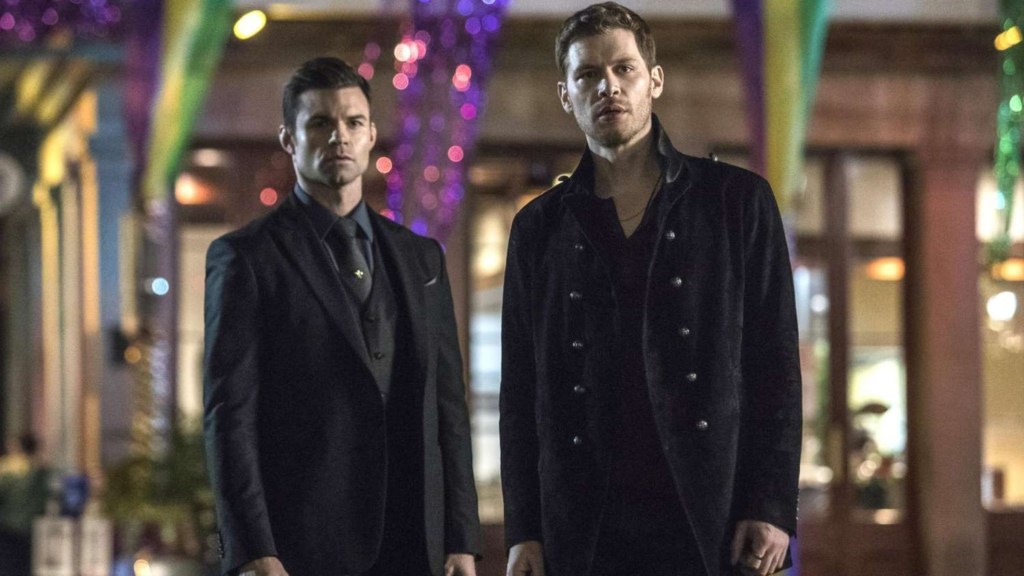
While The Vampire Diaries often got stuck in circular romance arcs, The Originals succeeds by doing the exact opposite (and that’s also why many fans still prefer it to this day). The show follows the Mikaelson family, the first vampires, as they return to New Orleans to reclaim control of the city. Along the way, they face witches, werewolves, and old enemies as they deal with centuries of internal resentment. In reality, it’s less about who ends up with whom and more about power, legacy, and families that tear themselves apart. There’s plenty of plot, but unlike the original, there’s a much clearer focus on what the story is actually trying to say.
The Originals feels more cohesive, more mature, and emotionally more honest. You watch Klaus (Joseph Morgan) move beyond being just a charismatic villain and become a deeply conflicted protagonist, while Elijah (Daniel Gillies) and Rebekah (Claire Holt) finally get larger arcs that actually make you care about them (something that’s often hard to achieve in The Vampire Diaries). The result is a spin-off that ends up exposing the original’s limitations while also proving that this universe worked better when it took its characters more seriously.

5) Frasier
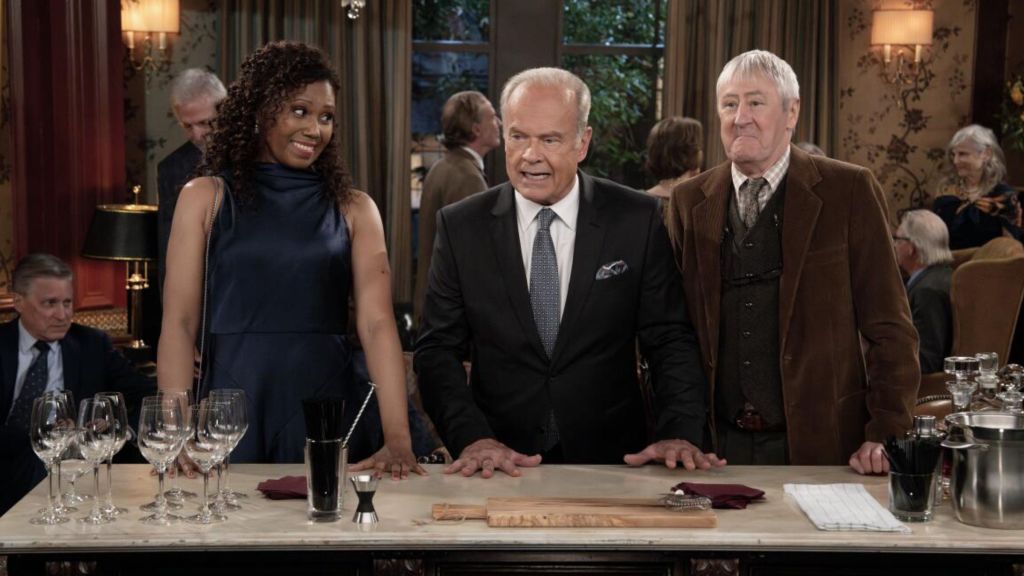
Remember Cheers? The sitcom gave us Frasier, and this is one of those rare cases where a supporting character gets his own show — and ends up with something even better than the original. Here, we follow Frasier Crane (Kelsey Grammer) as he moves to Seattle after leaving the famous bar behind and starts hosting a radio show as a psychiatrist. Along the way, he also tries to balance his life between his equally snobbish brother, his ex-cop father, and an endless series of bad decisions. It’s a simple premise with no huge ambitions at first, but it wins you over through strong execution.
What sets this spin-off apart is the writing: Frasier leans into fast-paced dialogue, smart situational comedy, and tightly defined characters. That alone makes it feel independent, because it doesn’t rely on nostalgia from the original to work. Instead, it builds its own identity right from the start. Over time, it becomes a more sophisticated, more consistent, and emotionally richer sitcom. Cheers introduced Frasier to the world, but it was the spin-off that showed what he was truly capable of beyond being just a side character.
4) The Good Fight

The Good Fight, unfairly overlooked, takes the world of The Good Wife and throws it straight into modern political chaos. The story kicks off when Diane Lockhart (Christine Baranski) loses everything in a financial scam and is forced to start over at a new law firm. From there, she begins taking on cases tied to fake news, systemic racism, authoritarianism, and out-of-control technology. And that’s what makes it so compelling — it speaks directly to its audience. Here, the law stops being just background noise and becomes an explicit tool for social critique. It may sound small, but it’s actually brilliant.
Best of all, this spin-off actually manages to be more interesting than the original because it isn’t afraid to be direct. The Good Wife was elegant and restrained; The Good Fight is louder, more experimental, and sometimes deliberately uncomfortable (in a good way). It features near-satirical episodes, unconventional narrative choices, and a clear willingness to poke at society’s open wounds. That boldness is exactly what pushes the entire legal universe introduced in the original into something far more relevant and challenging.
3) House of the Dragon
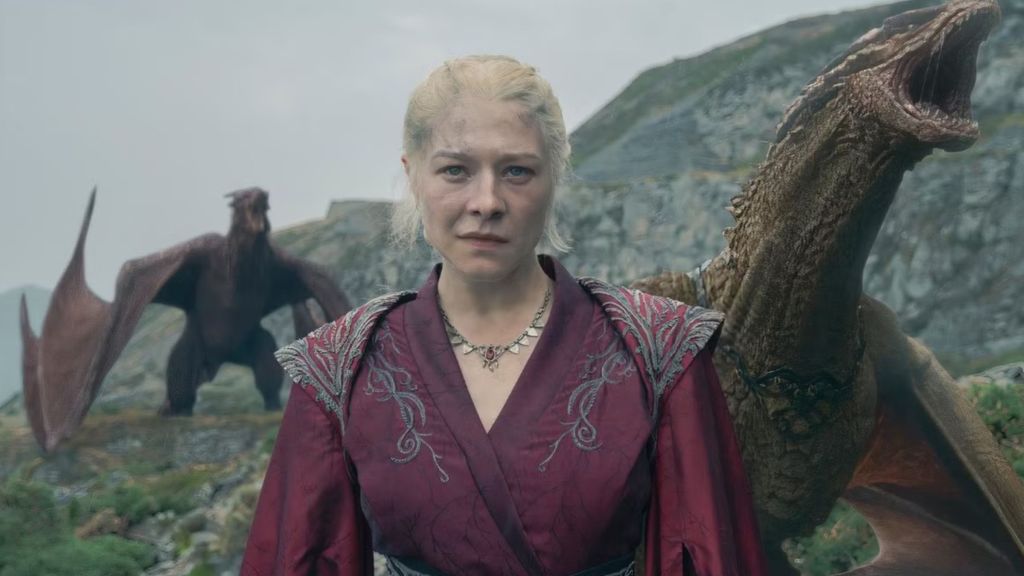
After Game of Thrones‘ controversial ending, House of the Dragon had every reason to fail too. But instead, the spin-off chose a more focused path: telling the story of the Targaryen civil war, showing how a powerful family implodes because of succession, pride, and poorly calculated decisions. That approach excited audiences and caught many by surprise (even if a misstep here and there was inevitable). The show follows multiple generations as alliances fall apart and conflict slowly becomes unavoidable. But what exactly makes it work?
House of the Dragon doesn’t try to compete with the original’s constant spectacle. It might look that way on the surface, but the truth is the story regularly slows down to invest in political tension and give its characters room to breathe. That’s what brings back the feeling of early Game of Thrones, when conversations behind closed doors mattered just as much as battlefield moments. The spin-off doesn’t try to reinvent Westeros — it reminds fans what made this universe work in the first place, helping turn it into a global hit. Plus, it also cleans up some of the bad taste left by the original series’ ending.
2) Boston Legal

Boston Legal doesn’t get talked about nearly enough, but it absolutely deserves a spot in any spin-off conversation, mainly because it abandons any attempt to be a traditional legal drama like its predecessor, The Practice. The series follows the lawyers at a major Boston firm, with a special focus on Alan Shore (James Spader) and Denny Crane (William Shatner), as they handle legal cases while also debating politics, ethics, and the American system itself (often in absurdly direct ways). It feels very similar to The Good Fight in terms of boldness, and you could even argue it helped pave the way for The Good Wife‘s spin-off in the first place.
The chemistry between the leads and the irreverent tone turn this new take on the universe into something far more memorable: where The Practice was serious and predictable, Boston Legal is weird, provocative, and self-aware. It isn’t afraid to feel exaggerated or even break narrative rules. And that’s exactly what allows the series to move beyond the courtroom and become almost a weekly commentary on society — something the original never even came close to achieving.
1) Better Call Saul
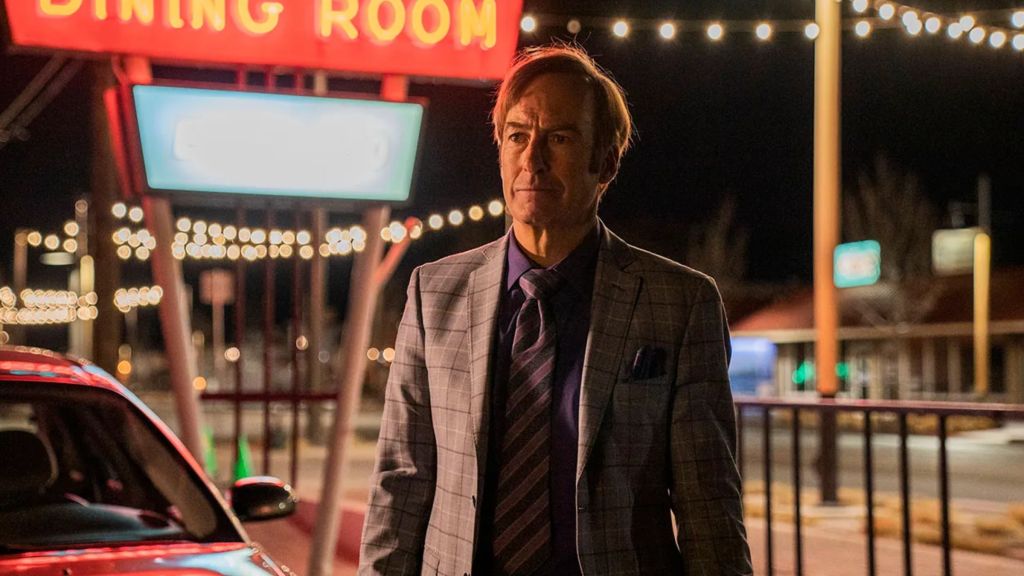
One of the biggest TV hits of all time, Breaking Bad was obviously going to get a spin-off — and it needed to live up to that legacy. Better Call Saul starts as the story of Jimmy McGill (Bob Odenkirk), a lawyer trying to survive honestly, and slowly turns into a tragedy about identity and choice. The series tracks his gradual transformation into Saul Goodman and also deepens characters like Mike Ehrmantraut (Jonathan Banks), building, piece by piece, the world that eventually leads into the familiar universe. It’s technically a prequel, but one that never relies on the original to justify its existence.
Here, the focus is entirely on process, not shock. Breaking Bad thrived on big twists, and they worked. However, its spin-off operates with a different kind of storytelling intelligence. Everything unfolds slowly, through small decisions that pile up until there’s no turning back. The writing is more patient, the characters feel more human, and as a result, Jimmy’s downfall hits harder — simply because it’s so gradual. Better Call Saul doesn’t just complement the original series; it really expands on its core themes and turns the entire story into something far more emotionally complete.
Have you seen any of these spin-offs? Leave a comment below and join the conversation now in the ComicBook Forum!
Most Viewed
-

Image Courtesy of Netflix -

Courtesy of ENGI / Kadokawa / Sentai Filmworks